The National Health Authority (NHA) de-empanelled 2,003 hospitals and suspended another 839 during 2025-26 as part of its crackdown on fraud and misuse under the Ayushman Bharat Pradhan Mantri Jan Arogya Yojana (AB PM-JAY). According to the NHA Annual Report 2025-26, this comprehensive action was executed by the National Anti-Fraud Unit (NAFU), which oversees fraud detection and enforcement under the scheme. The report stated that these measures were aimed at strengthening the integrity of the government's flagship health insurance scheme by identifying irregularities and taking action against hospitals found violating programme guidelines.
The NAFU imposed penalties worth ₹114.06 crore on hospitals following sustained monitoring, investigations, medical audits, trigger-based scrutiny and close coordination with states and Union Territories. As reported by The Hindu BusinessLine, these penalties were part of the unit's comprehensive approach to fraud detection and enforcement. The NHA also safeguarded ₹678.47 crore under the scheme by identifying suspected fraudulent claims and preventing financial losses, though the report did not specify the exact nature of these fraudulent claims or the number of cases involved.
To strengthen fraud detection capabilities, NAFU operationalised a Hospital Vulnerability Index Dashboard, a data-driven tool designed to identify high-risk and potentially vulnerable hospitals within the AB PM-JAY network. According to the report, the authority also developed a live Medical Oncology Utilisation Dashboard to monitor package utilisation and service delivery patterns under the scheme. The dashboard provides states and Union Territories with near real-time visibility of utilisation trends to help detect anomalies and improve oversight. The NHA has introduced a pre-authorisation screening framework that uses an automated adjudication engine to review every claim and identify anomalies such as mismatches between patient gender and billed medical packages, repeated claims for procedures that can only be performed once in a lifetime, and other unusual patterns. Every newly issued Ayushman card is also reviewed within 24 hours through a risk-based screening mechanism.
According to Indu Bhushan, the founding Chief Executive Officer of the NHA and now a senior associate at Johns Hopkins University, the anti-fraud system operates on more than 100 continuously refined algorithms. These algorithms can detect medically impossible claims, such as a hysterectomy billed for a male patient, clinically implausible procedures, or records showing the same doctor performing numerous complex surgeries at different locations on the same day. Serious violations trigger automatic payment blocks, while minor coding errors are flagged for review. For dialysis packages, considered particularly vulnerable to abuse, biometric authentication is now mandatory for every treatment cycle, replacing the earlier requirement of once-a-month verification.
The NHA report indicated that NAFU strengthened the anti-fraud governance framework through regular review meetings with states and Union Territories, an 'Audit of Audit' initiative, and capacity-building programmes aimed at improving enforcement and oversight. As reported by The Hindu BusinessLine, the anti-fraud unit combined data analytics, targeted medical audits and strengthened governance mechanisms to safeguard public funds, protect genuine beneficiaries and improve the integrity of the Ayushman Bharat health insurance programme. The comprehensive approach demonstrates the authority's commitment to maintaining the integrity of India's flagship health insurance scheme.
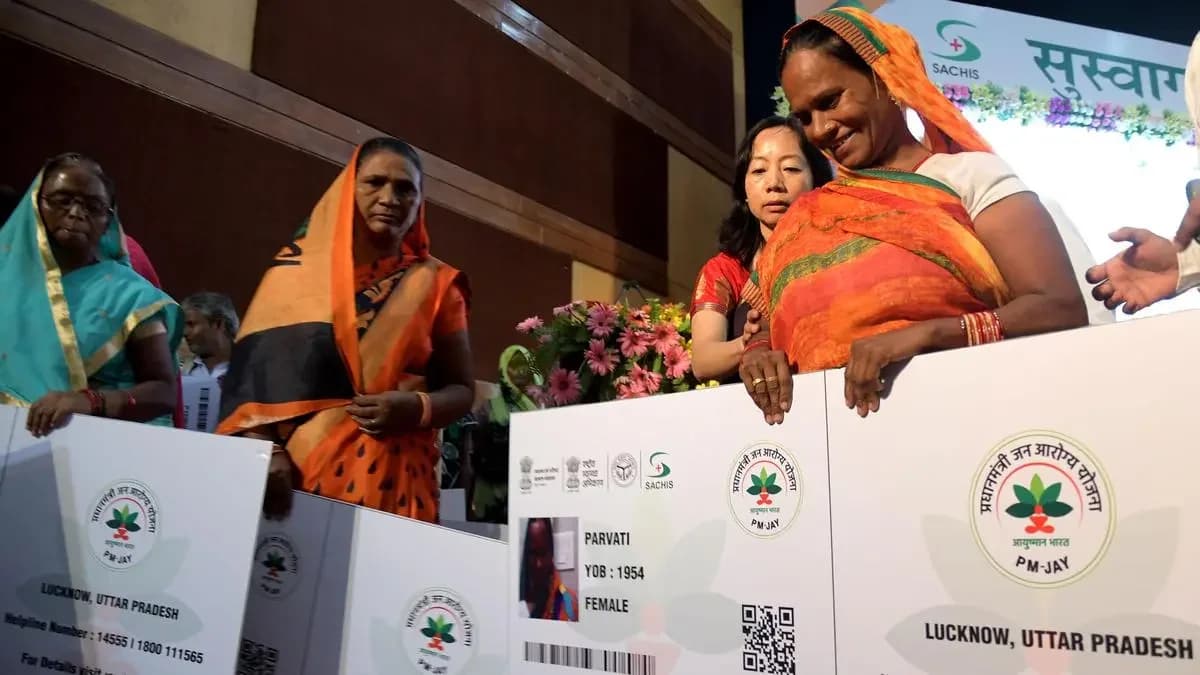
Launched in September 2018, Ayushman Bharat is among the world's largest publicly funded health insurance programmes, with the scheme having authorised nearly 119.3 million hospital admissions and total treatment value reaching approximately ₹1.78 trillion. During the last financial year alone, 32.6 million new beneficiary cards were issued, while healthcare services worth ₹48,828 crore were provided under the programme. However, private hospitals have expressed concerns over delays in reimbursements, with experts noting that 16,436 private hospitals empanelled under AB-PMJAY have long complained of delayed payments, leading some facilities to remain officially empanelled while informally turning away scheme beneficiaries. Public health expert Dr. Rajeev Jayadevan emphasised that while a zero-tolerance approach to fraud is essential, enforcement must remain balanced to ensure transparent, timely, and fair reimbursements for continued access to quality healthcare.