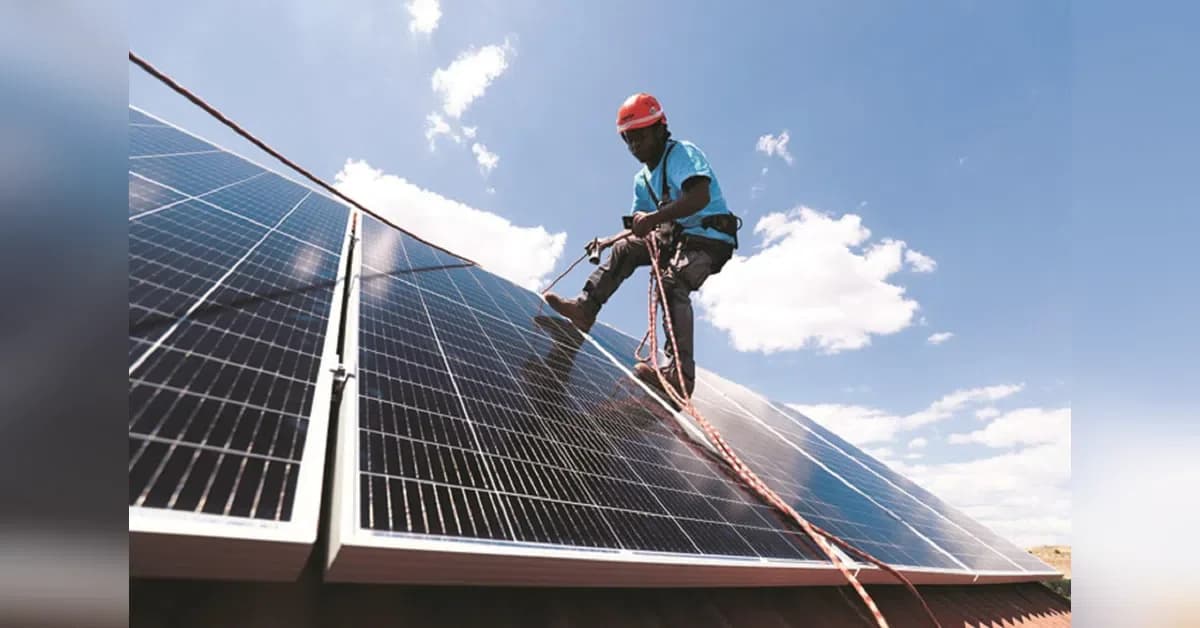
The Ministry of Home Affairs has issued comprehensive guidelines prohibiting any new solar, wind and hybrid renewable energy projects within 1 km of the Line of Control, Line of Actual Control, and International Border. According to reports from PTI, areas within 50 km of these borders have been designated as sensitive areas, requiring stringent security clearances and approvals. The guidelines, issued by the ministry's Internal Security wing, also bar engagement of engineers, staff, employees and labour from land border countries, especially Pakistan, Bangladesh and China, for project implementation without central government permission. As per the latest ministry guidelines, the 1 km area will be strictly restricted, and no project activity will be permitted in this area. The move was prompted by a rise in queries received by the Ministry of New and Renewable Energy regarding the suitability of setting up renewable energy projects in border areas that could have national security implications.
Under the new guidelines, all solar, wind and hybrid energy projects within 50 km will require security clearance from the Ministry of Home Affairs. As reported by PTI, areas within 20 km of the International Border will require a separate no-objection certificate from the Ministry of Defence. The ministry clarified that projects already receiving security clearance from MHA prior to these guidelines will not be required to reapply, and similarly, applicants with existing Ministry of Defence NOCs will not need to reapply under these new provisions. Security clearance for projects proposed in areas located from 1 km to 50 km, or for grant of No Objection Certificate in areas from 1 km to 20 km will be assessed by the Ministry of Home Affairs and Ministry of Defence on a case-by-case basis. The Home Ministry has committed to deciding proposals within 60 days of submission. The guidelines make it clear that no project activity will be allowed within 1 km of the LoC, LAC or the International Border, with projects proposed between 1 km and 50 km being examined by MHA on a case-by-case basis.
According to the guidelines, all applications for border area projects must be submitted to the Ministry of New and Renewable Energy, which will forward proposals accompanied by state government in-principle approval for land allotment. As reported by PTI, the ministry emphasized that land allocation should ensure construction does not extend over long distances parallel to international borders. The Ministry of New and Renewable Energy will ensure that land allocation is done in such a manner that constructions on the project do not extend over a long distance parallel to the international border. Projects must implement comprehensive security measures including anti-drone systems operated by Central Industrial Security Force or state police, with costs borne by project proponents. Developers have been directed to ensure strict monitoring and verification of employees and construction workers, while foreign nationals entering project areas must also be monitored. All project personnel must be verified before entering construction sites and will be required to follow instructions issued by local police and BSF authorities. The new norms will also apply to projects that are required to submit fresh applications.
The guidelines impose strict operational limitations including no accommodation or cafeterias within 5 km of the border, with hotels located at least 5 km from the border. According to PTI, civil infrastructure height is capped at 3 meters for areas within 1-8 km, 5 meters for 8-20 km, and 15 meters for 20-50 km from international borders. All projects must have dedicated police posts for monitoring construction works, with foreign nationals requiring monitoring and project staff following instructions from local police and Border Security Force. The applicant's staff implementing the project must be pre-verified before entering the field, and should follow the instructions issued by the local police and Border Security Force deployed at the International Border. Project roads should be designed in a manner that allows their use by armed forces or border security personnel during emergencies. The security framework also governs facilities that can be constructed around renewable energy projects, with cafeterias to remain within plant premises and facilities that could attract crowds discouraged in sensitive areas.
For projects involving foreign investment, separate applications must be made to the Department for Promotion of Industry and Internal Trade under the Foreign Direct Investment Policy. As reported by PTI, the Ministry of New and Renewable Energy will convey final decisions only after obtaining security clearance from MHA and no-objection letters from Ministry of Defence. The ministry stated that these uniform transparent guidelines were issued taking into account national security perspective while keeping ease of doing business in mind, with all stakeholders consulted during the development process. The applicant should not transfer land to any foreign company without prior approval of the central government, including security clearance from the MHA. The guidelines also place restrictions on associated infrastructure, with hotels, housing facilities and other establishments that could attract crowds discouraged in sensitive areas. Projects that had already received MHA security clearance before the new rules were issued will not have to apply again, and the same protection applies to applicants that had already secured a Defence Ministry NOC for their project.