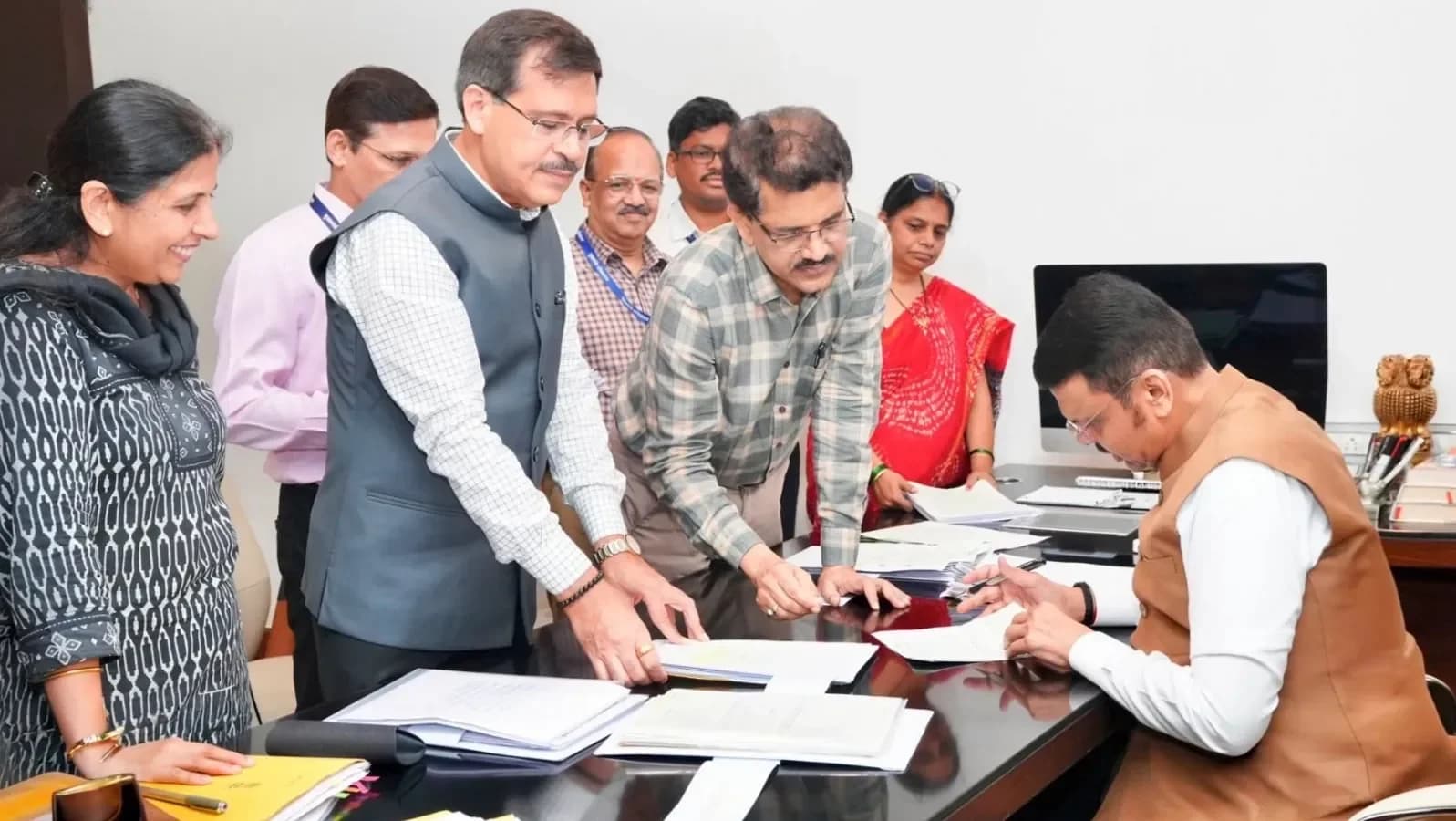
Maharashtra Chief Minister Devendra Fadnavis announced the formation of a seven-member committee to draft rules for the Uniform Civil Code (UCC) in the state during the Maharashtra Legislative Assembly session. According to the latest reports, the committee will conduct a comprehensive examination of all legal, administrative and social aspects related to the UCC and submit a report with recommendations to the state government within six months. The government will then finalise the draft of the Uniform Civil Code based on the committee's findings, with the aim to introduce and pass the UCC bill in both the Legislative Assembly and the Legislative Council during the upcoming Nagpur winter session. As per the chief minister's announcement, the committee is expected to submit its report within six months and the government will make efforts to introduce the legislation in the winter session of the state legislature in Nagpur. Fadnavis told the House that the names of other committee members are yet to be finalised, indicating that the complete membership structure is still being finalised.
The committee will be headed by retired Supreme Court Justice Ranjana Desai and includes three former judges from the Supreme Court or High Court, a constitutional expert, a former bureaucrat, and two members from the social sector. As reported by Essential Business Intelligence, the committee brings together expertise from the judiciary, constitutional law, public administration and the social sector, ensuring comprehensive legal and social perspectives are considered. The other members include former High Court Justice R C Chavan, former High Court Justice S G Mehare, former Chief Secretary of Maharashtra D K Jain, former Advocate General Virendra Saraf, constitutional expert Ramesh Patange and educationist Suvarna Rawal. The committee's mandate is to prepare draft rules and recommendations for implementing the UCC, which will subsequently be submitted to the state government for consideration. According to The Times of India, former advocate general Virendra Saraf confirmed that "We will make efforts to introduce the legislation in the winter session of the state legislature in Nagpur".
The committee is expected to study legal, constitutional and social aspects before submitting its recommendations to the state government. According to the chief minister's announcement, the move examines a common legal framework governing personal laws related to matters such as marriage, divorce, inheritance and adoption. Chief Minister Fadnavis emphasised that the government will follow all constitutional and legal procedures to take effective steps towards implementing the UCC in Maharashtra, noting that the concept is supported by the Directive Principles of State Policy in the Constitution and aims to uphold constitutional values of equality and uniformity. The committee will conduct a comprehensive review of the state's existing personal, social, and administrative laws and draft a distinct UCC for Maharashtra that takes into account the state's social and cultural diversity. The UCC seeks to establish a common set of civil laws governing matters such as marriage, divorce, inheritance and adoption, irrespective of religion.
This development marks a notable advance in discussions on personal laws and legal uniformity in India, with Maharashtra joining a handful of states that have initiated formal steps to explore or implement such a legal framework. The Maharashtra government initiated the process of framing the UCC last week and plans to closely study the experience of Uttarakhand, which became the first state since Independence to enact a Uniform Civil Code. Additionally, Assam passed its UCC bill in May, seeking to establish a single civil legal framework governing marriage, divorce, succession, and live-in relationships regardless of religion. The committee will place special emphasis on ensuring equal legal rights for women in matters like marriage, divorce, inheritance, property, and adoption. Once the UCC is implemented, separate laws based on religion, caste, or sect will no longer apply to personal matters such as marriage, divorce, inheritance, property rights, and child adoption. Instead, a uniform legal framework will apply to all citizens of Maharashtra, ensuring equal treatment across all personal matters regardless of religious or social background.