The Supreme Court has intensified its push for rational airfares in India, urging the Centre to address significant pricing discrepancies that burden consumers. On May 15, 2026, Justice Vikram Nath and Justice Sandeep Mehta highlighted the considerable disparities in airfares, pointing out instances where one airline charges ₹8,000 for a flight while another charges ₹18,000 for the same route in economy class for the same sector. The court brought this issue before Solicitor General Tushar Mehta to explore solutions that would offer more consistent pricing for travellers. The Supreme Court's insistence on rationalising airfares aims to protect consumers from arbitrary pricing and ensures that travellers benefit from more predictable and fair ticket costs. The petition, filed by social activist S Laxminarayanan, calls for an independent regulator to oversee transparency and passenger protection within the civil aviation sector, arguing that unregulated fare hikes disadvantage poor and last-minute travellers and infringe upon fundamental rights.
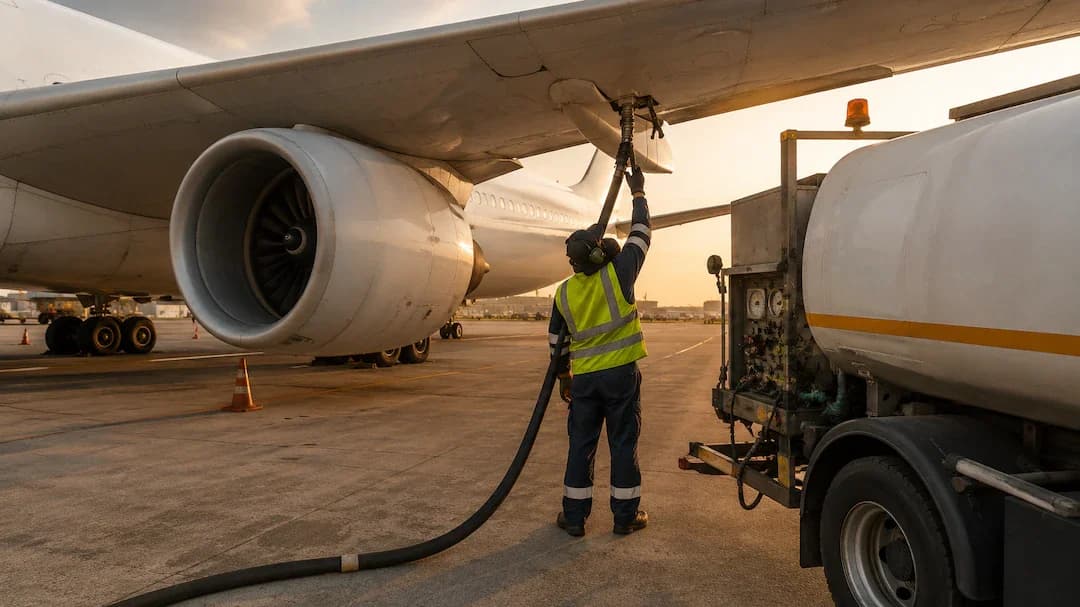
The Maharashtra government has reduced value-added tax on aviation turbine fuel to 7% from 18%, according to a notification issued by the state finance department. The revised tax rate came into effect from May 15, 2026, and will remain in force until November 14, 2026. The move marks an 11-percentage-point reduction in VAT on ATF and is expected to lower fuel expenses for airlines operating in the state. The amendment substitutes the existing 18% VAT rate with 7% for ATF listed under Entry 6 of Schedule B appended to the Maharashtra Value Added Tax Act 2002. As per the official notification, the concession will remain in force from May 15 to November 14, after which the previous rate would apply unless extended or modified by the government. Union Civil Aviation Minister Ram Mohan Naidu Kinjarapu announced the decision on social media platform X, thanking Maharashtra Chief Minister Devendra Fadnavis for the timely intervention. Following Maharashtra's lead, Delhi has now also reduced VAT on ATF from 25% to 7%, bringing both major aviation hubs under the same reduced tax regime.
Fuel remains one of the largest expenses for Indian airlines, accounting for 30-40% of total expenditure. The reduction in VAT comes at a time when carriers are facing pressure from elevated aviation fuel prices, longer flying routes and airspace restrictions linked to geopolitical tensions in the Middle East. Among Indian states, Tamil Nadu currently levies one of the highest VAT rates on ATF at 29%, while Delhi previously imposed 25%. Maharashtra State operates 16 airports and handles approximately 75 million passengers annually with daily traffic of around 2 lakh passengers. Civil Aviation Minister Ram Mohan Naidu Kinjarapu said the aviation sector has been facing challenges due to "air space closures, uncertain operations, spike in ATF prices" linked to the Middle East crisis. The minister added that one of the important expenditures in aviation industry is the VAT on ATF that is levied by state governments, noting that the reduction in VAT is expected to lower fuel costs for airlines and could help improve air connectivity and competitiveness of airports in the state.
Union Civil Aviation Minister Ram Mohan Naidu Kinjarapu expressed gratitude to the Maharashtra government for the VAT reduction, thanking Maharashtra Chief Minister Devendra Fadnavis for reducing VAT on ATF from 18% to 7% with immediate effect. The decision was notified by the state Finance Department on May 14 under the Maharashtra Value Added Tax Act 2002. The decision follows discussions between the Ministry of Civil Aviation and several state governments regarding reductions in VAT on aviation fuel. Media reports last month had indicated that the ministry held separate meetings with Delhi, Tamil Nadu, West Bengal and Maharashtra to seek relief on ATF taxes amid supply-chain disruptions caused by the West Asia conflict. The minister said the ministry had been engaging with states to lower VAT rates, particularly during the ongoing crisis. VAT on ATF, which is levied by state governments, remains a significant cost component and varies widely across states, often ranging from 4% to 30%. The Centre has already introduced several measures to cushion the impact, including capping ATF prices for domestic scheduled operators, reducing airport charges, and extending support through the Emergency Credit Linkage scheme. Responding to the Supreme Court's concerns, the Solicitor General confirmed that the government acknowledges the airfare pricing issue and is considering legislation enacted in 2024, which includes new rules under the Bharatiya Vayuyan Adhiniyam implemented in January 2025. These rules aim to standardise fares and limit arbitrary surcharges by airlines.