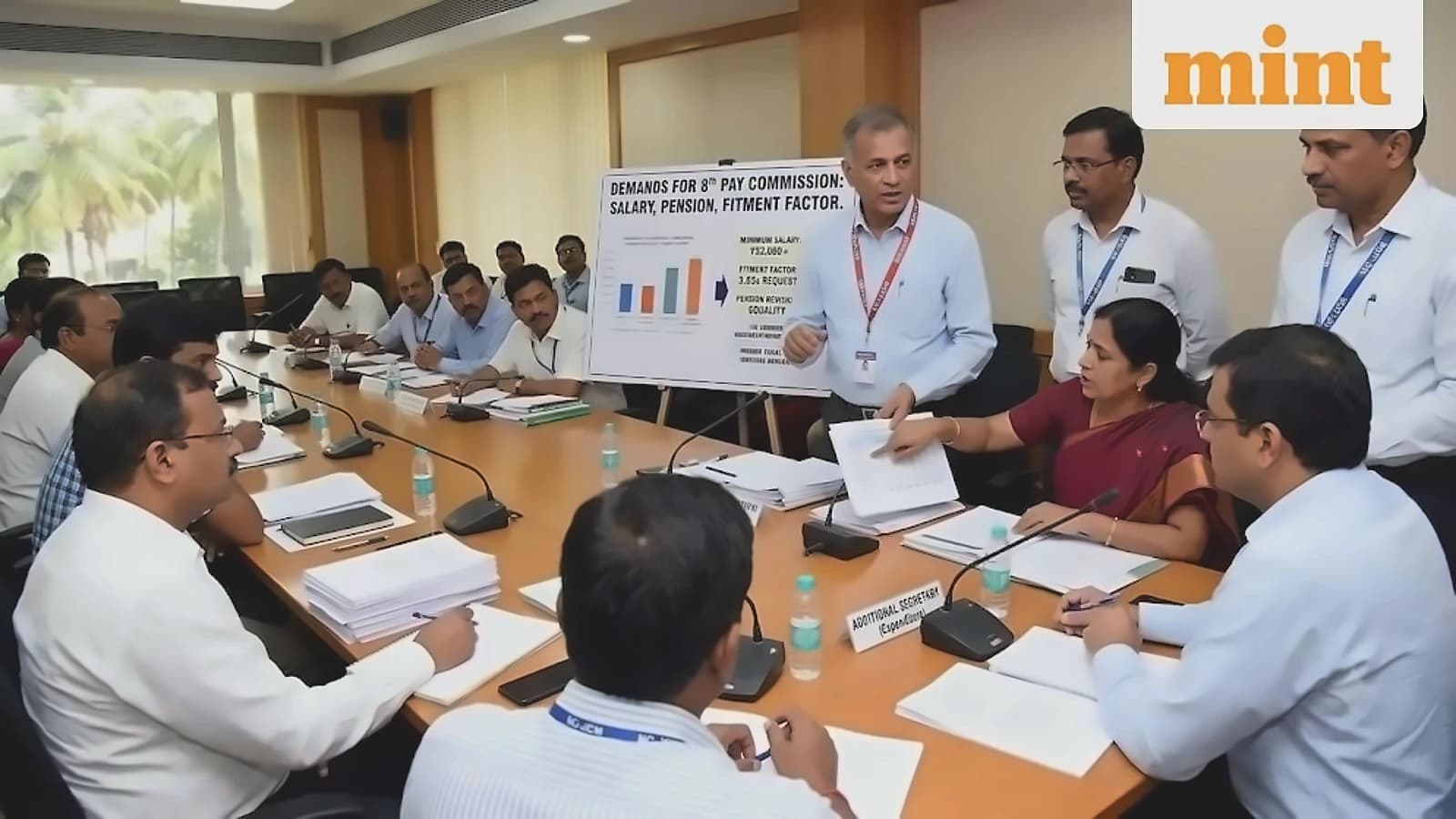
The 49th meeting of the National Council (Joint Consultative Machinery or JCM) chaired by the Cabinet Secretary has officially deferred the issue of salary fixation after promotion to the 8th Pay Commission. According to reports from Zee News, the decision was recorded during this meeting, with the minutes circulated by the Department of Personnel and Training (DoPT) through Office Memorandum No. 3/1/2025-JCA dated June 3, 2026. The latest developments show that this decision was made during the 49th National Council (JCM) Meeting held on May 11, 2026, where the tension regarding the delay was palpable among stakeholders.
The Staff Side argued that regular promotion results in an objective increase in duties and structural responsibilities, as reported by Zee News. Staff Side member Sivaji Vasireddy pointed out that the historical system inherently respected promotional vertical movement by granting the difference in grade pay, but this benefit disappeared under the current layout. The Staff Side also mentioned that various related irregularities had been brought up frequently in previous forums without a comprehensive solution. During the recent JCM meeting, the Staff Side argued that referring the matter to the 8th CPC was inappropriate because the groundwork for the enhancement had already been laid, with key arguments including that the mechanism for the 8th CPC to review this demand is officially built into its mandate.
The government clarified its stance on the structural anomaly surrounding MACP, stating that specific cases can be examined but the larger policy issue will be left for the 8th CPC to decide, according to Zee News. The Department of Personnel and Training (DoPT) retains the power to review isolated and highly specific administrative irregularities where the transition of rules caused unintended pay disparities. A baseline demand of reviewing the definition of FR-22(1)(a)(1) execution to allow an extra increment after MACP has been recognized as a structural policy matter. The government's strategy to route the FMA increase through the 8th CPC has been consistent over the past year, with the mechanism for the 8th CPC to review this demand officially built into its mandate.
The 8th Pay Commission has officially launched an extensive data collection initiative reaching out to various Ministries, Departments, Organizations, and Offices to gather granular workforce statistics. The Commission is collecting personnel data including strength, vacancies, retirement metrics, and resignation trends from all government organizations. To manage this extensive data requirement efficiently, the 8th CPC has implemented a strict digital-only submission policy with highly detailed framework requiring departments to track personnel statistics across all hierarchical pay tiers from Level 1 through Level 18. The Commission is also analyzing employee turnover by requesting detailed records from the last three calendar years (2023, 2024, and 2025) to assess employee retention, especially among newer recruits and specialized roles. By mandating this detailed, portal-based submission by June 30, 2026, the Commission aims to build a highly accurate, data-driven foundation for its future recommendations regarding government employee structures and compensation.

While the final recommendations of the 8th CPC are expected to take time, the commission may seek proposals and suggestions from stakeholders on pay, allowances and service conditions of employees, according to Zee News. The latest JCM decision makes it clear that the issue of pay fixation after MACP will be one of the major policy issues before the Commission and it may take a little more time to arrive at a logical conclusion. For Central Government pensioners, the wait for a more robust Fixed Medical Allowance continues, with pensioner associations now preparing to present their case directly to the 8th CPC to secure the requested Rs. 3,000 monthly allowance. The Commission is directed via Para 2(a) of the Terms of Reference (ToR) of the 8th Central Pay Commission, issued via a Ministry of Finance Resolution dated November 3, 2025, to examine and recommend changes to allowances and benefits, with the report expected to be submitted approximately 18 months after the Commission's constitution.