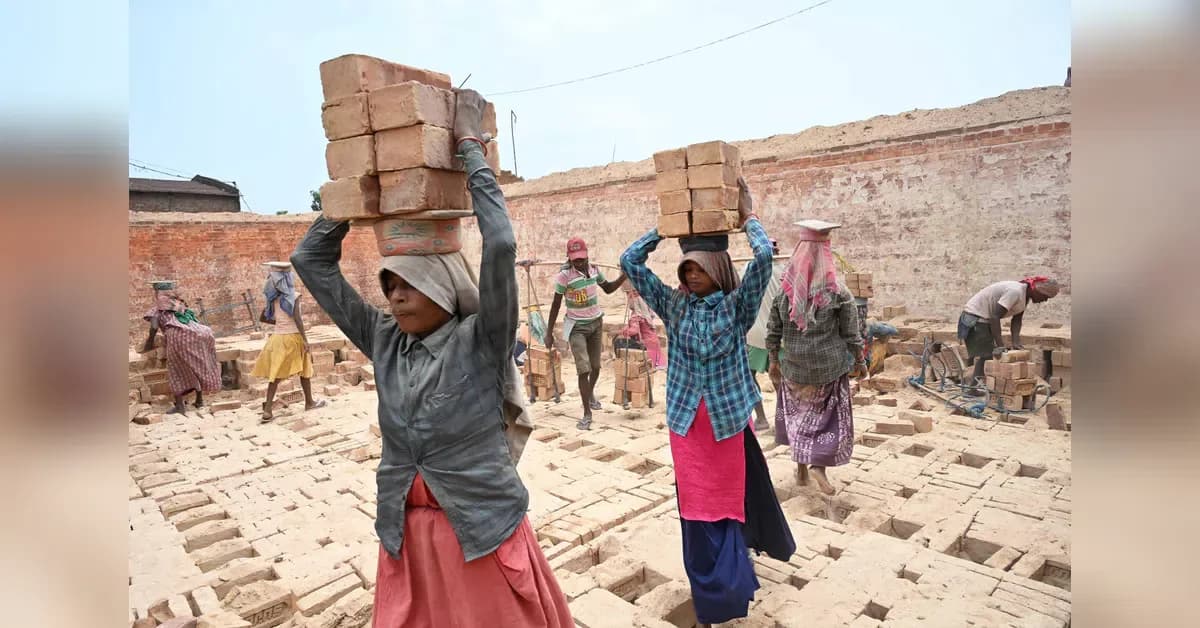


The labour ministry has begun consultations with industry bodies on migrant worker welfare, focusing on housing, portability of benefits and registration reforms. According to reports from Business Standard, in a meeting held on May 19, participants discussed housing access and portability of welfare benefits for migrant workers. The discussions included stakeholders from across ministries, corporate representatives, think tanks, academia, and civil society organizations.
The labour minister has asked the Confederation of Indian Industry (CII) to continue deliberations and return with more detailed concept notes on possible implementation models in a follow-up meeting likely to take place next month. As reported by Business Standard, the first meeting focused on improving living and working conditions for migrant workers, along with challenges in delivering benefits to them. The next round is expected to centre on implementation, with CII asked to consult workers and organizations working with migrant labour to better understand on-ground constraints.
Officials raised implementation challenges such as low literacy levels, language barriers and difficulties in completing online registration. According to Business Standard, one official explained that while online registration might be required, most migrant workers would be illiterate, necessitating consideration of using vernacular language for communication. The ministry has indicated that vernacular language communication may be needed to address these accessibility issues.
The consultations follow a national roundtable organized by CII in Coimbatore in January, after which the industry body prepared a recommendation note on migrant worker welfare presented to the labour ministry. As reported by Business Standard, CII's note proposed measures including easier portability of social protection benefits, simplified compliance requirements for employers, and stronger local support systems. The recommendations also called for enabling access to benefits such as ration, healthcare and compensation across states, creating facilitation centres for registration, and establishing transparent recruitment practices.
The consultations come amid recent labour unrest across industrial hubs such as Noida and Manesar, where workers have protested low wages, contractualisation, poor working conditions and lack of social security benefits. According to Business Standard, concerns have also risen over the economic fallout of the West Asia conflict and possible increase in crude oil and LPG prices. Policymakers and industry bodies have warned that higher energy costs could increase financial stress on factories and MSMEs, potentially leading to wage delays, layoffs and distress migration in labour-intensive sectors.