In a major policy shift hailed as "gold standard for progressive labour governance," the Telangana government has officially banned cash wage payments to workers and mandated electronic transfer, while bringing gig workers under the safety net of minimum wages. According to a government statement, "Payouts via paper cash are explicitly banned. Employers must disburse wages through direct electronic transfer (NEFT/RTGS/IMPS) or bank check, building an unalterable trail for labour inspectors and protecting vulnerable workgroups." The new government order (GO No 6) activates the provisions of the Centre's Code on Wages, 2019, completely repealing and superseding the Minimum Wages Act, 1948, across the state. The GO eliminates hundreds of industry-specific schedules and implements a unified, transparent grid designed to maximise worker security, positioning Telangana as India's most attractive destination for domestic and international capital.
The notification has implemented significant wage increases across all skill categories, with unskilled workers seeing minimum wages rise from ₹12,750 to ₹16,000, semi-skilled workers from ₹13,152 to ₹17,000, skilled workers from ₹13,772 to ₹18,500, and highly skilled workers from ₹14,607 to ₹20,000. The state has been divided into three zones - Zone 1 covers Municipal Corporations, Zone 2-Municipalities, and Zone 3-Rural Areas. The order establishes absolute gender neutrality, mandating perfectly uniform minimum wage rates for male, female, transgender, and physically challenged employees performing identical or equivalent work. Additionally, any task executed past standard eight-hour daily shifts, or requested on public holidays and weekly rest days, must be compensated as overtime at double the standard rate of wages.

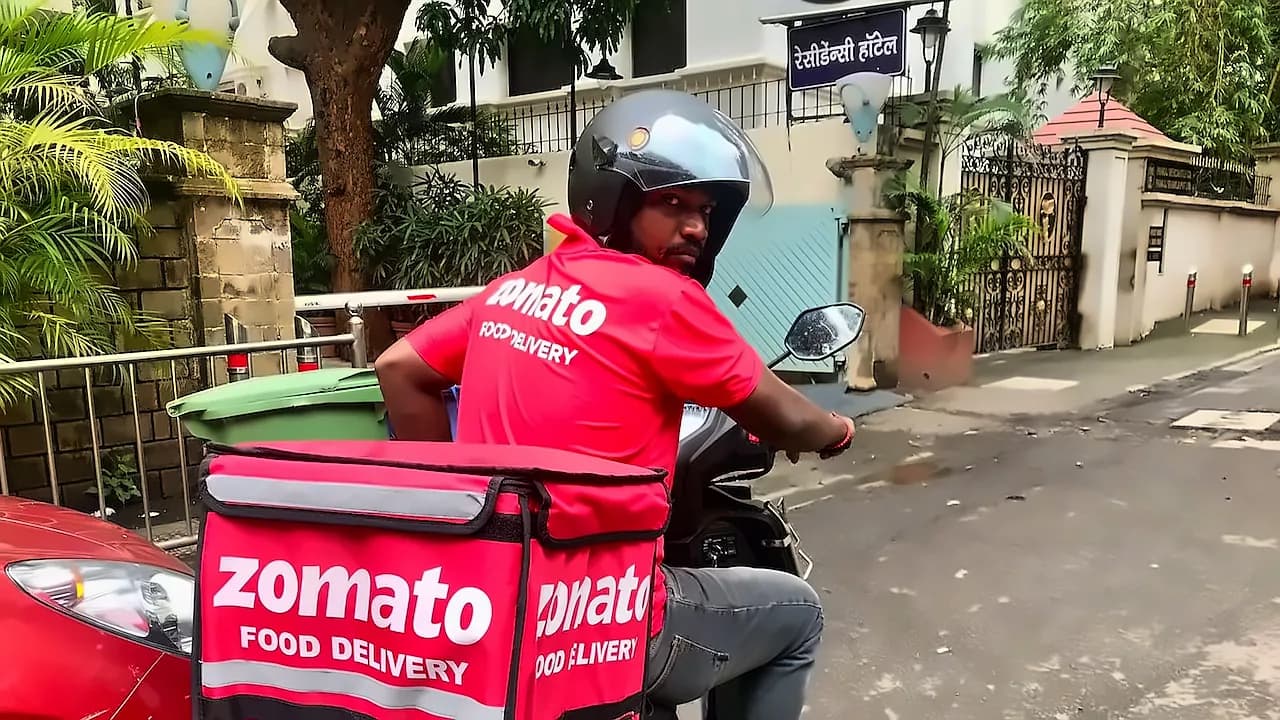
The government has formally recognised specialised designations such as Drone Technology Pesticide Sprayers under the 'Highly Skilled' category, securing premium wages for future professions. According to Zee News, Joint Secretary Ashutosh Pednekar announced that almost one crore workers are currently employed in the gig economy with potential to reach 2.5 crores by the end of this decade. The GO formally extends minimum wage protection to eCommerce, Courier Services, and LPG Distribution, while eliminating the legal loopholes of subcontracting by stating that if a third-party agency fails to deliver wages, the principal employer is directly liable under law to ensure immediate payroll settlement. The government has received approval to operationalise the National Social Security Board for Gig and Platform Workers and is establishing a Social Security Fund to finance welfare schemes.
A major component of the government's strategy involves integrating aggregator databases with the e-Shram portal to enable seamless access to welfare benefits. As reported by Zee News, Labour Ministry officials have set a June 22 deadline for platform companies to complete integration with the e-Shram portal, stating the government is working under very, very tight deadlines to implement the system. The integrated system will allow real-time tracking of benefits availed by workers and enable workers to digitally access details of their entitlements through an app-based system. Pednekar drew comparisons with India's digital public infrastructure, stating that e-Shram has the potential to transform benefit delivery and improve portability of welfare schemes for workers across platforms.
The GO offers significant strategic advantages to corporate management and industry by eliminating hundreds of complex, industry-specific schedules and providing a single compliance matrix. This drastically lowers legal processing overhead and corporate tracking costs. The clear distinction between Municipal Corporations (Zone-I), Municipalities (Zone-II), and Rural Areas (Zone-III) allows large-scale industrial developers to set up labour-intensive projects such as textiles, manufacturing in lower-overhead rural zones while managing corporate setups in urban centres. The order positioned Telangana far ahead of regional competitors such as Karnataka or Maharashtra through several pioneering features, while other states struggle to map digital logistics, Telangana has formalised gig and platform protection by explicitly extending the minimum wage net to eCommerce, Courier Services, and LPG Distribution.