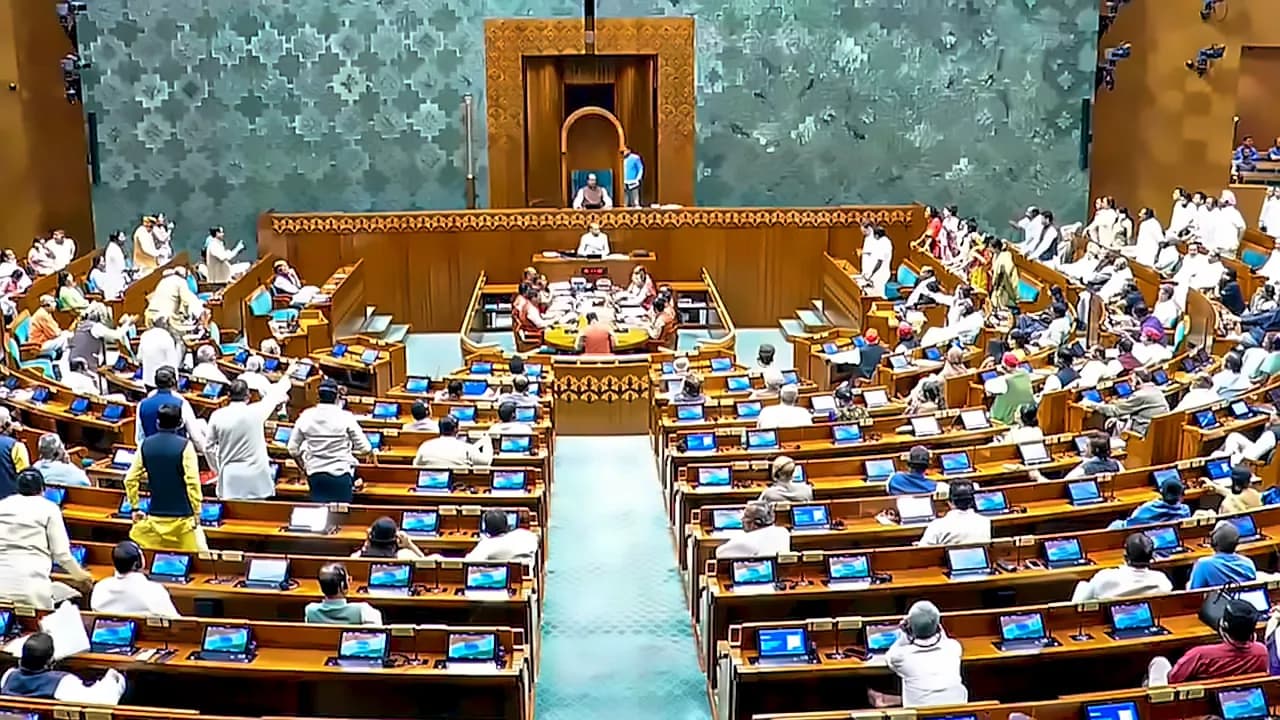
The Mines and Minerals (Development and Regulation) Amendment Bill, 2026 has completed its parliamentary approval process, with the Lok Sabha passing the Bill on Wednesday (August 12, 2026) and the Rajya Sabha clearing it on Thursday (August 13, 2026). As per The Times of India, the Bill will become law after receiving the President's assent. Jharkhand Chief Minister Hemant Soren has strongly opposed the legislation, calling it a 'black Bill' and an injustice to the people of Jharkhand. In a statement on X, Soren warned of a massive agitation against the Centre's move, stating that 'Minerals belong to Jharkhand, land belongs to Jharkhand; so why should Delhi decide on our rights and entitlements?' He termed it a 'severe blow to their development and future' and asserted that 'In haste, the central government passed the Mines and Minerals (Development and Regulation) Amendment Bill, 2026 in both the Lok Sabha and Rajya Sabha, effectively tying Jharkhand's hands and feet'. Odisha Chief Minister Naveen Patnaik has now joined the opposition, urging Chief Minister Mohan Charan Majhi to take immediate steps to protect the state's fiscal autonomy and rights over its mineral resources. Patnaik termed the amendment a 'serious threat to Odisha's financial interests and constitutional rights over its natural resources' and warned that its provisions could disproportionately affect mineral-rich states such as Odisha and result in significant revenue losses.
Jharkhand Chief Minister Hemant Soren has written to Prime Minister Narendra Modi seeking reconsideration of the Mines and Minerals (Development and Regulation) Amendment Bill, 2026, highlighting significant financial implications for the state. According to the State Economic Survey for 2025-26, mining revenue accounted for 84.9 per cent of the state's own non-tax revenue in 2024-25. The state's Mineral Bearing Land Cess, enacted in 2024, was expected to generate around ₹7,110 crore annually. The cess has demonstrated strong growth trajectory, generating approximately ₹1,379 crore in 2024-25, ₹7,488 crore in 2025-26, and projected to generate approximately ₹13,215 crore in 2026-27 based on present trends. Jharkhand holds about 40% of the country's total minerals, making the state particularly vulnerable to the proposed restrictions. Odisha's mineral revenues are crucial to its development, contributing to expenditure on healthcare, education, social welfare and infrastructure. Patnaik stressed that depriving the state of its ability to impose taxes and cesses on mineral-bearing lands would weaken its revenue base and undermine the principle of fiscal federalism. Officials said the state government projected revenue of ₹14,656 crore from the Mineral Bearing Land Cess in the 2026-27 budget, with around ₹9,000 crore designated to fund its flagship Mukhyamantri Maiyan Samman Yojana (MMSY).
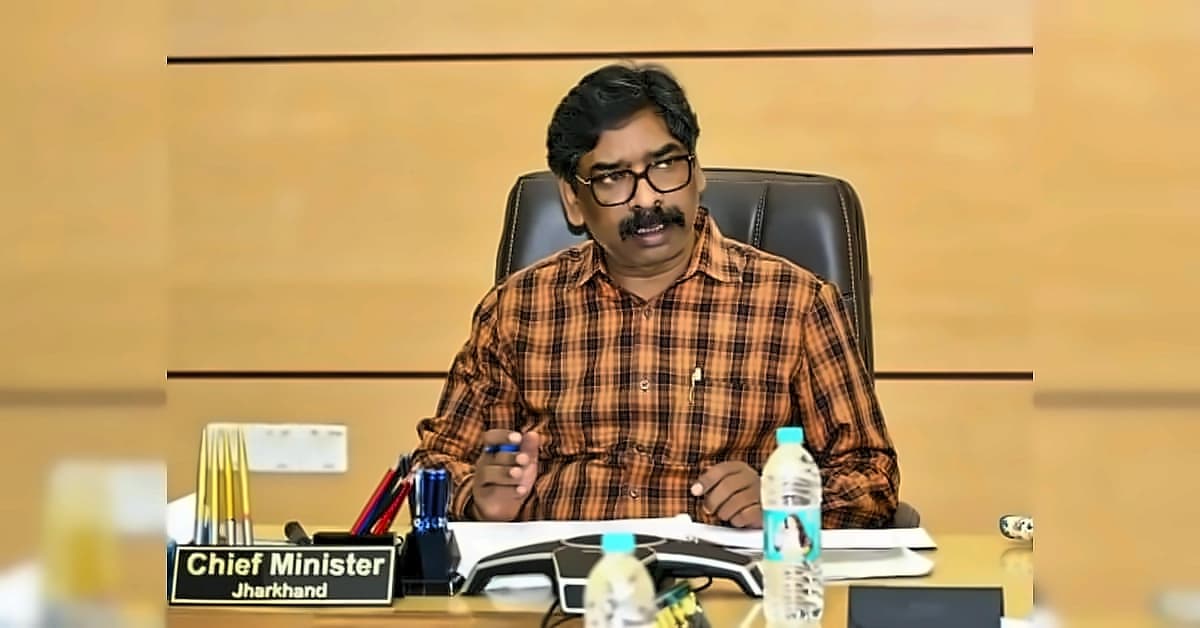
At the centre of Jharkhand's objection is the proposed Section 9D of the MMDR Act, which restricts state governments from imposing taxes, cess or other levies on mineral rights and mineral-bearing lands except under conditions prescribed by the Centre. As reported by Business Standard, Soren argued that this provision goes beyond Parliament's power to regulate mineral rights and affects the states' independent power to tax land. He referred to the Supreme Court's 2024 judgment in Mineral Area Development Authority versus Steel Authority of India, where a nine-judge Constitution Bench recognised the states' power to tax mineral rights and mineral-bearing lands. The CM emphasized that the distinction between Entry 49 of the State List (taxes on lands and buildings) and Entry 50 (taxes on mineral rights) is foundational, arguing that restrictions should be limited to mineral rights under Entry 50 rather than mineral-bearing lands. Congress legislature party leader Pradeep Yadav stated that the amendment was a 'direct attack on state rights' and that the Centre was attempting to 'undermine the constitutional and financial rights of states, thereby depriving them of their legitimate dues'. Patnaik specifically flagged the amendment to Section 2, which expands the scope of Union control to include 'mineral-bearing lands' along with the regulation of mines, raising concerns over the state's jurisdiction over its land and natural resources. He also objected to the amendment to Section 13, which gives the Centre exclusive authority to frame rules restricting the states' power to levy taxes on minerals.
The amendment's constitutional validity faces significant scrutiny, particularly regarding its impact on Entry 49 taxation powers. As reported by Business Standard, Akash Lamba, counsel at SKV Law Offices, stated that 'Redefining such land by prescribed parameters and folding it into the Union's Entry 54 declaration does not create competence that the Constitution withholds'. The Supreme Court's July 25, 2024, judgment in Mineral Area Development Authority v Steel Authority of India had established that states have legislative competence to tax mineral rights under Entry 50, with the Court finding that the MMDR Act as it then stood 'did not impose any limitation on this taxing power. It merely regulated royalty'. However, the Court recognised that Parliament could subsequently impose restrictions on state taxation of mineral rights. Ramanuj Kumar explained that 'The real constitutional question is whether this particular amendment amounts to a blanket prohibition rather than a reasonable limitation'. Shivanshu Thaplyal, partner at Khaitan & Co, noted that 'The amendment does not technically override the judgment because the Supreme Court itself recognised Parliament's power to impose limitations on state taxation of mineral rights'. The amendment also proposes retrospective financial consequences, with mineral levies not deposited before the new law coming into force treated as invalid, while amounts already recovered would not be refundable. This could extinguish outstanding liabilities arising from the Supreme Court's August 14, 2024, consequential order, which allowed recovery of state demands dating back to April 1, 2005, in instalments over 12 years from April 1, 2026.
Soren warned that the proposed restrictions will severely impact social security schemes for millions of people in Jharkhand. According to The Times of India, he stated that 'In Jharkhand, schemes providing social security to millions – such as the Maiya Samman Yojana, Abua Awas Yojana, pensions, education, health, and others – will be on the verge of closure'. The CM emphasized that these schemes are funded through mining revenues, making them particularly vulnerable to the proposed restrictions. Congress leader Pradeep Yadav warned that numerous welfare schemes benefiting the poor, women, farmers, and the needy were currently operational in Jharkhand and that schemes like the 'Maiyan Samman Yojana' could also face adverse effects. He added that the Centre's intent is 'to economically weaken states that do not align with its political ideology and to make them dependent on the Centre for their development and welfare schemes'. As per the latest reports, 'The Jharkhand Mukti Morcha strongly opposes this' and the state government reserves the right to take 'all appropriate constitutional and legal remedies available to it, including before the Hon'ble Supreme Court of India'. Soren warned that 'The consequences, Soren said, could extend beyond government finances, potentially causing public dissatisfaction and social tension in areas that have already borne the adverse consequences of mining'. Patnaik warned that if the Centre takes away the state's authority over mineral-bearing lands and its ability to levy cesses, Odisha could be left shouldering the pollution, displacement and other burdens associated with mining while losing a substantial part of the benefits accruing from its mineral wealth.
The Bill now awaits presidential assent before it becomes an Act, with Soren emphasizing that such revenues are critical for funding development programmes in mining-affected regions. As reported by Business Standard, Rahul Chouhan, partner, CMS INDUSLAW, stated that 'The Bill is therefore expected to invite close judicial scrutiny if enacted' and that 'The constitutional battle, therefore, may ultimately turn on two questions: whether Parliament has merely imposed a permissible limitation on Entry 50, and whether it has impermissibly intruded into Entry 49, where the Supreme Court found no such parliamentary limitation exists'. According to Business Standard, Patnaik demanded that an all-party meeting be convened immediately to build a unified political consensus on protecting Odisha's federal rights and mineral revenues. He also urged Majhi to summon a special session of the Odisha Legislative Assembly and secure passage of a unanimous resolution opposing the amendment and protesting what he described as the Union government's encroachment on state powers. Patnaik's letter specifically demanded that an all-party meeting be convened immediately to build a unified political consensus on protecting Odisha's federal rights and mineral revenues. Congress leader Pradeep Yadav called upon the Centre to 'immediately reconsider this decision and withdraw the amendment Bill' and stated that the Congress would fight vigorously in Jharkhand to protect the state's rights. The CM's strong opposition reflects the state's determination to protect its mineral wealth and fiscal autonomy in the face of what he describes as 'Central government's haste' in passing the legislation.