The 57th GST Council meeting, originally scheduled for September 12, has been postponed due to a scheduling conflict with the BRICS Leaders' Summit in New Delhi on September 12-13. According to reliable sources, the next GST Council meeting is likely to be held on October 7, though the final date has not been formally notified. The venue is expected to remain New Delhi for the rescheduled meeting. The change in date is being considered given the logistical challenges in having the GST Council meeting during the BRICS Leaders' Summit on September 12 and 13 with dignitaries expected to reach Delhi on September 11 and leave on September 14. An official notification confirming the new date is awaited, with the new GST Council meeting date expected to be confirmed after consultations with states.
As central and state governments prepare for the October 7 GST Council meeting, industry bodies have stepped up their demand for a system that allows more seamless use of tax credits across states. According to four persons familiar with the development, businesses are seeking the ability to set off the tax liability of their unit in one state with the unused tax credit available with its arm other states. Under GST, companies have to take separate registrations in all the states they operate in and therefore may end up with some unused tax credits in some states. Each registration is treated separately for the purpose of maintaining and utilising input tax credit (ITC), which refers to the credit businesses receive for GST paid on goods and services used for business purposes. For instance, a company may have ₹10 lakh in unutilised input tax credit under its GST registration in one state but may be required to pay GST in cash for a project undertaken in another state. Under the current framework, the credit accumulated under one state registration cannot ordinarily be used to meet the tax liability of another registration of the same company.
The 18th BRICS Leaders' Summit is scheduled to be held from September 11 to 13 at Bharat Mandapam in New Delhi, with the summit expected to be attended by leaders from around 30 BRICS member and partner countries, heads of international organisations and business representatives from BRICS nations. The BRICS grouping, which originally comprised Brazil, Russia, India, China and South Africa, expanded in 2024 with the inclusion of Egypt, Ethiopia, Iran and the UAE, with Indonesia joining in 2025. The New Delhi Municipal Council has implemented an extensive civic management plan for the summit period, including a round-the-clock Integrated Command and Control Centre at Palika Kendra functioning from September 5 to 14.
Industry representatives have sought greater flexibility in the utilisation of tax credits, with experts suggesting the government could initially consider allowing the cross-state utilisation of Central Goods and Services Tax (CGST) and Integrated Goods and Services Tax (IGST) credits while keeping State Goods and Services Tax (SGST) outside such an arrangement. Abhishek Jain, Indirect Tax Head and Partner at KPMG, said interstate utilisation of input tax credit could be a "natural next step" for CGST and IGST, which are central levies. He added that allowing CGST and IGST credits to be pooled across states could release working capital currently locked in different state registrations. Vivek Jalan, Partner at Tax Connect Advisory Services, highlighted that the facility to transfer ITC across state registrations has been a long-standing demand of GST taxpayers, particularly in sectors such as works contracts. He noted that allowing such accumulated credit to be transferred to another state registration where a project is ongoing would enable contractors to utilise their legitimate credits more effectively, with even a phased approach allowing the transfer of the CGST component alone potentially unlocking nearly 50% of stranded ITC.
The 57th GST Council meeting is expected to focus on several unresolved matters under the GST regime, with the upcoming session likely to take up pending questions around input tax credit (ITC), accumulated credits under the inverted duty structure, refunds and compliance. Among the matters expected to be discussed are proposals to relax restrictions on certain ITC claims and measures to address accumulated credits arising from the inverted duty structure. The Council may also examine the issue of credits accumulating under the inverted duty structure and consider refunds and GST compliance as part of the agenda. These discussions will provide the Council with an opportunity to take up pending GST-related matters following the implementation of the revised tax structure.
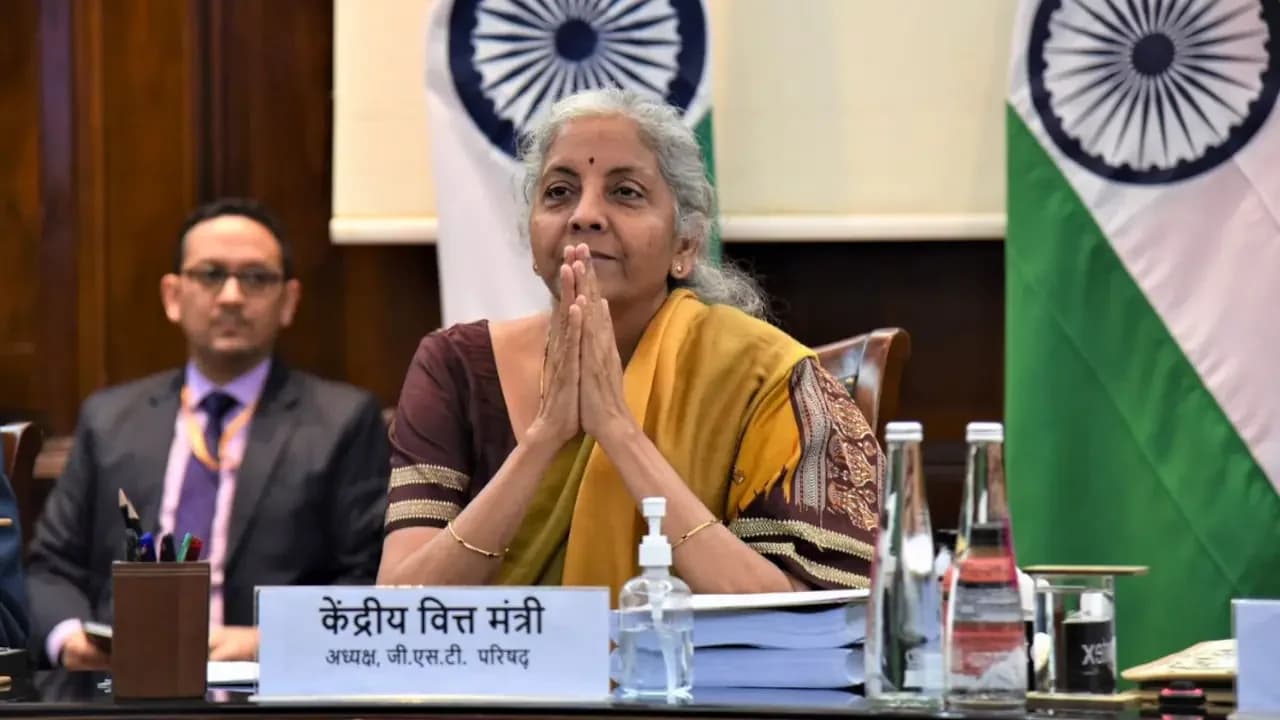
The GST Council serves as the apex constitutional body dealing with key aspects of the GST regime, including tax rates, exemptions and other related matters. This would be the 57th meeting of the Council, which would be taking place after a year's time - the last meeting was on September 3, 2025 when it had proposals for rate rationalisation and revamp of procedural norms as part of GST 2.0. The 57th meeting is expected to be closely watched for discussions on pending GST issues, including rate rationalisation. An official notification confirming the fresh date is awaited, with the new GST Council meeting date expected to be confirmed after consultations with states. This marks the first GST Council meeting since the rationalization of GST slabs from four to three in September 2025 as part of the far-reaching GST 2.0 reforms, with most goods and services moved to two main tax slabs of 5% and 18% and the new rates coming into effect on September 22, 2025.