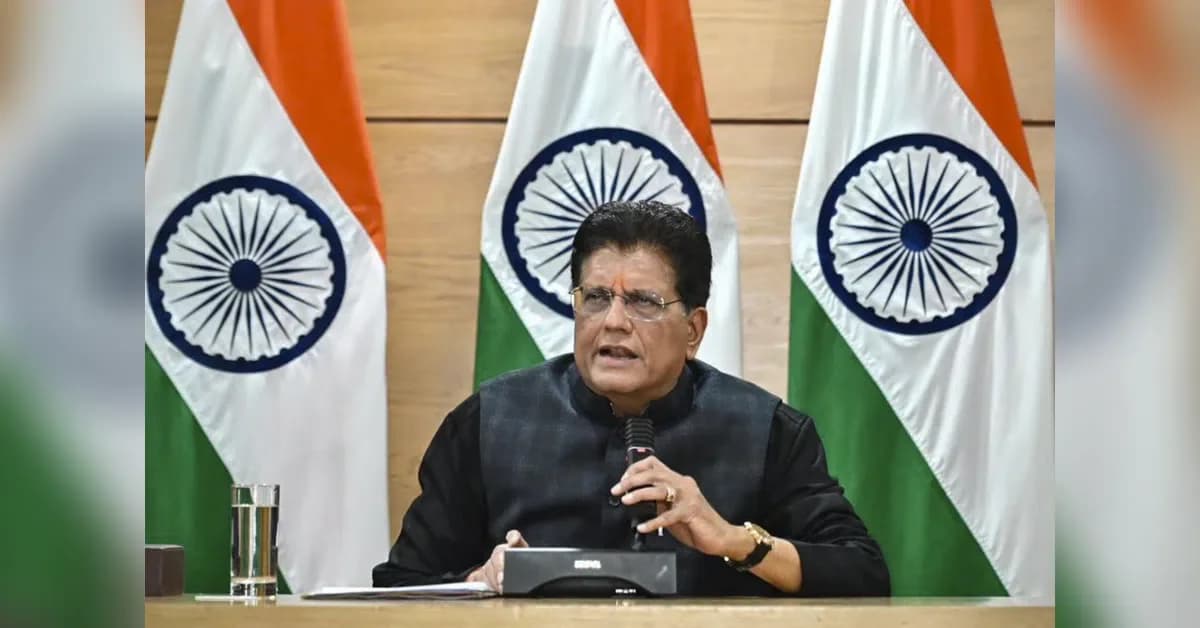
Commerce and industry minister Piyush Goyal announced on Wednesday that the government is actively considering several new measures to contain the widening current account deficit. According to reports from The Times of India, Goyal stated that various arms of government are working as a team to address the challenging situation. The minister expressed confidence that India will emerge as a winner despite the difficult global environment, noting that the government has no further plans to curb non-essential imports. Goyal emphasized that citizens have responded positively to public appeals for conscious consumption, with every Indian who trusts Prime Minister Modi taking cognizance of the government's requests.
The government has implemented significant import duty increases to address specific commodity concerns. As reported by The Times of India, gold import duty has been raised from 6% to 15% following a 24% increase in gold imports to $72 billion during the last financial year, despite volumes falling 4.8% to 721 tonnes. Additionally, silver imports soared 150% to $12 billion with volumes rising 42% to 7,335 tonnes, prompting similar policy responses. According to ICRA, while the hike in customs duty on gold and silver may provide some respite, merchandise deficit prints are expected to remain elevated in the near term, which is set to weigh on the CAD.
Prime Minister Narendra Modi has urged citizens to adopt more conscious consumption patterns regarding import-dependent products. According to reports from The Times of India, the PM specifically requested citizens to defer gold purchases for a year, conserve fuel, cut edible oil use and postpone overseas travel – all of which require foreign exchange. While maintaining that the government has no plans to cut non-essential imports, these public appeals reflect the broader strategy to reduce import dependency and manage the current account deficit. The government is also considering steps to boost capital inflows like a significant reduction in taxes paid by foreign investors on Indian bonds, potentially reducing withholding tax on interest income of overseas bond investors to 5% from 20%.
Chief Economic Adviser V. Anantha Nageswaran has warned that India's CAD could more than double to 2% or higher of GDP in FY27 from below 1% in FY26, as reported by The Times of India. This projection factors in the prospect of increased oil trade deficit and likely pressure on remittances from West Asia. ICRA projects the CAD to widen to a little over 2% of GDP in Q1FY27, following the expected seasonal narrowing in Q4 FY26, with FY27 CAD expected at ~2% of GDP assuming an average crude oil price of $95/bbl. The immediate worry is FPIs have taken out ₹2.2 lakh crore since the war began, with the rupee depreciating about 7% so far in 2026 and down roughly 6.1% since the war outbreak.