The Jal Shakti Ministry has amended the River Ganga Authorities Order, 2016 through a notification issued on August 7 and published in the Gazette on August 10. According to reports from The Hindu, the latest amendment removes the 'construction-free zone' wording and instead mandates that banks of the Ganga and its tributaries shall be maintained to reduce pollution sources and preserve natural groundwater recharge functions through necessary measures. A senior government official told The Hindu that the amendments did not represent any "dilution of standards," but rather, attempted to correct an inconsistency in the law. The River Ganga (Rejuvenation, Protection and Management) Authorities (Second Amendment) Order, 2026 came into force on the date of its publication in the official Gazette, with the principal order notified on October 7, 2016, and last amended on May 7, 2026, according to the latest notification. The National Mission for Clean Ganga (NMCG) issued a gazette order on August 10 formalizing these changes, as reported by The Hindu.
The government has introduced a specific definition of 'active floodplain' as an area of the Ganga or its tributaries coming under water due to floods corresponding to a one-in-five-year return period. As reported by The Hindu, the amended definition includes the 'active floodplain' - immediately along the channel that submerges at least once every five years, a 'regulatory zone' covering areas inundated between one-in-five-year and one-in-25-year floods, and a 'warning zone' covering areas inundated between one-in-25-year and one-in-100-year floods. The notification defines the Ganga 'flood plain' as "the area of the river or its tributaries which comes under water on either side of it due to floods corresponding to its greatest flow or with a flood of frequency once-in-a-hundred years." The earlier 2016 order had defined the floodplain as areas on either side of the river and its tributaries that come under water during floods corresponding to their greatest flow or a flood with a frequency of once in 100 years. The amended definition also includes areas of the Ganga or its tributaries that come under water on either side due to floods corresponding to their greatest flow or a flood with a frequency of once in 100 years.
Under the 2016 order, construction of permanent or temporary structures for residential, commercial, industrial or other purposes was prohibited in the Ganga, its banks, its tributaries and the active floodplain, subject to specified exceptions and permissions. According to The Hindu, the 2026 amendment replaces the total ban on flood plain construction with a regulated, approval-based system. Strict building prohibitions are now confined exclusively to the 'active flood plain', with minor exceptions reserved for temporary setups like religious events. Beyond the five-year flood line, construction in the 'regulatory' and 'warning zones is now permissible', subject to official clearances from the National Mission for Clean Ganga (NMCG) and regional authorities. Any project, from roads and bridges to riverfront infrastructure, must still secure prior approval while adhering to baseline environmental safeguards. The amended order does not separately specify whether construction will be permitted or prohibited in the newly defined regulatory and warning zones.
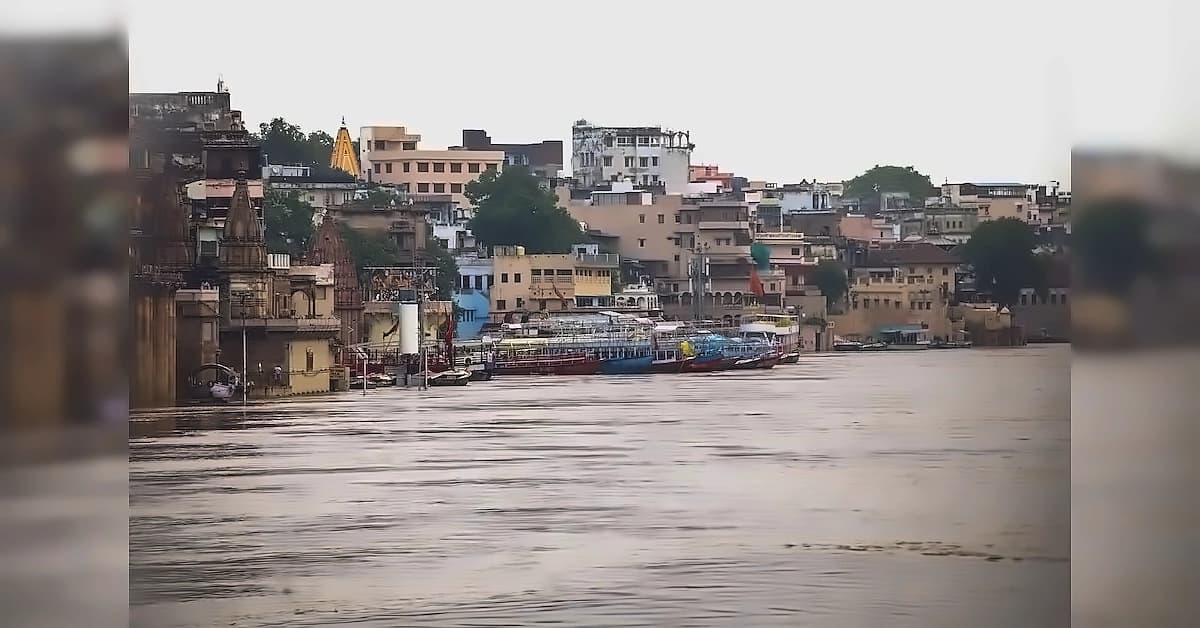
The River Ganga (Rejuvenation, Protection and Management) Authorities (Second Amendment) Order, 2026 came into force on the date of its publication in the official Gazette. As reported by The Hindu, the ₹30,000 crore Namami Ganga mission, part of the NDA government's ambitious venture to stem pollution in the Ganga river and maintain its ecological health, sources its legal teeth from the River Ganga Authorities Order, 2016. A senior government official explained that the 2016 order had used the term 'active' floodplain without defining it, creating an inconsistency. The Central Water Commission released Technical Guidelines for Flood Plain Zoning in July 2025, which mandates prohibition of construction in active flood plain zones while regulating land use in regulatory zones. This provides minimum standards for states to formulate policies while protecting rivers. The gazette order of August 10 from the NMCG formalizes these changes, as reported by The Hindu. The amendments address recent petitions before the National Green Tribunal (NGT) against construction along the Ganga and its tributaries, where litigants have cited the blanket construction-free zone mandate in the 2016 order.