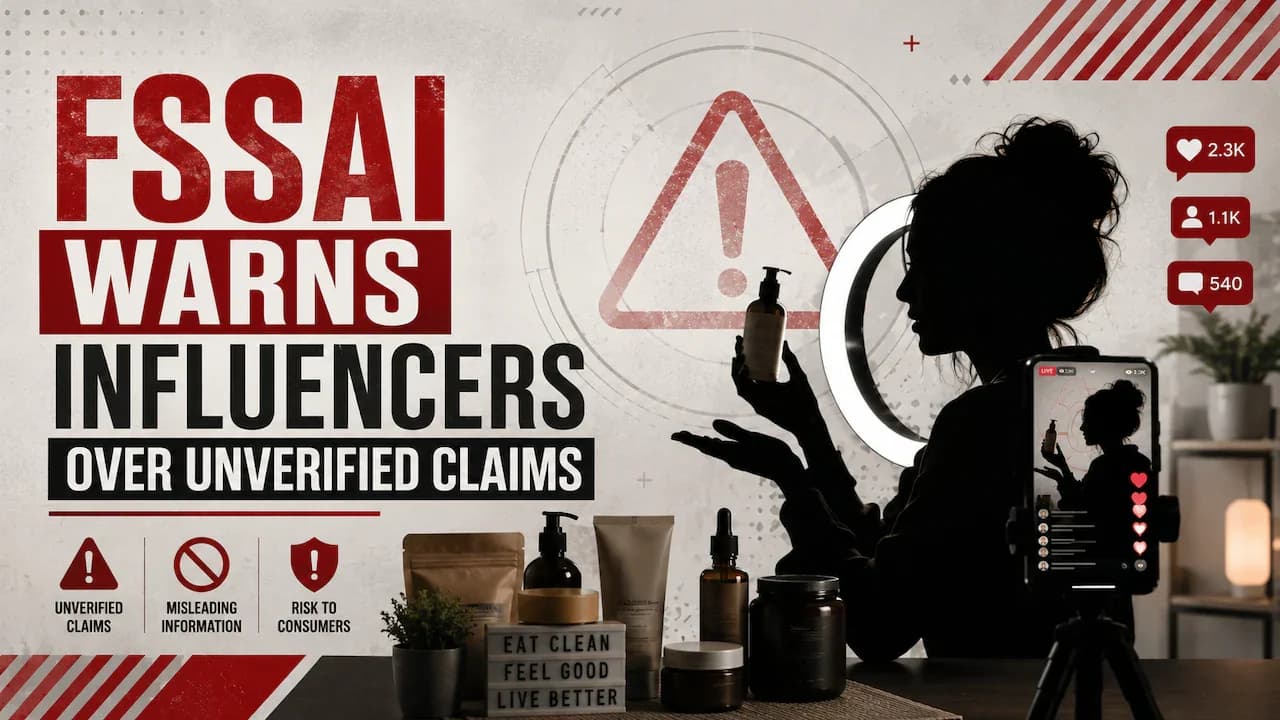
The Food Safety and Standards Authority of India (FSSAI) has issued a stern warning to celebrities and social media influencers against endorsing unverified food claims, emphasizing the need for truthful, scientifically backed promotions to avoid legal consequences. According to reports from FSSAI, the warning comes as the regulator steps up action against manufacturers selling unsafe food products. The advisory was communicated through a social media post stating, 'With great influence comes great responsibility! Before endorsing a food product, ensure that claims are truthful, verifiable & compliant with the law. Promoting misleading or unverified food claims can attract legal consequences. Verify before you amplify.'
The advisory comes at a time when food brands are increasingly relying on digital creators and celebrities to market health drinks, protein supplements, snacks and packaged foods to millions of consumers online. As reported by FSSAI, the regulator has asked influencers and celebrities to ensure that claims made by brands are truthful, scientifically substantiated and compliant with food safety regulations before lending their name or credibility to a product. The warning specifically cautions influencers against amplifying claims such as 'boosts immunity' or 'rich in nutrients' unless such statements are backed by scientific evidence and permitted under food laws. According to FSSAI, endorsements go beyond conventional advertisements because consumers often place considerable trust in the individuals promoting products.
Recent data from the Advertising Standards Council of India (ASCI) reveals a concerning trend in influencer marketing compliance. According to Business Standard's Datanomics report, ads that were non-compliant or required modifications jumped from 93 per cent in 2021-22 to 98 per cent in 2025-26 even as the sample size rose. During this period, ASCI processed 37,532 cases of ad violations, of which 21.12 per cent involved influencer violations. Influencers recorded the most violations in illegal betting, personal care, and consumer durables sectors. Meanwhile, high-profile celebrity influencers most frequently failed to provide mandatory disclosures across fashion, telecom, and personal care promotions. Meta led among digital platforms that saw the most ads violating norms.
FSSAI has recently taken decisive action against companies making misleading claims, issuing a prohibition order to Dabur India Ltd over the sales of food products carrying misleading '100%' claims. According to the food safety regulator, the use of the 100% claims is in contravention of the FSS (Advertising & Claims) Regulations, 2018, as they are ambiguous, unverifiable and likely to mislead consumers. The prohibited products include honey, apple cider vinegar, virgin coconut oil, sesame oil, cow ghee, coconut water, coconut milk and other such items. Misleading food advertisements and endorsements can attract action under the Food Safety and Standards Act, 2006, and the Food Safety and Standards (Advertising and Claims) Regulations, 2018.