India's Ambassador to the US Vinay Mohan Kwatra has defended the Foreign Contribution (Regulation) Act amendments as a sovereign step driven by national security concerns, citing similar laws enacted by other democracies. In a series of posts on X, Kwatra stated that regulating foreign financial flows in public and political spaces is a sovereign step driven by national security concerns and cited similar laws enacted by the US for this purpose. He highlighted that the US has had FARA (Foreign Agents Registration Act) since 1938 and FATCA (Foreign Account Tax Compliance Act) since 2010, while Australia legislated in 2018, Canada in 2024, and the UK's scheme came into force in July 2025. According to Kwatra, the EU is legislating now, demonstrating this approach is an accepted feature of modern governance in many democracies around the world. India's FCRA framework has existed since 1976, was overhauled in 2010, and strengthened through amendments in 2016, 2018 and 2020, with the proposed 2026 Bill being a continuation aimed at improving transparency, governance and regulatory clarity.
The Foreign Contribution (Regulation) Amendment Bill, 2026 has become one of the most contentious issues in Parliament's Monsoon Session. According to reports from Business Standard, the Bill, first introduced in the Lok Sabha on March 25, was scheduled for discussion on Wednesday but the government put it on hold on Tuesday after protests from opposition parties and certain civil society groups. Union Home Minister Amit Shah is expected to reply to the debate, marking his first major intervention amid the current parliamentary stalemate. The controversy has drawn international attention, with US Congressman Riley Moore alleging that the proposed amendments could allow the Indian government to take over churches and religious charities, warning that the move could affect India-US bilateral relations.
As reported by Business Standard, the Foreign Contribution (Regulation) Act, 2010 regulates foreign contributions to NGOs, trusts, societies, educational institutions, religious organisations and other entities. According to the Statement of Objects and Reasons attached to the Amendment Bill, India had 14,449 active FCRA registrations as of July 15, 2026. However, India has over three million NGOs, and only a bare fraction of these, 14,450, hold FCRA registration, as noted by Ambassador Kwatra. Since the FCRA came into force, 22,498 registrations have been cancelled, while another 15,212 have expired. Between 2019 and 2022, organisations registered under the FCRA received foreign contributions worth ₹55,741 crore. The Ambassador emphasized that tens of thousands of associations are registered under FCRA and routinely receive foreign funds for health, education, disaster relief, research and humanitarian work. Of India's more than three million NGOs, only 14,450 hold FCRA registration, meaning the 'overwhelming majority' of civil society organisations fall entirely outside the Act's ambit.
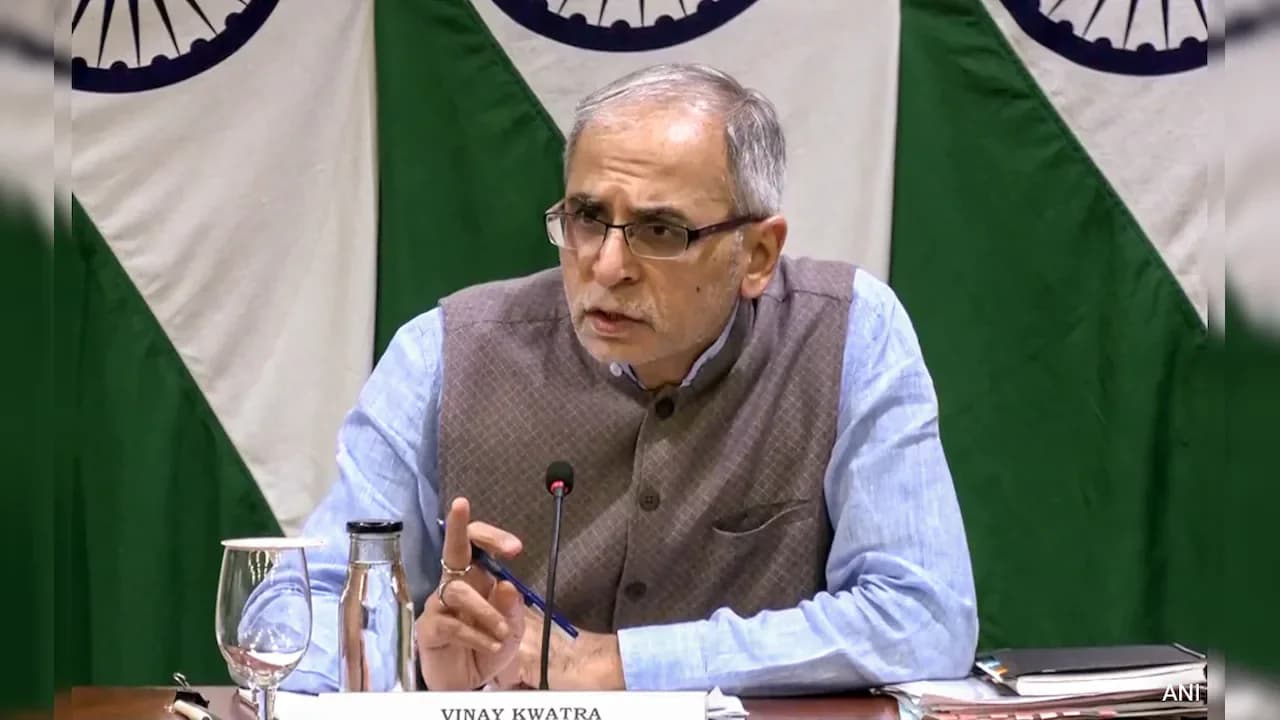
According to Business Standard, the Bill proposes significant changes to foreign contribution regulation. The government has stated that the proposed amendments are intended to tighten regulations governing foreign-funded NGOs and ensure greater transparency. The Bill proposes reducing maximum imprisonment for certain FCRA violations from five years to one year and introduces a minimum utilisation threshold of ₹10 lakh for FCRA registration renewal. One of the biggest changes is the creation of a government-appointed designated authority that would take over management of foreign contributions and assets when an organisation's registration is cancelled, surrendered, or lapses. As explained by Ambassador Kwatra, when a registration is cancelled or surrendered, foreign contributions and the assets created from them already vest in a State Government authority under a provision that has been in force since 2010. The 2026 Bill adds a designated authority to safeguard these assets and provides a mechanism for assets to be returned if the organisation restores its registration. Foreign money inflows into India had in fact been 'rising, not falling,' citing growth in contributions to registered organisations from roughly $1.2 billion in 2010-11 to $2.67 billion in 2024-25.
Addressing specific concerns about religious institutions, Ambassador Kwatra clarified that places of worship carry their own protection, where a cancelled association has created property connected to a place of worship, that property goes to another FCRA-registered association of the same faith to ensure continuity of worship. He dismissed suggestions that the new law aimed at cutting off foreign aid to civil society, stating that nothing could be farther from it - the Act applies uniformly to all organisations regardless of religion, community or ideology. According to Kwatra, faith-based welfare activities, including religious education, maintenance of places of worship, and charitable work by organisations of every faith, continue to be eligible for foreign funding. The Ambassador also dismissed apprehensions that the new law targeted a particular community, emphasizing that the overwhelming majority of civil society organisations are entirely outside the Act. On suggestions that the law targeted a specific religion, Kwatra said the Act 'applies uniformly to all organisations regardless of religion, community or ideology'.