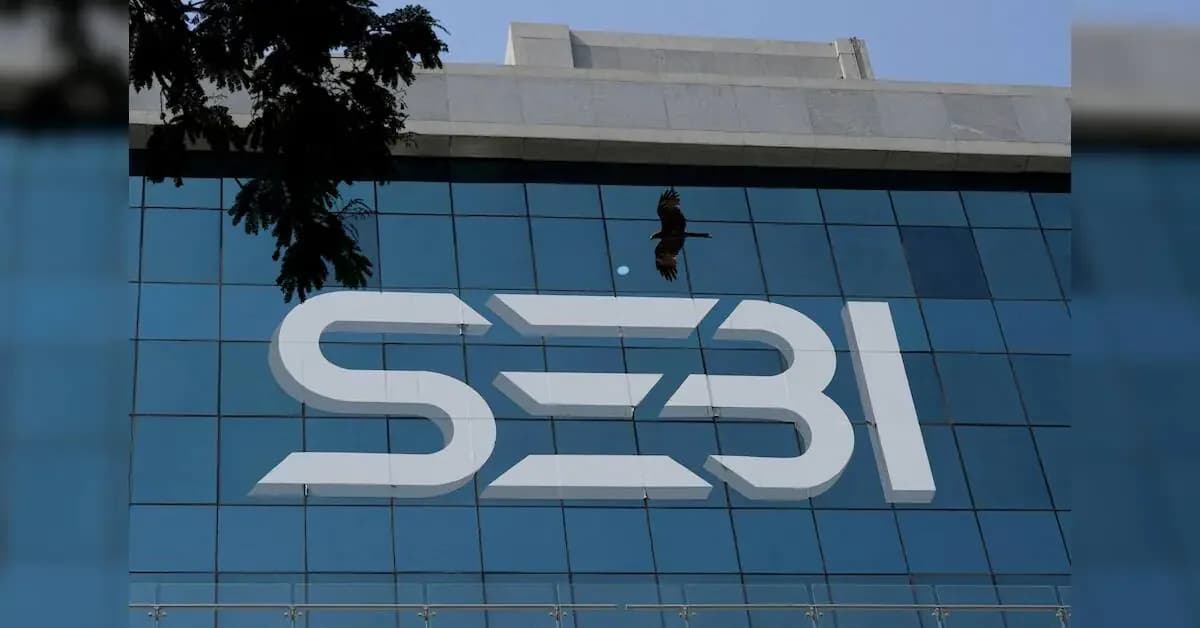
The Department for Promotion of Industry and Internal Trade (DPIIT) has issued a public notice barring unauthorized use of the Indian Patent Office logo and insignia. According to the DPIIT notice, no person, business entity, digital platform, trademark or patent agent, or legal practitioner can display, replicate, or use the official logo of the Indian Patent Office in any medium without prior approval from the Ministry of Commerce and Industry. The logo serves as an official government identifier representing the statutory authority under DPIIT, Ministry of Commerce and Industry. As reported by the Office of the Controller General of Patents, Designs and Trade Marks (CGPDTM), various individuals, agencies, corporate bodies, online legal tech platforms, and unauthorised service providers are unlawfully utilising the official logo, emblem, and design of the Indian Patent Office on their websites, social media accounts, marketing collateral, stationery, and paid digital advertisements. The enforcement action comes after the CGPDTM became aware of widespread unauthorized usage across various platforms and media. The department has directed entities and individuals currently displaying the IPO logo or deceptively similar designs on their websites, promotional banners, visiting cards, portals or application interfaces to remove such material. The warning comes amid concerns over private entities using government identifiers in their promotional material in ways that could potentially make applicants believe that their services are officially authorised or endorsed by the government.
The unauthorized publication, reproduction, or display of the logo creates a false and misleading impression of official government endorsement, affiliation, or recognition, thereby defrauding stakeholders, applicants, and the general public. As reported by DPIIT, continued unauthorized use, misrepresentation, or imitation of the official IPO logo constitutes an offence under the Emblems and Names (Prevention of Improper Use) Act, 1950, the Trade Marks Act, 1999, the Copyright Act, 1957, and the Information Technology Act, 2000. The department warned that such non-compliance will attract immediate civil and criminal prosecution, administrative sanctions, and reporting to law enforcement authorities without further notice. All concerned stakeholders and the public are notified that "no person, business entity, digital platform, trademark/patent agent, or legal practitioner is permitted to display, replicate, adapt, or use the official IPO logo, trade dress, or DPIIT insignia in any medium (print, digital, social media, or sponsored search advertisements) without prior formal, written approval from the competent authority in the CGPDTM or DPIIT."
The Indian Patent Office (IPO) has issued draft guidelines for examination of pharmaceutical applications for patent to improve quality, consistency and uniformity of scrutiny. According to the draft guidelines dated September 4, the office aims to incorporate evolving court interpretations of patent laws to establish harmonious practices among technical officers. The guidelines address the critical importance of pharmaceutical patenting in India, noting that "a bad patent can become a burden to society; good patents are essential for promoting innovation and technological development in the country." The IPO emphasizes that pharmaceutical patenting is of utmost concern not only to Indians but also for the world community, as "India has emerged as the pharmacy of the world." The present guidelines are prepared with the objective that examiners and controllers will achieve consistently uniform standards of patent examination, particularly addressing issues related to novelty, obviousness, industrial applicability, sufficiency of disclosure and clarity in claims.
The IPO has also issued draft guidelines for examination of applications in the field of biotechnology to address serious concerns related to patenting of biotechnological inventions. According to the draft guidelines dated September 4, key issues include novelty, obviousness, industrial applicability, sufficiency of disclosure and clarity in claims. The guidelines also cover special issues such as moral and ethical concerns, environmental safety, patenting of ESTs (Expressed Sequence Tags) of partial gene sequences, cloning of farm animals, stem cells, and gene diagnostics. The IPO stated that "the patenting of inventions in the field of biotechnology poses challenges to the applicants for patents as well as to the Patent Office," making urgent guidelines necessary to establish uniform and consistent practices under the Patents Act, 1970 (as amended).
The CGPDTM has issued additional guidance to protect the public from unauthorized intellectual property services. The CGPDTM also advised the general public, startups and MSMEs to verify the credentials of entities offering intellectual property registration services and rely only on the official IPO portal, www.ipindia.gov.in, for statutory filings, updates and official communications. This advisory comes as part of the broader enforcement action to prevent misuse of the IPO logo and ensure that only authorized entities provide legitimate intellectual property services to the public. The Indian Patent Office also urged startups, MSMEs and members of the public to exercise caution while choosing entities offering intellectual property registration and related services, advising applicants to verify the credentials of service providers and rely only on the official Indian Patent Office portal for statutory filings, official updates and communications.