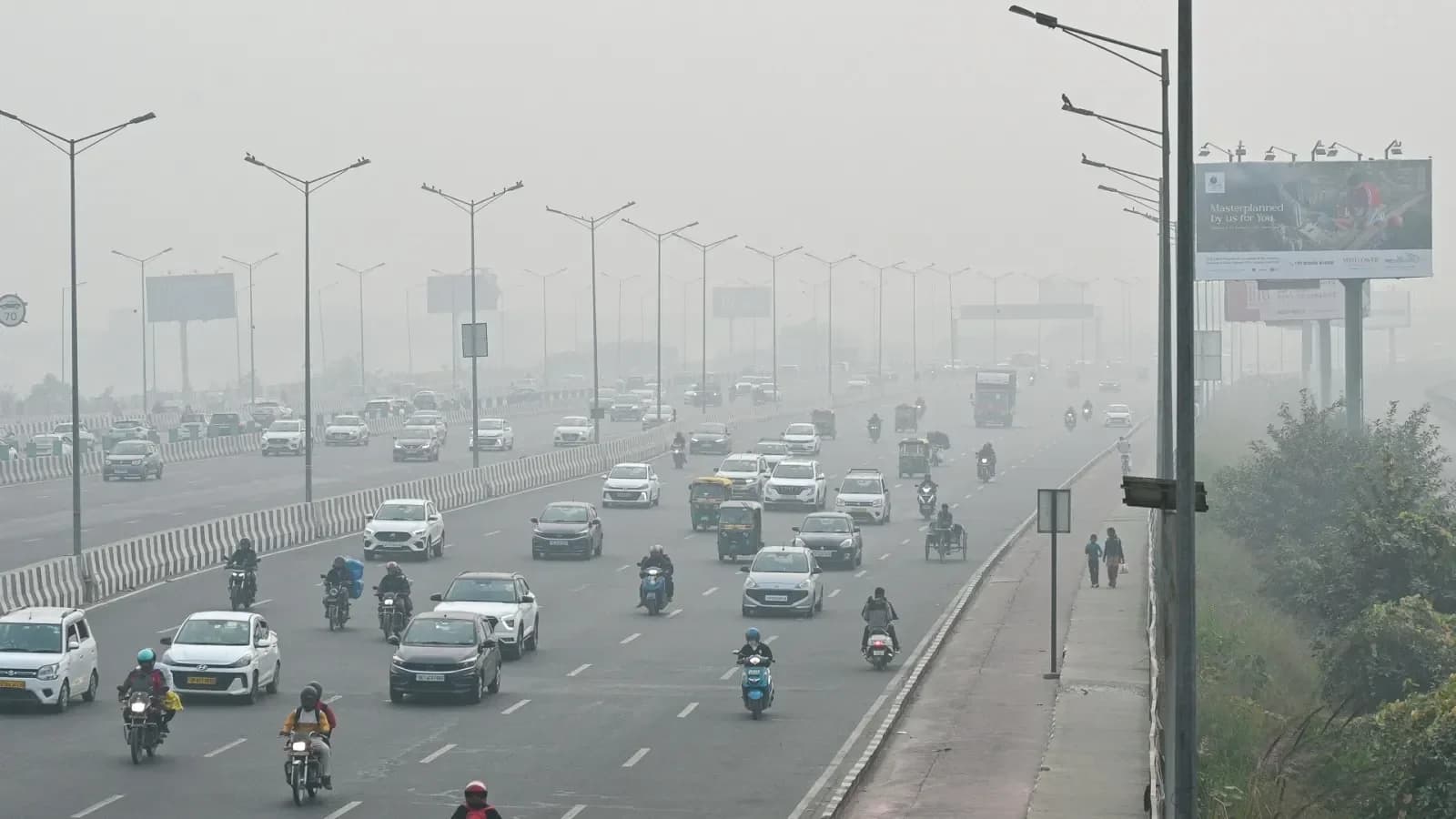
The Delhi government has officially unveiled its Proactive Winter Air Quality Management Framework months before the winter season begins, with the new measures taking effect from November 1, 2026, to February 28, 2027. Chief Minister Rekha Gupta announced that this framework represents a proactive approach to pollution management, moving away from the earlier practice of imposing emergency restrictions only after air quality had already worsened. The newly notified framework has been issued under the Environment (Protection) Act, 1986, and will function alongside the revised Graded Response Action Plan (GRAP) implemented by the Commission for Air Quality Management (CAQM). According to the Chief Minister, the objective is to ensure advance preparedness for the annual winter pollution season, when Delhi's air quality often plunges into the "very poor" and "severe" categories. As per the Chief Minister, the government has encouraged project operators, contractors and citizens to plan ahead for their activities so that additional pollution loads are not created during periods of high pollution.

Key measures under the new framework include mandatory Pollution Under Control Certificate (PUCC) verification for fuel purchases at all petrol stations across Delhi. Under the new rules, vehicle owners lacking a valid pollution certificate or those with an expired one will be denied fuel at any petrol pump in Delhi during this period. The government has also implemented strict restrictions on commercial vehicles registered outside the national capital, with non-BS-VI commercial vehicles from other states not allowed to enter Delhi between November 1, 2026, and January 31, 2027. These restrictions will not apply to CNG-powered commercial vehicles, electric vehicles, emergency vehicles, and vehicles engaged in official government work, with officials expecting the measure to significantly reduce pollution from older diesel-powered commercial vehicles entering the city. The framework includes additional restrictions on construction work between December 10 and January 20 as pollution levels are expected to remain particularly high during this period.
The framework introduces staggered office timings across government and private sectors as part of efforts to reduce traffic volume and improve commuting efficiency. According to the latest announcement, rules limiting office attendance to 50% of the workforce could be implemented in both government and private offices, with the remaining employees working from home. The government has also announced that parking fees at parking lots may be doubled from November 1, 2026, to February 28, 2027, to discourage excessive use of private vehicles and reduce traffic congestion during winter. Additionally, significant adjustments will be made to office opening and closing times to avoid traffic congestion during peak hours. The framework includes construction and demolition activity will face stricter dust-control norms during the period, with advance planning to manage pollution hotspots and greater accountability for project developers. The government may also impose restrictions on the movement of vehicles transporting construction materials to further control dust emissions.
The government plans to use drone surveillance and field inspections to monitor violations of the new measures, with authorities intensifying enforcement against other forms of open-air combustion that significantly worsen air quality during winter. Officials will also target open burning of garbage, leaves and other waste, with resident welfare associations, institutions and contractors required to prevent such activities. The framework includes enhanced monitoring of construction activities and stricter enforcement of dust-control norms, with large construction sites and commercial high-rises potentially required to install anti-smog guns and mist suppression systems. Environmental penalties and legal action may be taken against violators of the winter pollution restrictions. The Chief Minister called for active participation of citizens, institutions, commercial establishments and industries, emphasizing that air quality cannot be improved with the efforts of the government alone.
The Delhi government has announced that it is preparing to launch its new Electric Vehicle (EV) Policy 2.0, with the draft policy likely to be placed before the Cabinet for approval next week. According to government officials, the proposed policy aims to ensure that 95% of all new vehicle registrations are electric by 2027, with specific targets including CNG auto-rickshaws gradually transitioning to electric alternatives, taxis shifting towards electric mobility, light commercial vehicles adopting EV technology, and Delhi's public bus fleet becoming fully electric over time. The policy also proposes a 50% road tax exemption for hybrid vehicles priced up to ₹30 lakh, though discussions regarding incentives for hybrids are still ongoing. This marks a shift in the earlier strategy of previous governments, where they used to adopt corrective measures after the air quality started deteriorating.