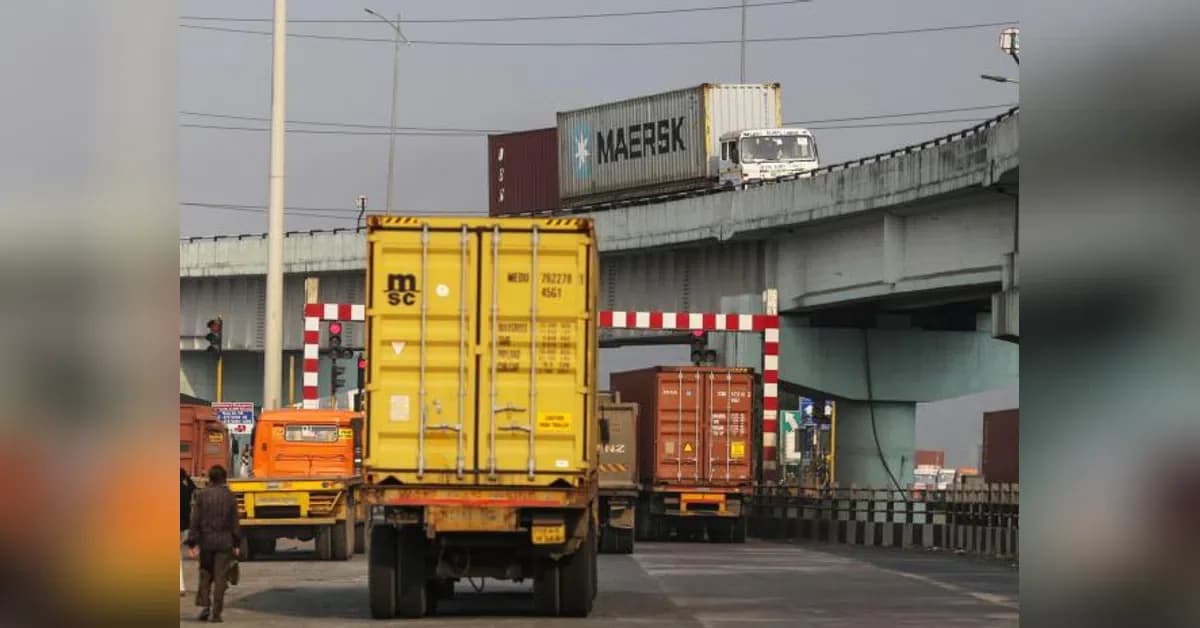
Transport unions in Delhi-NCR have escalated their protest to a three-day 'chakka jam' starting May 21, 2026, expanding from the previous three-day strike announced in April. According to reports from Business Standard, the All India Motor Transport Congress (AIMTC) called the protest, representing transporters and truck operators across the country. The latest action involves more than 68 transport associations and unions across Delhi-NCR, with AIMTC claiming to represent nearly 95 lakh truck drivers and 26 lakh private bus, taxi and maxi-cab operators across the country. The strike centers on the sharp hike in the Environment Compensation Charge (ECC) imposed on commercial vehicles entering Delhi-NCR, with transporters warning of broader financial strain on the industry. As per Business Standard, the protest comes amid growing tensions between transport operators and authorities over pollution-control measures in the National Capital Region.
The Delhi government recently revised the Environment Compensation Charge (ECC) rates following recommendations by the Commission for Air Quality Management (CAQM) and approval from the Supreme Court in March. As reported by Business Standard, the revised rates came into effect from April 2026. Under the new structure, light-duty commercial vehicles and two-axle trucks now pay ₹2,000 instead of ₹1,400, while three-axle trucks and heavier vehicles now pay ₹4,000 instead of ₹2,600. The transport unions claim this represents a hike of nearly 40 to 55 percent, with transporters arguing that the charges are now applied to essential goods vehicles and empty trucks, even though the Supreme Court's original intent was to regulate only transit vehicles using Delhi as a corridor. The government has also approved a 5% annual increase in the fee, further escalating costs for commercial operators.
Despite the broader strike action, essential goods vehicles will be exempted to prevent disruption in the supply of critical commodities, as reported by multiple sources. This exemption recognizes the vital role of commercial transport in maintaining essential supply chains during the protest period. The transport unions argue that transporters are dealing with increasing fuel prices, toll charges, insurance costs and maintenance expenses, while freight rates have not risen proportionately. They also claim that transport businesses operate on thin profit margins and that repeated levies are making operations unsustainable. The transport bodies have alleged that crores of rupees have been collected as ECC since 2015, but Delhi's air quality has not seen any major improvement, questioning the effectiveness of the charges.
Apart from seeking a rollback of the higher ECC, transporters have opposed the planned ban on the entry of non-Delhi registered BS-IV commercial goods vehicles from November 1, 2026. Under Delhi's Air Pollution Mitigation Action Plan 2026, only BS-VI (Bharat Stage VI emission norms), CNG and electric goods vehicles will be allowed to enter the capital from November. According to transport bodies, the proposed decision could impact the livelihoods of over 17 lakh truck operators and their families across Delhi-NCR. Truck unions have warned that suspending commercial vehicle operations may disrupt the supply of vegetables, groceries and other essential goods in parts of the region, with concerns about delays in logistics and delivery services. AIMTC has specifically objected to the levy being imposed on BS-6 vehicles, despite such vehicles being permitted during stricter pollution control measures under the Graded Response Action Plan (Grap) guidelines. The pollution watchdog has argued that the move is aimed at discouraging older vehicles from using Delhi as a transit corridor and diverting traffic to peripheral expressways.
Amid the escalating standoff, Union road transport and highways minister Nitin Gadkari said on Tuesday that he was hopeful of resolving the issue after discussions with Delhi chief minister Rekha Gupta. However, transport associations have warned that the current protest is symbolic, but if their concerns are not addressed in time, they may launch an indefinite transport shutdown across Delhi-NCR in the future, potentially affecting supply chains, markets and normal public life. The AIMTC has specifically warned that "the three-day strike call is symbolic, but in the absence of a timely resolution, the discontent and agitation among the transport fraternity may escalate into an indefinite suspension of transport operations in Delhi-NCR." The unions have submitted a formal representation to Delhi Lieutenant Governor Taranjit Singh Sandhu and Chief Minister Rekha Gupta on May 19, 2026, and have warned that the movement may intensify if fare revision and related demands are not addressed within one to two weeks. Delhi continues to battle severe air pollution, especially during winter months, and vehicular emissions remain one of the biggest contributors. The CAQM and the Supreme Court have argued that stricter charges and regulations are necessary to push transporters towards cleaner vehicles and alternative routes, while transport unions argue that environmental reforms should not come entirely at the cost of drivers and operators who are already under economic stress.