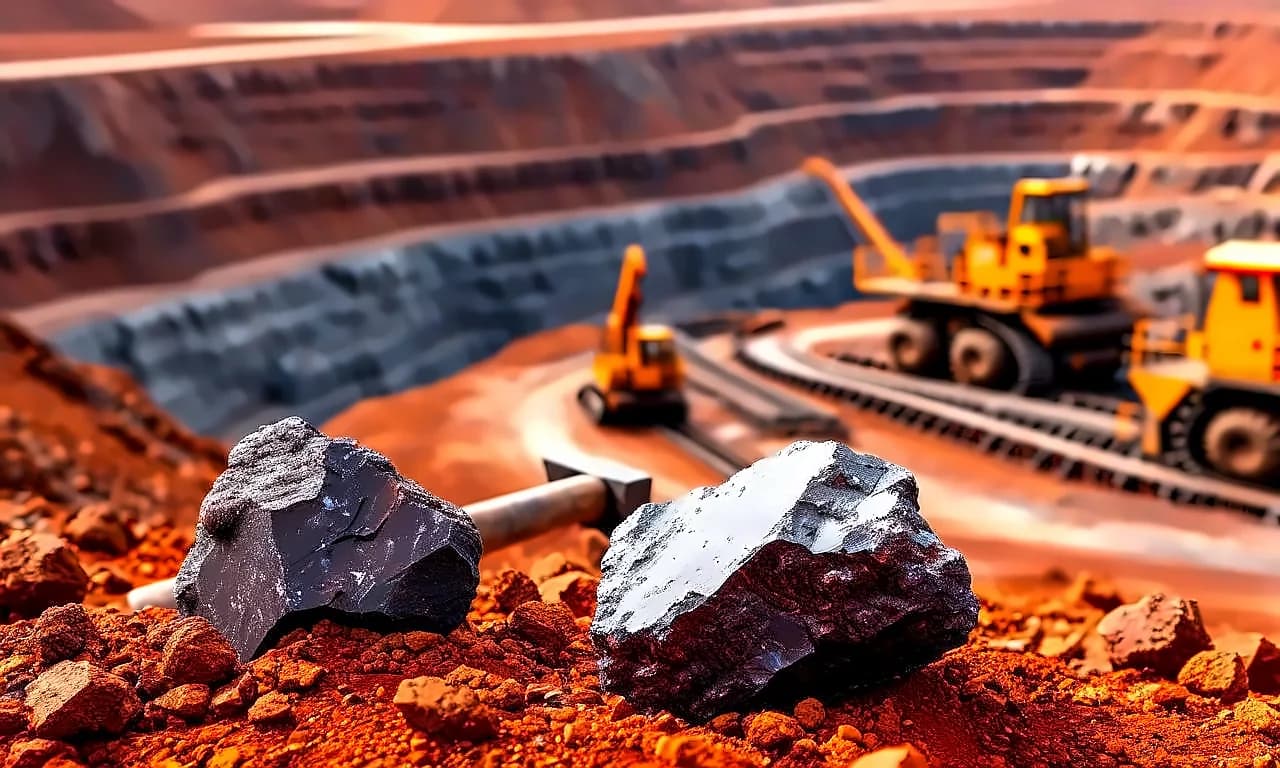
The government has approved a $3.9 billion initiative aimed at converting coal into gas as part of efforts to reduce dependence on imported fuels and strengthen domestic energy security. According to latest reports, this move reflects the government's broader strategy to utilise abundant domestic coal reserves while diversifying energy sources and lowering exposure to global fuel market volatility. The initiative focuses on expanding coal gasification projects, a process that converts coal into synthetic gas which can be used for power generation, fertilisers, chemicals and industrial applications. Officials believe the programme could help reduce imports of natural gas, methanol and other fuel-related products while improving utilisation of India's large coal reserves.
India's coal resources provide a compelling foundation for this transformation, with the country producing over 1,047 million tonnes of coal in FY25 and holding nearly 199 billion tonnes of proven reserves and 401 billion tonnes total geological reserves. As reported by Business Standard, nearly 80% of mined coal is still burnt for power, representing serious underutilisation of this advantageous natural endowment. The urgency is amplified by import dependence, with India importing 88% of crude oil, over 90% of methanol, and 13-15% of ammonia, with ammonia imports alone costing $982 million in 2024. Each geopolitical disruption translates directly into inflation, making coal gasification a strategic domestic hedge.
The government has established comprehensive policy support for coal gasification development through the ₹8,500 crore viability gap funding scheme (2024) targeting 100 mt of gasification capacity by 2030. According to Business Standard, the Cabinet approved a ₹37,500 crore unified incentive scheme with maximum support of ₹3,000 crore per project, up from previous limits. The framework includes a proposed ₹50,000-crore plan to revive 20,000 MW of idle gas-based capacity, with seven major gasification projects worth ₹64,000 crore already underway across Maharashtra, Odisha, and West Bengal. Experts estimate 15-20 large complexes will be needed between 2026 and 2030 to meet the 100 mt target.
Significant private sector initiatives are complementing public sector developments, with Jindal Steel's Angul facility among the world's largest syngas-based steel plants now operational. As reported by Business Standard, New Era Cleantech's $2.5 billion coal-to-ethanol investment and NLC India's lignite-to-methanol project further expand the ecosystem. Key projects include the Coal India Ltd-BHEL joint venture at Lakhanpur, Odisha (₹11,782 crore) and Coal India-GAIL joint venture at Sonepur Bazari, West Bengal (₹13,052 crore). The ₹13,000 crore Talcher Fertilizer Plant in Odisha, inaugurated in September 2018, produces 1.27 million tonnes annually as India's first coal gasification-based urea project.
The economic potential of coal gasification is substantial, with estimates suggesting a scaled gasification programme could reduce imports by $15 billion annually and generate savings of ₹60,000-90,000 crore through domestic fertiliser and chemical production. According to Business Standard, this represents not just energy transition but macroeconomic stabilisation. The technology can substitute for imported LNG, supply farmers with home-grown urea, reduce coking coal imports in steel, and bridge the hydrogen economy transition. However, experts note that gasification projects are capital-intensive and technologically complex, requiring sustained commitment similar to China's approach, which now gasifies over 80 mmpta annually and dominates global methanol and ammonia production through coal-derived syngas. The initiative forms part of India's broader effort to balance energy security, industrial growth and clean energy expansion while managing rising domestic power and fuel demand.