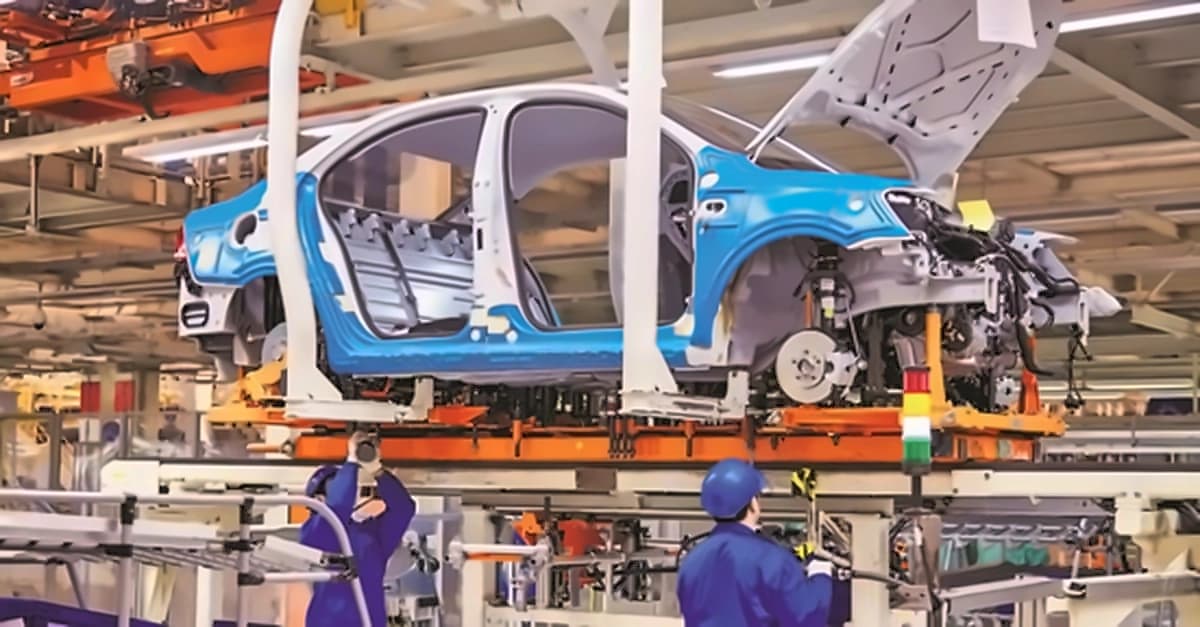
Automobile manufacturers told NITI Aayog on Tuesday that they often have no idea where many 20-25-year-old vehicles are because ownership changes multiple times over their lifecycle. According to Business Standard, during a meeting organised by NITI Aayog, auto industry executives said the lack of traceability of old vehicles could make it difficult to meet obligations under the Centre's recycling rules for end-of-life vehicles (ELVs), which were issued last year. A senior executive of a major passenger vehicle maker stated that manufacturers have virtually no visibility on the whereabouts of many 20-25-year-old vehicles, as ownership changes three, four, or five times by the time they reach 25 years, and these old vehicles never come to OEM workshops.
Under the Environment (Protection) (End-of-Life Vehicles) Rules, 2025, which came into force on April 1, 2025, vehicle manufacturers have been assigned annual Extended Producer Responsibility (EPR) targets for scrapping end-of-life vehicles. For 2025-26, manufacturers must obtain EPR certificates equivalent to at least 8 per cent of the steel used in private vehicles sold in 2005-06 and commercial vehicles sold in 2010-11. The target will rise to 13 per cent from 2030-31 and 18 per cent from 2035-36. As reported by Business Standard, the traceability issue surfaced repeatedly during the discussion, with an executive from a commercial vehicle manufacturer saying more dynamic updating of active vehicle records in the Vahan database was necessary for accurate estimation of ELVs.
Concerns over traceability were accompanied by criticism of Automated Testing Stations (ATSs), which were introduced under the Vehicle Scrappage Policy to identify unfit vehicles through fitness tests. According to Business Standard, an executive from a foreign passenger vehicle manufacturer said ATSs were expected to become a key source of ELVs for the formal recycling ecosystem, but that was not happening. "As per our information, almost 95 per cent, more than 95 per cent, of the vehicles that go to ATSs come out as fit vehicles. So, they are not turning into ELVs after going into an ATS," the executive said during the meeting, according to sources. The executive stated that ATSs were supposed to be "a very critical strategic lever" for the development of the ELV ecosystem but were being "largely overlooked." An executive of a commercial vehicle maker added that ATS capacity remained limited and that "a lot of vehicles are passing the fitness test where they should probably be much more objective in their assessment."

A senior executive of a vehicle-scrappage marketplace operator said documentation and ownership issues were pushing a large number of vehicles towards informal scrapping channels. As reported by Business Standard, the executive noted that "someone has a car but the legal owner sold the car many years ago, but they did not go to the RTO to transfer that car's ownership," adding that such cases were extremely common. The marketplace executive suggested a "know your car" mechanism, similar to know-your-customer (KYC) norms used by banks, to allow ownership details to be updated when the registered owner has died, left the country, or transferred the vehicle without completing the formal paperwork. Several participants said that pending traffic challans and other liabilities were discouraging vehicle owners from approaching authorised scrapping centres.
To address the traceability issue, the executive suggested that manufacturers be given access to updated ownership information available in the Vahan database maintained by transport authorities so they can contact current owners and encourage them to scrap their vehicles through authorised facilities. According to Business Standard, executives from the recycling industry proposed linking vehicle registration numbers with Goods and Services Tax (GST) invoices generated when recovered materials such as steel, aluminium and copper are sold, creating a digital trail from scrappage to material recovery. A representative of the recycling industry said "pending challans, liabilities, documentation issues" were among the key reasons why ELVs were not reaching RVSFs, and suggested removing the burden of older challans to increase the flow of ELVs to the RVSFs. NITI Aayog did not immediately respond to Business Standard's queries regarding the matter.