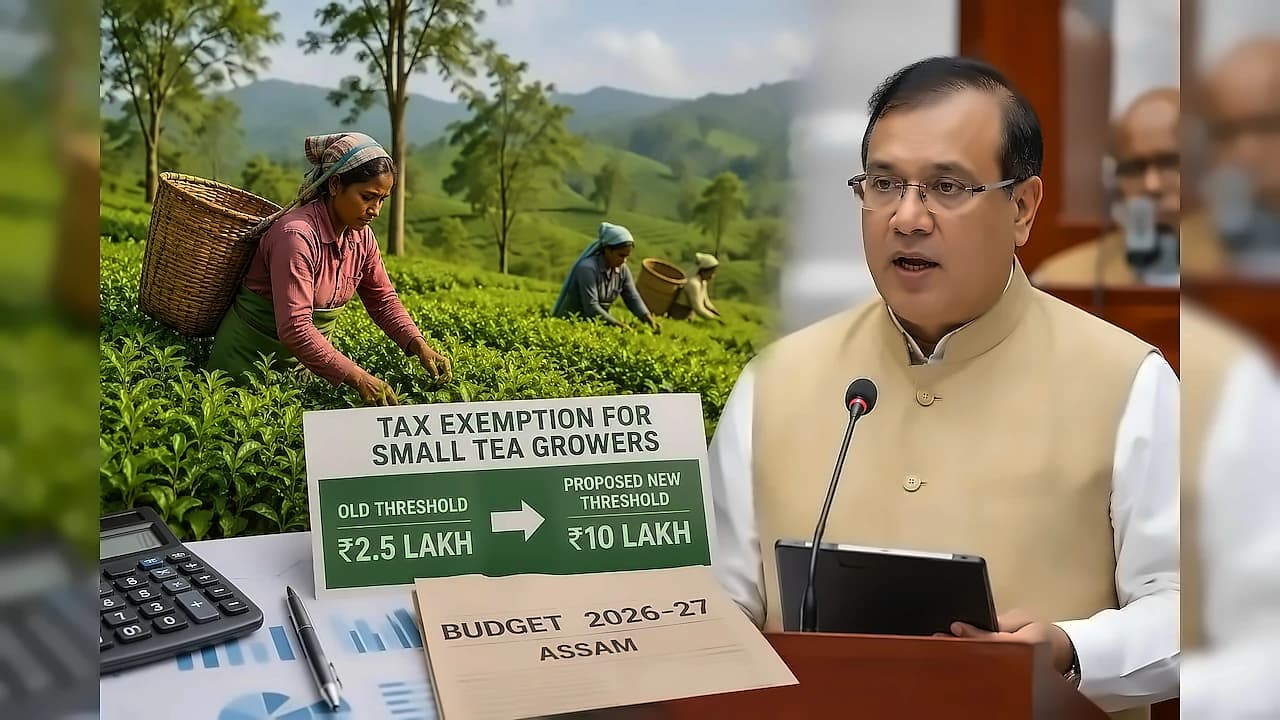
Assam Chief Minister Himanta Biswa Sarma announced on Saturday that the Cabinet has decided to discontinue Aadhaar card issuance for individuals above 18 years of age. According to reports from Times Now, the decision aims to prevent illegal immigrants from acquiring the document. In exceptional cases, district commissioners will be required to send proposals to the state government seeking permission for card issuance. The decision, effective immediately, marks a major policy shift in Aadhaar enrolment in Assam and is expected to have far-reaching implications on identity management and immigration control in the state. As per Business Standard, the state government justified the move as a necessary step to prevent "illegal immigrants", particularly those alleged to have crossed over from Bangladesh, from acquiring Indian identity documents. The move comes in response to concerns that Aadhaar, a widely used identity document for accessing welfare benefits, has in some instances been misused by suspected illegal immigrants to obtain official documentation, as reported by The Indian Express.
As reported by Times Now, Sarma stated that Aadhaar card issuance has reached a saturation point in the state. The Chief Minister revealed that in some districts, Aadhaar card issuance has crossed the 100 per cent mark, highlighting the widespread adoption of the document across the state. This saturation level has prompted authorities to investigate who is obtaining additional Aadhaar cards beyond the initial issuance. According to Business Standard, officials cited concerns that Aadhaar enrollment levels in certain districts have reportedly exceeded population estimates, suggesting possible duplication or fraudulent entries. Under the new guidelines, Aadhaar enrolment will continue for children below 18 years of age, but once they attain adulthood, any further updates or services related to Aadhaar will require thorough verification at the government level. The saturation levels have necessitated tighter controls as identity enrolment in Assam has already reached 100% in several districts, as per The Indian Express.
According to Times Now, the Cabinet has entrusted Deputy Commissioners with the responsibility of verification and approval, ensuring stricter scrutiny and transparency in the process. Officials believe that decentralising the verification mechanism will strengthen oversight and reduce the chances of fraudulent enrolments. The government has provided relaxation for Scheduled Tribes (STs) and Tea Tribes, acknowledging their unique socio-economic conditions, with these groups continuing to receive certain exemptions under the revised framework. This comprehensive approach aims to maintain the integrity of the identification system while addressing the specific needs of vulnerable communities. Individuals belonging to the tea garden community and Scheduled Tribes will be excluded from the immediate restrictions and will continue to receive Aadhaar cards, as reported by The Indian Express.

As per Times Now, Sarma emphasized that the policy change is specifically designed to ensure that illegal immigrants do not exploit the Aadhaar system to establish identity fraudulently. The Chief Minister expressed concern about individuals taking additional Aadhaar cards, stating that authorities must ascertain who these people are who are taking the additional Aadhaar cards. This measure represents a proactive approach to address immigration-related concerns in the state, with the initiative being crucial to prevent illegal Bangladeshi immigrants from obtaining Aadhaar cards and to reinforce the verification process across Assam. As reported by Business Standard, the policy is rooted in Assam's longstanding concern over undocumented migration, with the state sharing a porous border with Bangladesh and political discourse historically focusing on demographic change and identity protection.
The decision is almost certain to raise concerns over potential exclusion, as restricting Aadhaar access for adults could create administrative barriers for genuine citizens, particularly those in rural and economically weaker sections who may not have enrolled earlier due to documentation gaps. According to Business Standard, without Aadhaar, individuals may face difficulties accessing welfare schemes, opening bank accounts, completing KYC requirements, or using digital services where Aadhaar is the fastest verification method. Aadhaar functions as a de facto gateway for identity verification in India's increasingly digitised governance system, raising questions over whether restricting access could indirectly limit access to essential services. The move aligns with CM Sarma's broader political emphasis on addressing illegal immigration and safeguarding what the government describes as the demographic and cultural identity of Assam.