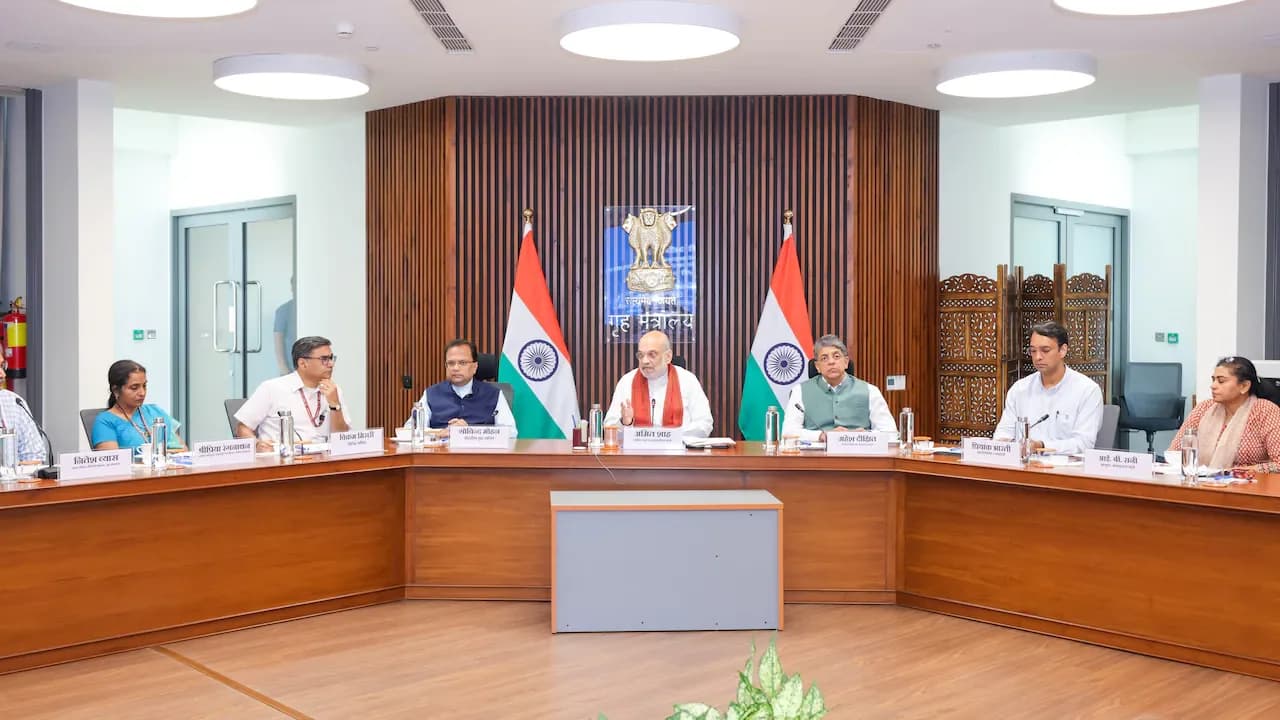
Union Home Minister and Minister of Cooperation Amit Shah unveiled the updated FCRA 2.0 Portal and the new e-OCI Card system in New Delhi on Tuesday. According to the Home Ministry, the FCRA 2.0 portal has been developed to simplify compliance and strengthen monitoring and enforcement mechanisms under the Foreign Contribution (Regulation) Act. Shah emphasized that both initiatives will greatly improve people's convenience and specifically address challenges faced by those who receive donations via the FCRA portal. The launch was attended by Union Home Secretary, Foreign Secretary, Director of the Intelligence Bureau (IB), and several other senior officials.
As reported by PIB, Shah highlighted the implementation of a strict surveillance system for wrongdoers. He stated that the nation can be made more secure when the intention is clear, the policy is transparent, and there is a mindset to embrace technology. The home minister noted that before 2014, the FCRA system was beyond adequate control due to its entanglement in files and procedures, which is crucial for both national security and development. Shah emphasized that due to FCRA law, monitoring on foreign contributions coming with wrong intentions will increase with the new system implementation.
The FCRA 2.0 Portal has been developed to simplify compliance under the Foreign Contribution (Regulation) Act and strengthen the monitoring and enforcement mechanism. According to the Home Ministry, around 14,500 active FCRA organisations are currently working across the country, with approximately 15,000 to 20,000 applications and about 17,000 annual returns received every year. The portal, hosted on the National Government Cloud (MeghRaj), includes features such as process restructuring, integrated dashboard, Aadhaar-based authentication, e-Sign facility, and OCR-based document analysis. All key processes related to applications, renewals, annual returns, and other services have now been fully digitised. The system eliminates the need for physical submission of documents and incorporates the key provisions of the new FCRA Amendment Rules, 2026. It is integrated with major government databases including PAN, Aadhaar, OCI, NGO Darpan, and ICAI's UDIN system. For organisations, the portal reduces paperwork significantly, while for the government, API-based integration with key databases makes verification faster and more accurate, improves compliance monitoring, and ensures effective oversight of the receipt and use of foreign contributions.
The Electronic Overseas Citizen of India (e-OCI) Card launched today is a significant initiative to provide benefits of swift and seamless services to over 50 lakh OCI cardholders by digitalising OCI-related processes. According to the Home Ministry, under the e-OCI system, applicants can complete the entire OCI process online, submitting an application, uploading supporting documents, and downloading a digitally generated card upon approval. Existing cardholders can receive their e-OCI card digitally, in most cases without a new application or physical verification. Under the new arrangement, the requirement to re-issue the OCI booklet upon receiving a new passport after the age of 20 years has been eliminated. However, cardholders will need to update their passport-related details online whenever a new passport is issued. The system enables online applications, digital card generation, 24/7 mobile access, and reduces processing time significantly. For applicants, this system provides a convenient and fully digital experience that eliminates the need for physical presence and facilitates smoother travel by enabling faster immigration clearance.
The launch of the FCRA 2.0 portal comes days after the Home Ministry notified the Foreign Contribution (Regulation) Amendment Rules, 2026, introducing a detailed framework classifying permissible activities under the religious category while also tightening compliance requirements for organisations receiving foreign funding in India. The amendment modifies the Foreign Contribution (Regulation) Rules, 2011, and introduces a dedicated schedule outlining activities eligible for registration for religious purposes. The listed activities include construction, renovation and maintenance of places of worship such as temples, mosques, churches, gurudwaras, monasteries, synagogues and other religious sites. The schedule also permits preservation, printing, translation and digitisation of sacred scriptures and commentaries, support for institutions engaged in the study of religious philosophy and history, and provision of amenities for pilgrims, including drinking water, sanitation and shelter facilities at heritage religious sites. It further allows the establishment of dharamshalas, langars, annadans and community kitchens under religious initiatives. However, the rules clearly exclude any activity involving proselytisation. A key change is the introduction of the term "key functionary," expanding accountability to include directors, partners, trustees, karta of Hindu Undivided Families, office-bearers and any person responsible for the management or control of an organisation. The rules further restrict eligibility by stating that organisations with foreign nationals (other than those of Indian origin) as key functionaries will generally not qualify for registration, unless specifically permitted. In another significant change, NGOs will be required to utilise at least 75 per cent of previously received foreign funds before being eligible for subsequent instalments, with additional provisions defining "reasonable activity" thresholds linked to fund utilisation over a specified period.