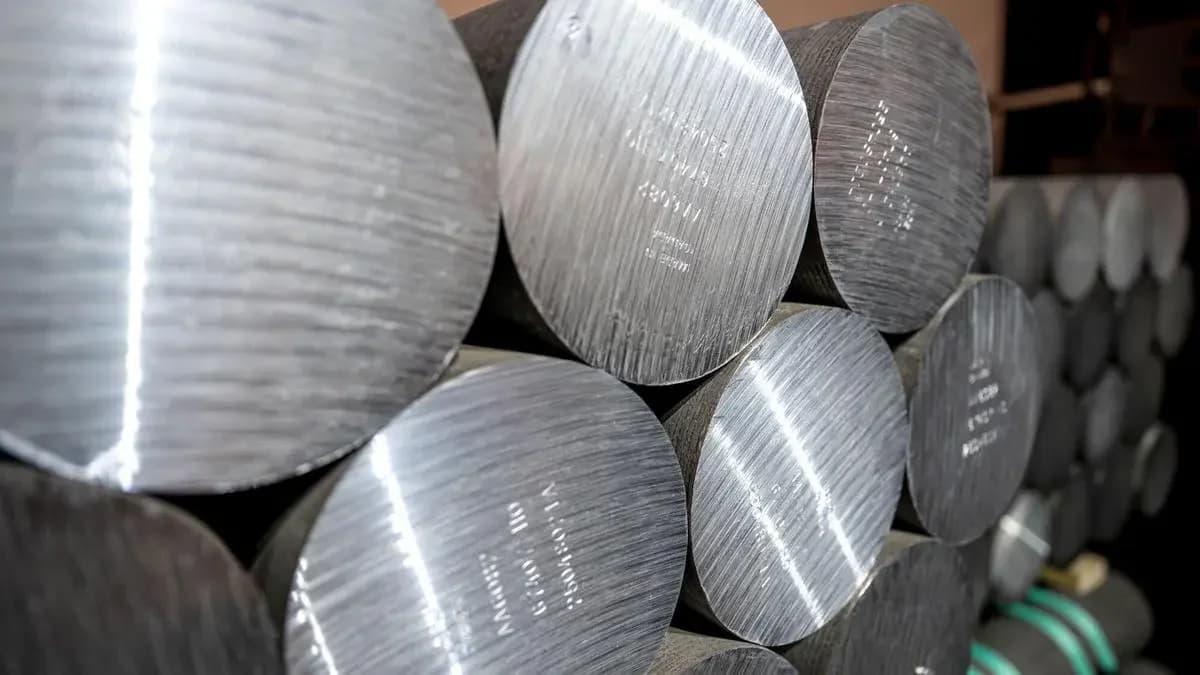
The Ministry of Mines has recommended to the Department of Revenue the removal of the existing 2.5% basic customs duty (BCD) on aluminium waste and scrap, citing lower costs for recyclers and stronger domestic value addition. In response to queries from Business Standard, the ministry confirmed that it has recommended to the Department of Revenue that "the existing 2.5% BCD on aluminium waste and scrap be eliminated". The recommendation follows deliberations of a Joint Working Group constituted by the Ministry of Mines, comprising representatives of the primary aluminium industry, secondary aluminium manufacturers and recyclers. "Based on the deliberations of the Group, it was broadly agreed that removal of the existing 2.5% BCD on aluminium scrap may be considered in the larger national interest," the ministry said.
The aluminium industry remains divided over scrap import policy, with the Material Recycling Association of India (MRAI) now joining the Aluminium Association of India (AAI) in advocating for different approaches to aluminium scrap trade. While the AAI has called for maintaining the 2.5% basic customs duty on aluminium scrap to protect domestic manufacturing, the MRAI has urged the government to abolish this duty to promote the circular economy. According to reports from Business Standard, MRAI President Sanjay Mehta emphasized that removing the 2.5% Basic Customs Duty on aluminium scrap will strengthen thousands of MSMEs, generate employment, improve resource security, and enhance the competitiveness of downstream manufacturing. The conflicting positions highlight the complex trade-offs between protecting domestic manufacturing competitiveness and supporting India's growing recycling sector.
India's aluminium scrap sector faces a critical dependency challenge, with the country importing nearly 80-85% of its aluminium scrap requirements according to MRAI's latest submissions to the Prime Minister's Office. As reported by Business Standard, MRAI highlighted that making uninterrupted access to imported scrap is indispensable for sustaining domestic manufacturing and the growth of the recycling industry. Aluminium scrap imports have increased from 1.8 million tonnes in FY25 to around 2 million tonnes in FY26, reflecting the secondary industry's continued dependence on imported raw material. The ministry noted that "removal of the 2.5% BCD will reduce the cost of scrap imports" and with aluminium demand projected at 8.4-8.7 million tonnes by FY30, eliminating the duty will strengthen secondary production to meet growing domestic demand.
The ministry addressed quality concerns raised by primary producers, stating that "the JWG observed that the quality of imported scrap and the applicable customs duty are two separate issues. Quality-related concerns may be addressed through appropriate standards and classification." The ministry pointed to IS 2066 (Part 1): 2024 - Coding and Classification for Non-Ferrous Scrap Metals and Residues: Part 1 Aluminium Scrap, published by the Bureau of Indian Standards in November 2024, which provides a uniform framework for identifying and classifying aluminium scrap. The ministry emphasized that "the standard is expected to improve the quality of aluminium scrap, reduce ambiguity in grade descriptions, improve transparency in trade and facilitate procurement of scrap for different metallurgical applications in the secondary aluminium ecosystem."
The ministry's recommendation addresses the current "inverted duty structure" where domestic recyclers pay 2.5% BCD on aluminium scrap while finished aluminium products enter India at zero duty under certain free trade agreements, including the India-Asean FTA. The ministry cited that "several countries (US, UAE, Saudi Arabia) are restricting aluminium scrap exports, which may tighten global supplies and increase import costs." MRAI President Sanjay Mehta welcomed the ministry's proposal, stating that "these products are extensively used by leading companies across the automotive, engineering, steel and packaging sectors, including Tata Motors, Maruti Suzuki, Honda, TVS Motor, Tata Steel and JSW Steel." The ministry concluded that "removal of the 2.5% BCD on aluminium scrap may not adversely affect primary producers, as the primary and secondary aluminium industries cater to distinct end-use segments of the economy."