The rhetoric emerging from the May 2026 meeting between Donald Trump and Xi Jinping in the Chinese capital has generated dramatic headlines in Washington, but regional policymakers and analysts see little substance behind the statements. According to bne IntelliNews, nothing has materially changed in the underlying strategic balance between the US and China regarding Taiwan. For years, US officials have been more focused on efforts to constrain China's military reach, particularly its access to the Northwest Pacific, than on Taiwanese moves towards independence. The core strategic reality remains that in the event of a Chinese push into the Pacific, the US would not be defending Taiwan for its political status, but seeking to prevent China from gaining unopposed access to Hawaii and the West coast of the mainland US. Chinese foreign ministry spokesperson Guo Jiakun confirmed on Monday that China has 'taken note of U.S. President Donald Trump's latest remarks on Taiwan', reaffirming Beijing's position that 'Taiwan is an inalienable part of China's territory; it has never been a country, and will never be one in the future.'
Chinese President Xi Jinping's strong messaging on Taiwan during his US counterpart Donald Trump's visit to China last week has reportedly led to fresh concerns that Beijing could try to invade the island in the next five years. According to a report by US-based web publication Axios, Trump returned from China satisfied with the warm reception and high-level meetings, but several of his close advisers were alarmed by Xi's comments on Taiwan. They believe the Chinese leader projected China as an equal global power to the US and made it clear that Taiwan remains a core national priority for Beijing. One Trump advisor told Axios that 'This trip signalled a much higher likelihood that Taiwan will be on the table in the next five years.'
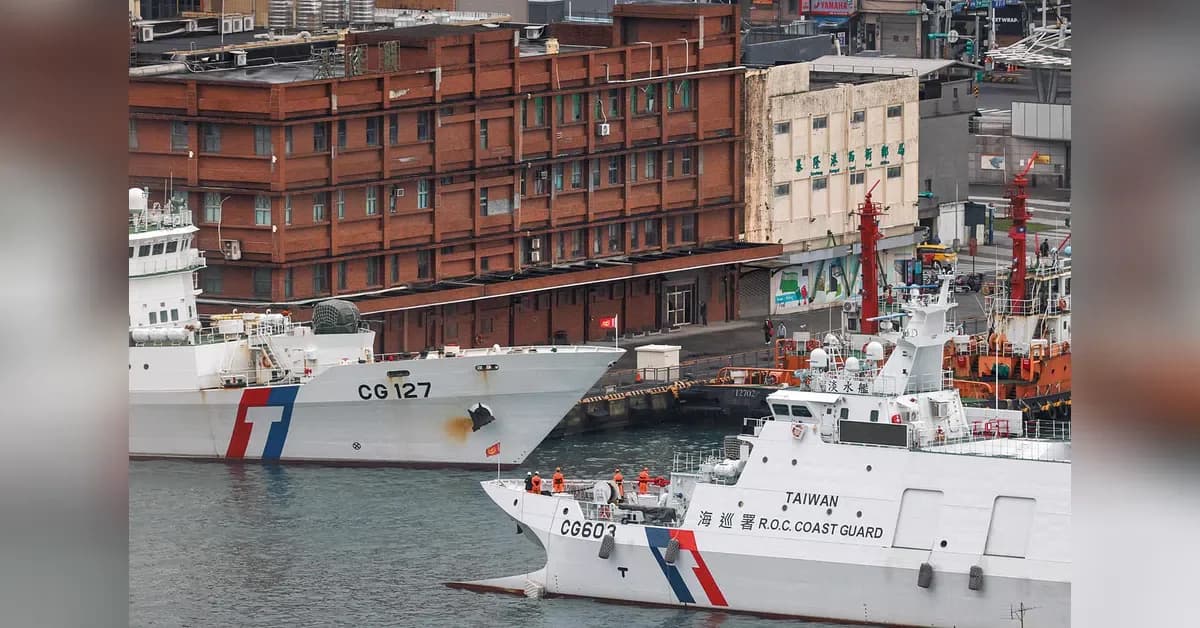
During the summit, Xi warned that mishandling the Taiwan issue could lead to 'clashes and even conflicts' between the two countries. Chinese officials described Taiwan as the 'most important issue' in US-China relations. These concerns arise as China continues increasing military pressure around Taiwan through large-scale naval and air exercises. Analysts warned that Beijing may try to reunify Taiwan with mainland China by force if peaceful methods fail. However, Taiwan sits in between Japan's Okinawa islands in the north, through Taiwan and down to the Philippines, forming what defence planners call 'unsinkable aircraft carriers' that are crucial for restricting Chinese access to the Pacific. A Trump advisor warned that 'There's no way we can be ready economically — the chips supply chain won't be anywhere close to self-sufficiency.'
One major concern within the Trump administration is the impact such a conflict could have on global technology supply chains. Taiwan is home to some of the world's most advanced semiconductor manufacturing facilities, particularly those producing high-end chips used in artificial intelligence, defence systems and electronics. A Trump advisor told Axios that 'There's no more pressing issue than the supply chain for chips' for CEOs and the economy as a whole. The report comes after Trump's visit to China earlier this month, accompanied by a senior delegation of politicians, including his secretary of defence, and a phalanx of business leaders and technology executives. During his visit, Trump gave an interview to Fox News stating that he does not want to see Taiwan go independence and has no desire to travel 9,500 miles to fight a war, while also claiming that Taiwan was able to develop and thrive because it stole the U.S. chip industry. This contradicts earlier reports suggesting the US would defend Taiwan for its strategic positioning.
While the summit did not produce any major agreements, analysts believe Xi emerged from the talks stronger in terms of his diplomatic position. According to several media reports, the Chinese leader avoided major concessions while presenting China as stable, confident and central to global geopolitics. The ruling Democratic Progressive Party administration in Taipei, in power since 2016, has consistently maintained that it does not need to declare independence and operates as a sovereign entity in practice with its own elections, currency, military and significant international economic presence. Taiwan's role in the US-aligned chain is geographic, not ideological, as Trump has indicated, with the island perceived as the most vulnerable component among Okinawa, Taiwan and the Philippines. The post-meeting statements from both China and the US are described as 'classic face-saving exercises' that reinforce doubts about US reliability in the region while maintaining the underlying strategic balance. Taiwan's representative to the US, Ambassador Alexander Yui, noted that Trump 'didn't say he agreed to anything' regarding arms sales discussions with Xi Jinping, emphasizing that 'having arms sales continue to Taiwan is in the interest of the United States and Taiwan to keep peaceful and stable Taiwan Straits.'