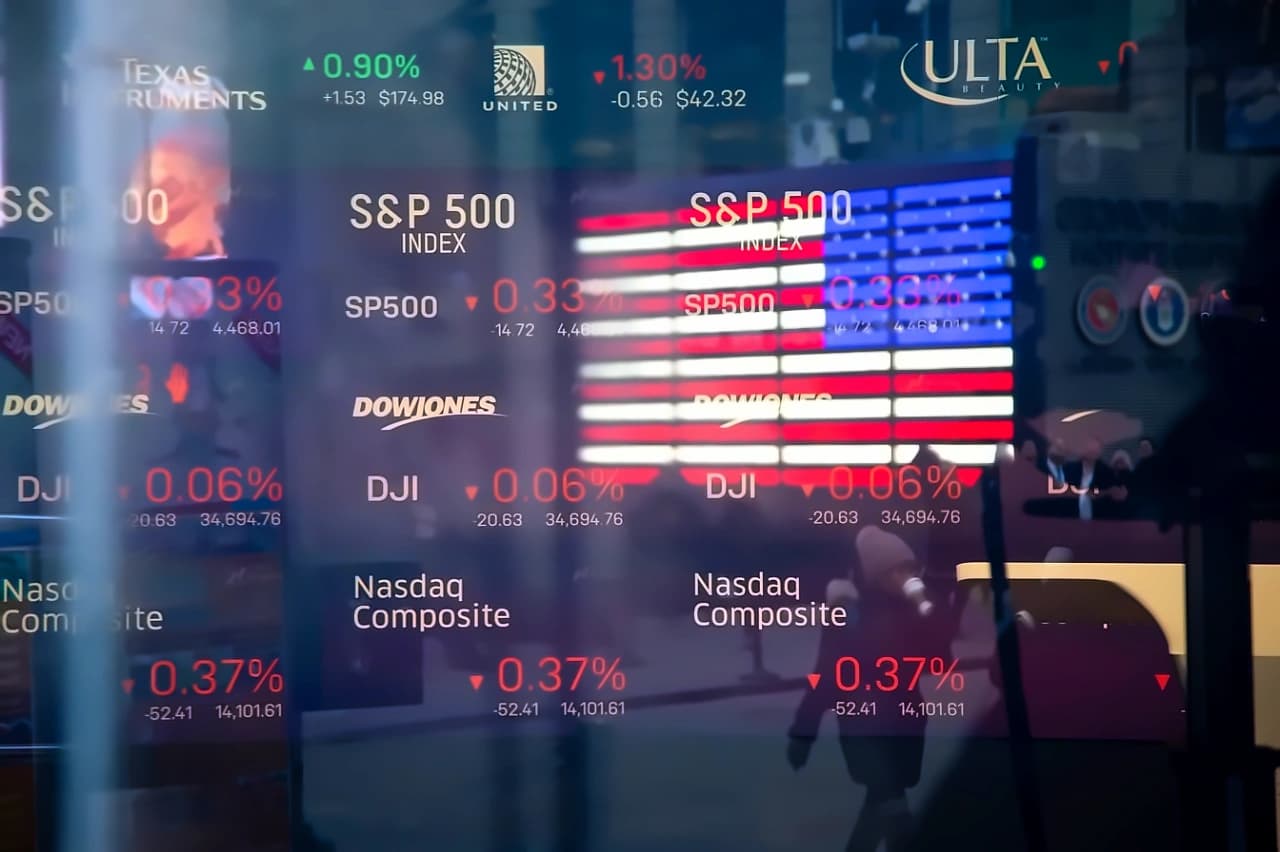
U.S. stocks opened sharply higher on Monday, with the Dow Jones Industrial Average surging more than 600 points to a fresh intraday record, after President Donald Trump announced that an agreement had been reached with Iran to end the conflict and reopen the Strait of Hormuz. The Dow rose 607 points, or 1.2%, while the S&P 500 gained 1.3% and the tech-heavy Nasdaq Composite outperformed, advancing 2.2% amid broad-based risk-on sentiment. Investor optimism was fueled by Trump's statement late Sunday that a deal with Iran was "now complete," according to Pakistan Prime Minister Shehbaz Sharif, who said a memorandum of understanding is expected to be signed in Switzerland on Friday. The rally came after a severe selloff that had seen the S&P 500 shed more than $3.3 trillion in market cap since its record high on June 2, with the latest session showing continued weakness before the optimistic developments.
Oil prices experienced a sharp decline following Trump's announcement, with US crude futures falling about 5% to trade near $80 a barrel, though both remain well above pre-war levels. The geopolitical breakthrough also eased concerns over global energy supplies, with Trump saying he had authorised the reopening of the Strait of Hormuz, a critical shipping route for global crude flows. Vice President JD Vance told CNBC that he expects the waterway to remain open on a toll-free basis over the long term. A potential deal to end the war with Iran could reopen the Strait of Hormuz, sending oil prices lower as the critical shipping route for global oil supplies becomes less volatile. The conflict has driven painful inflation, with U.S. wholesale prices rising more than expected in May, contributing to the Federal Reserve's concerns about price pressures.
Technology and artificial intelligence-related shares experienced their most severe selling pressure yet, with the S&P 500 technology index dropping 1.1% during Wednesday's session. However, some semiconductor-related companies bucked the trend, with Lam Research leaping 12.7% and KLA climbing 12.9%, helping offset an 8.5% drop for Oracle. Marvell Technology climbed 11.1%, recovering from a volatile stretch where it had plunged 16.7%, soared 9.6% and then fell more than 5% for two straight days. After surging to records, AI stocks reversed sharply, dragging the broader U.S. market into volatile swings that have sometimes flipped direction by the hour. Critics warn that AI investment may have ballooned into a bubble, and with rate hikes now in the picture, the sector faces serious scrutiny over whether its valuations can hold.
The Federal Reserve's policy outlook improved following Trump's announcement, with Fed funds futures indicating a more than 98% probability that policymakers will leave interest rates unchanged, according to CME FedWatch data. Markets are also closely watching the Federal Reserve's policy meeting, with the yield on the 10-year Treasury dropping to 4.45% from 4.55% late Wednesday, a significant move for the bond market as falling oil prices meant less upward pressure on inflation. A sustained drop in oil prices could allow the Federal Reserve to keep its main interest rate on hold this year, instead of hiking it as many traders suspected it may have to because of high inflation and a solid U.S. job market. The rally came after a severe selloff that had seen the S&P 500 shed more than $3.3 trillion in market cap since its record high on June 2, with the latest session showing continued weakness before the optimistic developments.
Investor sentiment received additional support from fresh inflation data released earlier in the day, though the reading highlighted ongoing concerns about price pressures. US consumer prices rose 4.2% year-on-year in May, the highest level since April 2023, recording the largest year-on-year increase in over three years. On a monthly basis, it rose by +0.5%, while core figures, excluding energy and food, rose by 0.2% month-on-month (against expectations of 0.3%) and by 2.9% year-on-year (in line with estimates). The conflict has driven painful inflation, with U.S. wholesale prices rising more than expected in May, contributing to the Federal Reserve's concerns about price pressures. Investors are now turning their attention to key economic data releases this week, including housing and retail sales figures, as markets continue to monitor the broader economic landscape amid the geopolitical developments.