Wall Street experienced mixed trading on Wednesday, with the S&P 500 declining 0.2% for its eighth loss in 11 days, according to reports from Associated Press. The Dow Jones Industrial Average dropped 13.96 points to 52,305.24, while the Nasdaq composite fell 173.69 points to 26,040.03. Despite the overall market decline, most of Wall Street rose during the session, with three out of every five stocks within the S&P 500 climbing higher. The index trimmed an early drop of 0.7% after a report said U.S. manufacturing grew last month at a slightly slower speed than economists expected. The S&P 500 slipped 16.13 points to 7,483.23 for the session.
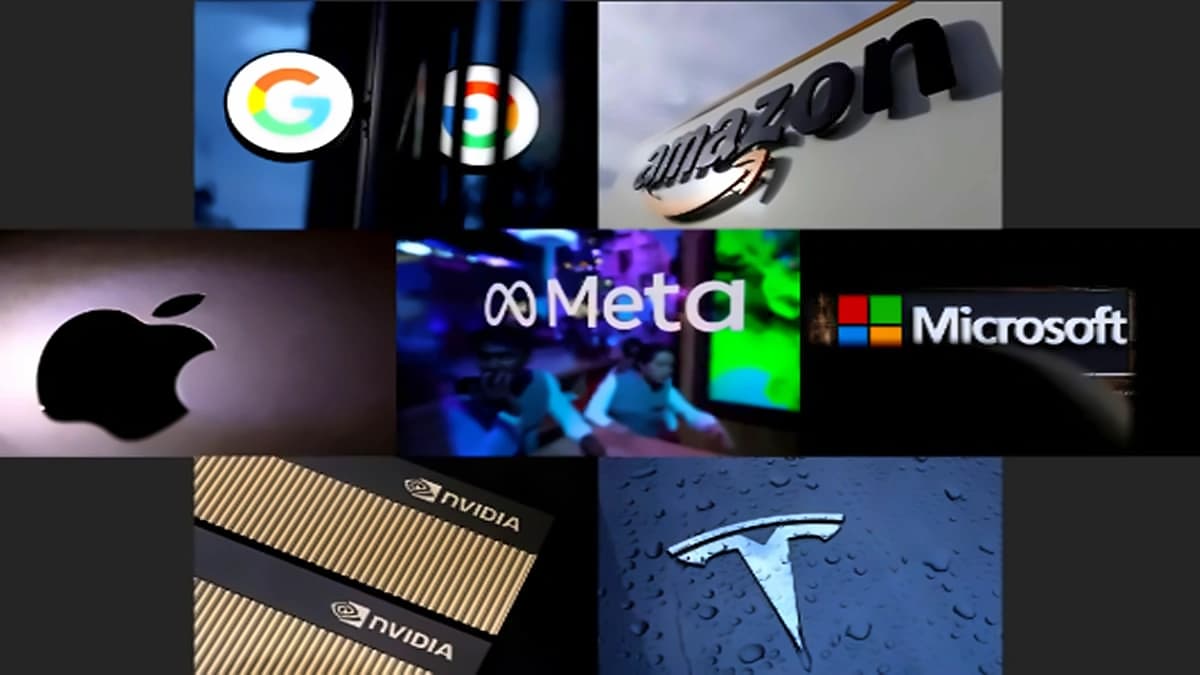
The heaviest weights on the market came from technology stocks that had soared during the artificial intelligence euphoria, as reported by Associated Press. Micron Technology plummeted 10.6%, Advanced Micro Devices fell 6.9%, and Nvidia declined 1.3%. These stocks have been experiencing volatility in recent weeks due to concerns that they had become too expensive, with their large market capitalizations giving them significant influence on major indexes. The performance within the Magnificent Seven group has been sharply divided, with Microsoft and Meta losing almost 19% in the last 1 year, while Microsoft's stock price has dipped 6% in the last month alone. Alphabet has jumped 100% in the last 1 year and is up over 15% year-to-date, though it has shed 2.3% in the last month. Amazon has had a dull run with single-digit returns over the last year and is down 2% in the last month.
Consumer-focused companies led the market gains, with General Mills climbing 8.5% after reporting better quarterly results than analysts expected, according to Associated Press. The company also announced a $3 billion cost-cutting plan over four years. Kroger swung from an early loss to a 1.3% gain after agreeing to acquire Giant Eagle for $1.25 billion in cash, taking on an additional $400 million in liabilities to buy the food and pharmacy retailer with stores stretching from Indiana to Maryland. Nike also flipped an initial loss and rose 4.9% after reporting stronger quarterly results than analysts expected, despite CEO Elliott Hill noting ongoing headwinds affecting revenue. The athletic-gear giant is in the midst of a turnaround attempt by CEO Elliott Hill, and he said it's still facing headwinds dragging on its revenue.
The concern is not about what these companies have built; it is about whether the billions spent will actually pay off, as reported by The Financial Express. All Magnificent Seven companies have made major moves into AI, with multi-billion-dollar deals announced in recent months. Investors are now questioning whether the significant spending by these major hyperscalers will yield enough profits to justify their share price increases and high valuations. Additionally, profit margins are under pressure due to rising costs of components like memory chips and electrical equipment. Nigel Green, CEO of deVere Group, warns that "within five years, today's Magnificent Seven could become the 'Magnificent Three'" as the easy phase of the AI investment story is over. The Roundhill Magnificent Seven ETF (MAGS) has lost over 2% year-to-date, with the 3-year return still over 30% but the 1-year return about 18%.
For Indian investors with significant exposure to US tech stocks, this represents a moment to pause, reassess, and not panic, according to The Financial Express. Viram Shah, Founder & CEO of Vested Finance, recommends checking how much of your US portfolio is concentrated in mega-caps versus the other 490 companies in the index, and considering broader-market or equal-weight funds instead of top-heavy ones. The AI trade on Wall Street also appears to be shifting, moving away from pure AI plays towards semiconductors and chips. Chip and memory stocks have significantly outperformed the S&P 500, with Sandisk rising by over 800% and Micron, Intel, Western Digital, and Seagate Technology's stock prices all more than tripling as memory shortages are expected to last until 2028.