The US Department of Homeland Security has moved forward with a proposal to eliminate the 60-day grace period currently available to foreign workers holding non-immigrant visas after job loss. According to reports from Bloomberg, Business Standard, Fragomen, and Goodreturns, the proposed regulation is currently under review by the Office of Management and Budget (OMB). The proposal would remove this window for certain principal non-immigrants and their dependents if employment ceases before their stay period expires. Once it clears federal review, which could take several months or longer, DHS would publish the proposal in the Federal Register for public comments, with the comment period expected to last 30 to 60 days. More details of the proposal are not immediately known, as reported by multiple sources. The regulation would not take effect simply because it clears OMB review, as DHS would first have to consider public feedback and issue a final rule, a process that could take several more months. Until a final rule takes effect, the existing 60-day grace period continues to apply to eligible foreign workers.
The 60-day grace period was created by regulation in 2017 and took effect in early 2017 to allow foreign workers and their dependents to remain in the US while searching for new employment after job loss. As reported by Bloomberg, Business Standard, Fragomen, and Goodreturns, the current rule allows workers who lose their jobs to remain in the US for up to 60 days, or until their I-94 expires, whichever comes first. The rule was introduced in 2017 as part of measures designed to provide greater flexibility to non-immigrant workers facing an unexpected loss of employment. The provision applies to multiple categories of non-immigrant visa holders including E-1, E-2, E-3, H-1B, H-1B1, L-1, O-1 and TN categories and their dependents. Under current rules, the provision covers workers whose employment ends voluntarily or involuntarily and is generally available once during each authorized petition validity period. The provision was introduced to give workers who lose their jobs time to find new employment, change status where eligible or prepare to leave the US. USCIS has previously said the period can allow recently unemployed workers to pursue options to remain in the country beyond the 60-day window if they take appropriate immigration action. The grace period provides time for workers to retain their nonimmigrant status or request a change of status, allowing them to continue job searching from within the United States even if their current status expires.
If finalized, the elimination of the 60-day grace period would require foreign nationals whose employment ceases prematurely and their dependents to depart the US immediately and would generally be considered to have fallen out of status. According to Bloomberg, Fragomen, Goodreturns, and multiple reports, affected foreign nationals could then be required to leave the US and would generally be unable to change status or change employers from within the country, unless US Citizenship and Immigration Services exercises its discretion to forgive the lapse in status. The grace period currently allows US employers to more easily facilitate employment changes for existing or newly recruited non-immigrant workers, and removing this window could leave workers with considerably less time to make arrangements for new employment. Within the grace period, eligible H-1B nonimmigrant workers may also begin employment again as soon as a new employer properly files a new H-1B petition, rather than waiting for the new petition to be approved. A worker filing for employment in another classification must wait to begin employment until the new petition is approved, but given the availability of premium processing, the wait for petition adjudication is often less than 15 business days. The impact could extend beyond H-1B workers, as the existing framework also covers categories including E-1, E-2, E-3, H-1B1, L-1, O-1 and TN, as well as eligible dependents. For workers in these categories, losing a job can already create uncertainty over their immigration status, and removing the grace period could make the transition considerably more difficult, particularly for professionals who need time to secure a new employer and complete the necessary immigration procedures.
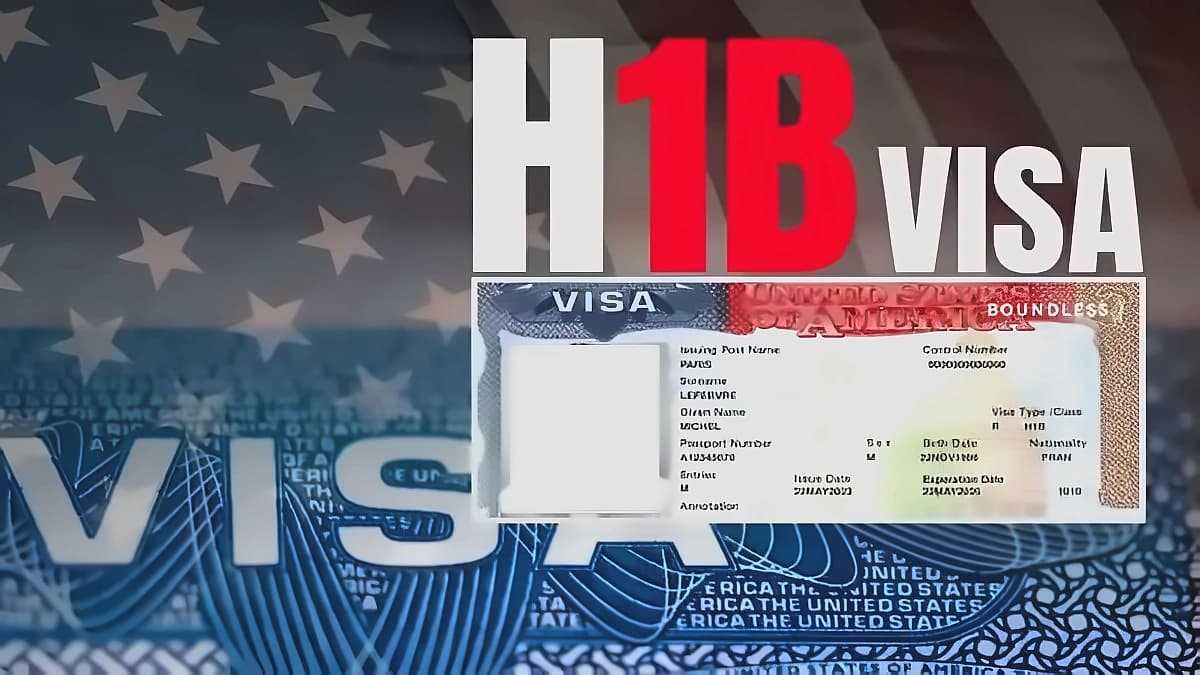
The proposed change could significantly affect the Indian-American population estimated at 5.2 million in the US. As reported by Bloomberg, Business Standard, Fragomen, and Goodreturns, Indian nationals are among the largest beneficiaries of H-1B employment visas, comprising 71 percent of all successful applicants in the 2024 fiscal year, with US Citizenship and Immigration Services approving 399,402 H-1B petitions covering initial and continuing employment. The elimination of the grace period would particularly impact Indian workers who lose their jobs and would require immediate departure from the country, making job losses more consequential for workers who need time to secure a new sponsor or explore another immigration route. The development is significant for Indian nationals who now rely on the 60-day window after a job loss, as reported by multiple sources. An H-1B worker who is laid off currently has up to 60 days, subject to the existing rules, to find another employer willing to sponsor a new H-1B petition. Removing that window could make an already difficult job transition significantly more urgent. The impact could extend beyond H-1B workers, as the proposal itself does not single out Indian nationals or any particular nationality, but the H-1B category is likely to be the most closely watched because Indian professionals make up a large share of H-1B beneficiaries.
The regulation would not take effect simply because it clears OMB review, as DHS would first have to consider public feedback and issue a final rule, a process that could take several more months. According to Bloomberg, Fragomen, Goodreturns, and multiple reports, feedback from employers after publication of the proposal would be important in informing the government about its potential impact on businesses. If DHS moves ahead, the proposed rule would first need to be published in the Federal Register, followed by a public-comment period. DHS would then have to consider the comments before issuing a final rule. There is no immediate change requiring H-1B or other covered visa holders to leave the US simply because they lose their jobs, as the proposal is still under review by OMB and has not yet become a final regulation. The proposal particularly affects H-1B workers, who currently can remain in the US for up to 60 days after layoff to seek another employer willing to file a new H-1B petition. Workers filing for employment in another classification must wait to begin employment until the new petition is approved, but given the availability of premium processing, the wait for petition adjudication is often less than 15 business days. The grace period also provides time for certain spouses of nonimmigrant workers to continue their own employment if they have an Employment Authorization Document or are employment-authorized incident to status.