U.S. markets experienced significant whipsaw action today, with the Dow Jones making a record high of 52,742 before cooling off nearly 350 points to end below the flat line. The S&P 500 and Nasdaq Composite also cooled off 40 and 200 points from their respective intraday highs to end with losses of 0.2% and 0.7% respectively. According to CNBC TV18, semiconductors fell 4.4%, led by memory stocks down 8.7%, while the Magnificent 7 technology stocks surged 2.4%, led by Meta's 9% jump on their announcement of building a cloud business to sell excess AI capacity. Interest rates jumped on prospects of a return to much higher oil prices, with the 10-year yield rising 4 basis points and 30-year yield up 5 basis points, though rates have since calmed down with the 2-year yield flat and 10-year yield back below 4%. Crude oil jumped as much as 4% overnight due to uncertainties about what will happen next in Iran, but oil is now back down to well below $69/bbl this morning. The bond market remains nervous about inflation and what the new Fed chairman may do to address it.
The Nasdaq Composite dropped by 173.69 points or 0.7% to close at 26,040.03, ending its two consecutive sessions of gains totaling 955.42 points. This marked a significant reversal from last week's crash of 1,503 points, though the index remains well above its recent lows. The Nasdaq 100 index plunged by 467.21 points or 1.54%, to close at 29,809.13, pulling away from the 30,000 mark it touched on June 30th after five days of volatile sessions. Chipmakers and memory stocks led the decline, with Micron Technology (-10.6%), Sandisk Corp (-10.6%), AMD (-6.9%), Intel (-9%), and Applied Materials (-10%) all posting significant losses. Nvidia, the world's most valued company and AI giant, was down by 1.3%, while SpaceX, listed on Nasdaq 100 and a heavyweight, crashed nearly 8%. The sharp selloff in technology stocks has impacted Asian markets, with Japan's Nikkei declining nearly 2% in early trade and South Korea's Kospi falling by more than 6%. According to Investing.com, high-beta momentum baskets suffered one of their worst sessions in years, with one major basket falling around 9% and the long-short version down roughly 10%, putting it on pace for its ugliest day since the vaccine shock in 2020.

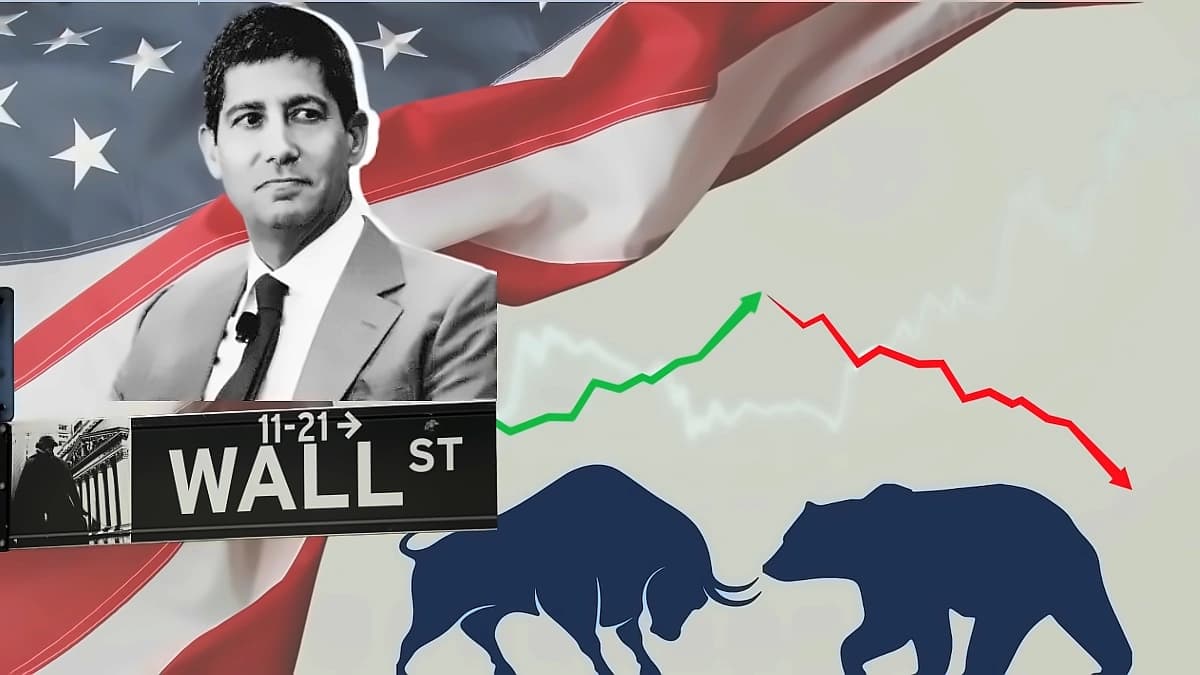
In his first beyond-policy address at the ECB symposium in Portugal, new Fed Chair Kevin Warsh vowed that the Fed has signed up to deliver price stability and that remains their primary objective. As reported by CNBC TV18, Warsh said that prices currently are 'too high' but inflation risks have come down over the last four weeks as oil prices have cooled off. The new Fed Chair refrained from giving any forward guidance and stated that policymakers also agree that giving forward guidance is not suited in the current policy conjecture. Addressing concerns surrounding the Fed's independence, Warsh reiterated that the central bank remained an independent entity and will continue to remain one in the future as well. According to Investing.com, Warsh offered little more confidence that inflation is no longer travelling in only one direction, stating that expectations of inflation over the first four weeks of this period have come down, inflation risks have come down. The 2-year yield eased following his remarks, with markets interpreting this as no immediate case for a July hike, but nobody should confuse that with an invitation to start pricing a clean path toward cuts. Investor focus remains on upcoming jobs data, with consensus estimates projecting non-farm payrolls to rise by 115,000 in June while unemployment rate is likely to remain steady at 4.3%.
Meta surged around 10% as investors welcomed the prospect of greater financial discipline, with reports that the company is looking to sell excess compute capacity through a cloud business while stepping back from the ambition of building the leading frontier model. As reported by Investing.com, Meta's apparent capex discipline is bullish for Meta, but it raises difficult questions about the durability of AI compute, memory and neocloud demand. The market had always been likely to reward the first hyperscaler willing to hint that the capex race might not be endless, but the phrase that did the damage was 'excess capacity.' Once that word appeared, the market no longer had to debate whether Meta's decision was good for Meta - it had to start asking whether one of the largest buyers of compute was effectively telling investors that the AI buildout may not be as supply-starved as everyone had assumed. For the last year, the AI trade has worked like a very tidy machine, with hyperscalers spending aggressively, chipmakers and memory producers supplying the machinery, and every new capex estimate giving the whole chain another excuse to trade higher. However, yesterday, that machine started to cough as Meta rallied while semis, memory names, and neocloud plays were taken to the wood chipper.
Korea sits directly in the blast radius of the memory unwind, with the country having heavyweight semiconductor exposure, deep retail participation, sizeable leveraged-product flows and a familiar ability to turn a global growth theme into a domestic trading carnival. According to Investing.com, KORU's 23% fall is not just another ugly number on the screen - it is a warning that leverage once again collides with a narrative reversal, and that rarely ends gently. The question heading into Seoul today is not whether the market feels the move, but how much of the opening must be processed through forced de-risking, volatility circuit breakers, and traders realizing that a crowded trade does not need a terrible earnings print to unravel. Micron has become one of the cleaner fault lines, with it not closing below its 20-day moving average near 1049 since early April, a remarkable stretch for a stock with this much volatility. If it loses that level, the next obvious area sits closer to the 50-day moving average around 842, roughly 20% lower. Reports that Apple may be exploring alternative memory-chip supply channels have not exactly helped the mood, but the larger issue is whether investors are still willing to pay for a memory cycle built on the assumption that demand remains hotter for longer while some of the largest buyers of compute begin talking about unused capacity.