The Federal Reserve's decision to raise interest rates in December has received overwhelming support from October's robust employment data. According to the latest Bureau of Labor Statistics (BLS) report, non-farm payrolls jumped to 165,000 in October, nearly triple the 59,000 Wall Street forecast, with 84,000 upward revisions to the past two months' data. The unemployment rate dropped to 4.1% from 4.2%, while wage growth rose 0.4% month-on-month and 3.1% year-on-year versus the consensus prediction of 0.3%/2.9%. CME FedWatch odds of a December hike jumped to roughly 77% following the BLS release, representing a significant increase from previous expectations. October's job gain is notably higher than the average monthly gain of 48,000 jobs for the past 12 months, as reported by the U.S. Bureau of Labor Statistics.
Manufacturing emerged as a key performer in the October report, with the sector adding 19,000 jobs as it becomes increasingly competitive to produce certain products in the US. As reported by Investing.com India, manufacturing has now added 86,000 jobs over the past five months after three consecutive years of decline. The sector's recovery is attributed to secure and relatively low-priced energy, a strong economy, huge tech investment spending, and at the margin, tariffs. Private education and healthcare services led the gains with 53,000 additional jobs, while temporary help and transport and warehousing sectors also performed well with 19,000 and 25,000 job additions respectively. Professional and business services added 70,000 jobs and healthcare sector contributed 42,000 jobs in October.
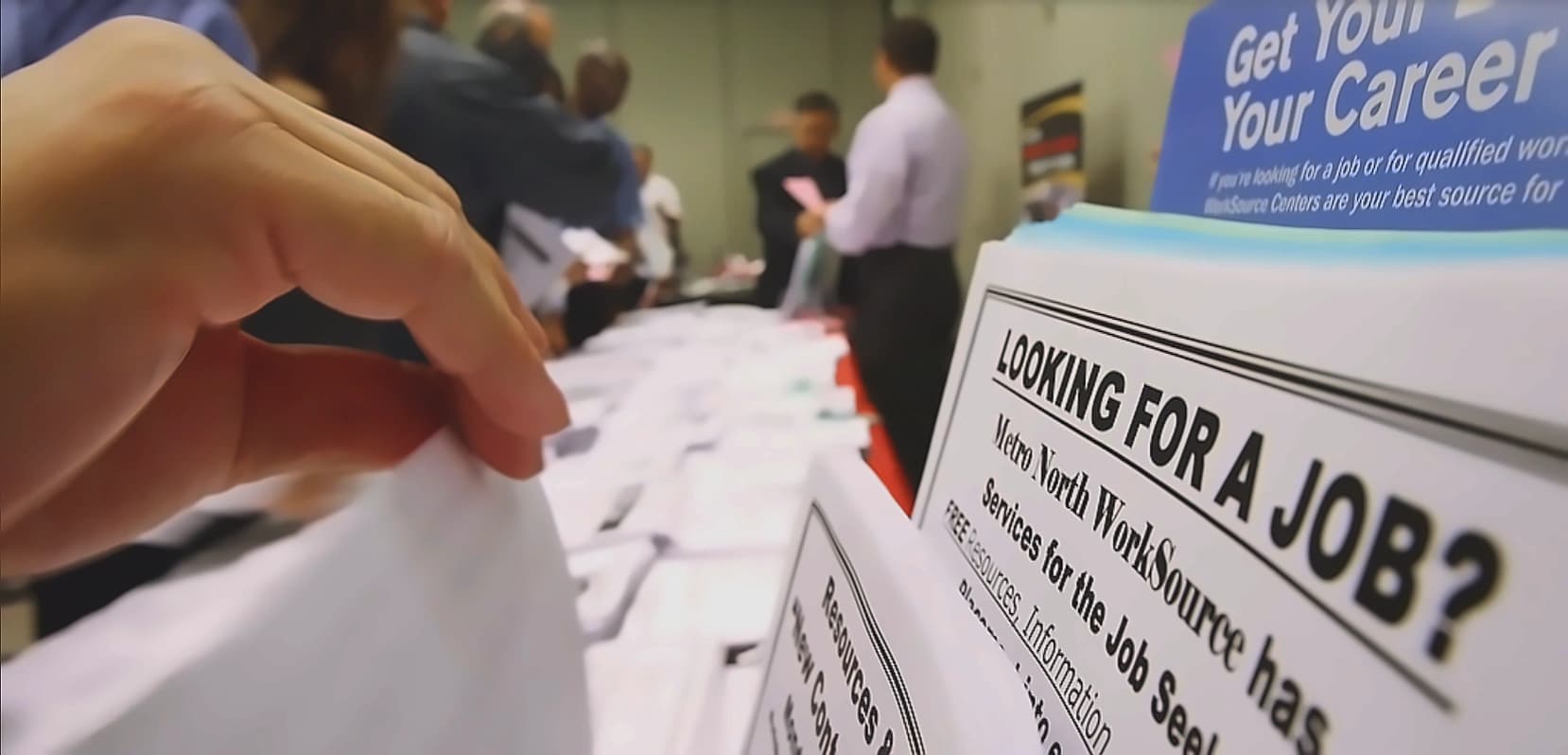
While the headline unemployment rate remained steady at 4.1%, underlying labor market conditions reveal more complex challenges. As reported by Mike Fratantoni, senior vice president and chief economist at the Mortgage Bankers Association, "While the headline unemployment rate decreased, some of this was due to individuals taking part-time work when they would have preferred a full-time position." The U-6 unemployment rate, which more broadly captures underemployment, increased to 7.9% from 7.6% the prior month. Fratantoni noted that "Individuals who have lost jobs are also finding a difficult time getting back in, as the median and average length of unemployment spells are increasing." The jobs reports for August and September were also revised upward, with an additional 53,000 jobs in August and 31,000 more in September, according to the U.S. Bureau of Labor Statistics.
According to Investing.com India, December rate hike expectations had slipped to make it close to a 50:50 call at one point but are now back to 20 basis points priced for the December FOMC meeting. Market experts are now more confident about the Fed's December decision. Sam Williamson, senior economist at First American, described the jobs report as "a strong rebuttal to fears that the economy is heading into a meaningful slowdown." Mike Fratantoni, chief economist at the Mortgage Bankers Association, concluded that "a resilient job market, combined with inflation that is still too high, is likely to lead the FOMC to hike rates in December." The MBA anticipates another hike in the first quarter of 2027, aligning with their earlier forecast for December and Q1 2027 rate increases. As Williamson noted, "The rebound in hiring, upward revisions and low unemployment point to a healthier labor market, keeping a December rate hike firmly in play and potentially delaying mortgage-rate relief."