The US Federal Reserve has appointed three Indian-origin professionals to serve on key task forces designed to review the world's most influential central bank's monetary policy framework. Former Reserve Bank of India Governor Raghuram Rajan, Harvard economist Raj Chetty, and Microsoft executive Asha Sharma have been selected among a distinguished group of economists to serve on newly formed task forces set up by the Federal Reserve to review the way the central bank formulates and implements monetary policy. The appointments reinforce the growing global influence of Indian-origin professionals in economics, finance and technology, bringing expertise spanning central banking, academic research and artificial intelligence to address the increasingly interdisciplinary nature of monetary policymaking.
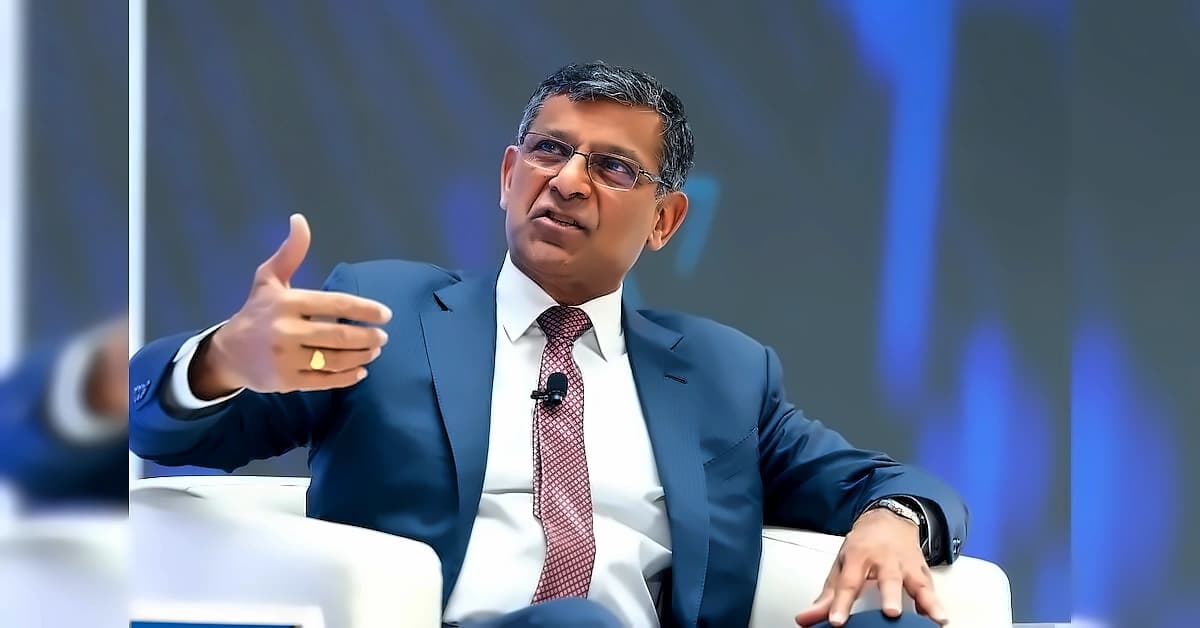
Rajan has been appointed to the balance sheet policy task force alongside Harvard University economist Karen Dynan and former federal reserve governor Jeremy Stein. The panel has been tasked with examining the costs, benefits and long-term institutional implications of the Federal Reserve's balance sheet strategy, including its asset holdings and the role they play in implementing monetary policy. Delhi-born American economist Raj Chetty will co-lead the data task force with former Walmart CEO Doug McMillon and University of Chicago economist Kevin Murphy, focusing on improving the quality, accuracy and timeliness of economic indicators used by policymakers. Wisconsin-born Asha Sharma, executive vice president at Microsoft and CEO of Xbox, will serve on the productivity and jobs task force alongside venture capitalist Marc Andreessen and Stanford University economist Charles I Jones, studying how emerging technologies, particularly artificial intelligence, are transforming productivity, labour markets and long-term economic growth.
The appointment drew praise from Senate Banking Committee Chairman Tim Scott during Warsh's first semiannual monetary policy hearing before Congress on Wednesday. As reported by IANS, Scott singled out Rajan's inclusion as evidence that the new Fed chief was encouraging competing ideas rather than institutional consensus. Scott welcomed the composition of the Federal Reserve's newly established working groups, particularly the balance sheet task force, stating that the inclusion of competing approaches and philosophies about the balance sheet was necessary for intellectual honesty. "It seems like you have Jeremy Stein... as well as the former governor of the Indian Central Bank, Mr Rajan. They have very nicely put competing approaches and philosophies about the balance sheet, but if you're going to be intellectually honest, you need to have a serious debate about what direction to go and, frankly, how to get there," Scott said.
The five task forces announced by Federal Reserve Chair Kevin Warsh will examine five core areas of the Fed's work: communications, balance sheet policy, the use of economic data, productivity and jobs, and the inflation framework. Warsh revealed that the task forces have been given six months to complete their work, with preliminary findings expected as early as September and final recommendations by the end of the year. Each panel will receive support from Federal Reserve staff while operating independently before submitting recommendations to the Federal Open Market Committee (FOMC). The communications task force will review how the Federal Reserve conveys its policy deliberations and decisions during periods of uncertainty, led by Peter R Fisher, Arminio Fraga, and former Bank of England Governor Mervyn King. The inflation frameworks task force will revisit how the Federal Reserve understands and responds to the drivers of inflation, led by Harvard University economist Greg Mankiw, Nobel laureate Thomas Sargent, and former Bank for International Settlements adviser William White.
This represents a clear window into Kevin Warsh's distinct philosophical approach to central banking, which has historically criticized the Fed for becoming too academic, too reliant on lagging indicators, and too insulated from real-world business dynamics. By examining the mandates and the specific people appointed, three major strategic shifts become clear. First, Warsh is actively breaking the traditional "Fed Speak" and academic echo chamber. Fed review panels are usually dominated by inside-the-beltway lifers. Deliberately bringing in corporate leaders like Doug McMillon and tech venture capitalists like Marc Andreessen implies that Warsh believes the Fed cannot understand a modern economy by looking exclusively at traditional economic models. He wants real-time, boots-on-the-ground business data. Second, the appointments signal a shift away from lagging economic models. The inclusion of Thomas Sargent, a pioneer of rational expectations, and Greg Mankiw to lead the Inflation Frameworks group suggests a desire to dismantle the standard Phillips Curve models that failed to predict the inflation spikes of the early 2020s. Warsh wants a framework that accounts for modern global supply chains and fiscal realities rather than just historical trade-offs between unemployment and inflation. Third, the Fed is embracing the supply-side and the realities of artificial intelligence. Central banks usually focus almost entirely on managing demand by adjusting interest rates. By creating a dedicated Productivity and Jobs task force stacked with Silicon Valley heavyweights, Warsh is signaling that the Fed needs to understand the supply side of the economy. If AI drastically increases worker productivity, the economy can grow faster without triggering inflation, a thesis Warsh has historically been open to exploring.

Rajan, who served as Governor of the Reserve Bank of India from 2013 to 2016, is internationally recognised for his work on financial stability and monetary policy. Currently Professor of Finance at the University of Chicago Booth School of Business, he previously served as Governor of the Reserve Bank of India and was also the International Monetary Fund's Chief Economist. His inclusion in the Federal Reserve's balance sheet review comes as the US central bank reassesses its monetary policy framework after the pandemic-era expansion of its nearly $9 trillion balance sheet and subsequent effort to reduce it while bringing inflation back towards its long-term target. The appointment represents a significant milestone for Indian-origin professionals in global central banking leadership, with Warsh revealing that the balance sheet review would not be a symbolic exercise and that the central bank should be "very open-minded to changes" while ensuring financial markets had sufficient time to adjust to any reforms.