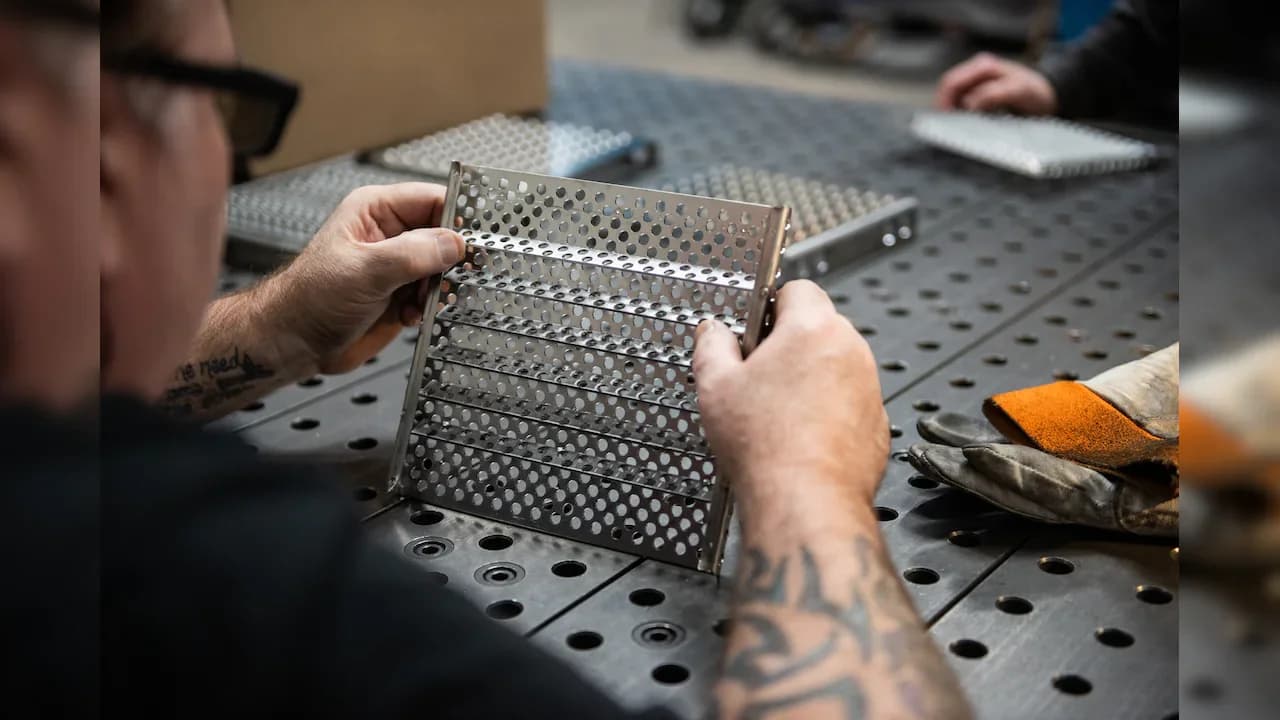
The Institute of Supply Management's (ISM) Purchasing Managers Index showed economic activity in U.S. manufacturing expanded for the sixth straight month in June, but at a slightly slower pace than May. The PMI registered 53.3% in June, down from 54% in May, though still up from 52.7% in both April and March. According to ISM's Manufacturing Business Survey Committee Chair Susan Spence, while ongoing war and price volatility remain concerns, "the badness is better than last month." The PMI, which tracks 18 manufacturing sectors, indicates any reading over 50% indicates expansion in the manufacturing economy.
The US economy continues to demonstrate robust performance with real GDP expanding 2.7% over the year to the first quarter, according to BMO Capital Markets analysis. However, the BEA's second estimate revised Q1 2026 GDP growth down to 1.6% from the 2.0% advance estimate, with most of the downgrade attributable to inventory investment. As reported by BMO Capital Markets economist Sal Guatieri, the economy has remained far more durable than the recession calls that circulated so freely only a year ago, despite not every household feeling prosperous.
Goldman Sachs research reveals that AI-related spending will reach $800 billion annualized by year-end and contribute roughly 3.3 percentage points to "true" capital expenditure growth in 2026. However, when translated into actual GDP growth, the bank estimates a contribution of just 0.3% on a "true" basis and 0.1% on a measured basis. This represents a significant gap between the investment flow and its economic impact, as much of the equipment gets sourced from Taiwan, Korea, and Japan, with dollars leaving U.S. shores at the point of equipment sale. The original multiplier math used a 3:1 ratio based on traditional infrastructure projects, but AI capex carries lower domestic content, requiring a more conservative 2:1 multiplier.

Nonfarm business productivity rose 2.8% over the same period, representing the strongest pace since 2024 and comfortably above the roughly 1.9% long-run average. According to BMO's figures, this productivity improvement is particularly significant because it allows growth to remain firm without automatically forcing a new inflation problem. The AI investment boom is central to this story, with business spending on computer hardware, software and data centres reportedly rising 25% over the past year as companies build what BMO describes as the modern equivalent of an AI interstate highway system.
At 4.2% unemployment, the labor market remains another source of resilience, though BMO notes that recent improvement has come more from a shrinking labor force than from booming hiring. The labor force contracted by 2.1 million people, an unusually large decline outside the pandemic period. Unit labor costs rose only 0.5% over the past year, the smallest increase since 2019, creating a powerful combination of stronger output without a matching surge in labor costs.
Despite the strong fundamentals, equity markets remain at record highs with the Dow pushing to fresh peaks, supported by strong earnings growth and the prospect that AI-driven productivity gains eventually feed through into corporate margins and profits. However, Goldman's research highlights that AI capex risk is wider than the framework shows, with potential downside scenarios estimating a 0.2 to 0.4 percentage points drag on GDP if the cycle rolls over. The investment prescription shifts toward betting on productivity adoption rather than buildout exposure, with companies whose products embed AI into existing workflows offering more durable returns than those dependent on hyperscaler capex orders.