US stocks declined sharply on Friday after a blowout jobs report fueled bets of a rate hike by the U.S. Federal Reserve, with all three major indexes posting significant losses. According to The Economic Times, the Nasdaq Composite lost 1,117.38 points, or 4.16%, to 25,713.58, ending its nine-week winning streak - the longest weekly run since December 2023. The S&P 500 fell 199.64 points, or 2.63%, to 7,384.67, while the Dow Jones Industrial Average dropped 684.53 points, or 1.33%, to 50,877.40. The sell-off was led by technology stocks, with chip stocks suffering their largest daily decline this year as the semiconductor sector was way overbought, according to Wells Fargo's Ohsung Kwon. Nvidia, the largest company by market value, fell sharply, along with smaller rivals Intel, Micron, AMD and Broadcom. The robust labour market data prompted a significant rise in Treasury yields as traders pared expectations of near-term Federal Reserve rate cuts and increased bets that policymakers could maintain a restrictive stance for longer. The benchmark 10-year Treasury yield climbed above 4.5%, while the 2-year yield hit a 15-month high at 4.164%. However, emerging-market currencies faced additional pressure, with the MSCI emerging-market currency index dropping to its lowest level since early April, as reported by CNBC TV18.
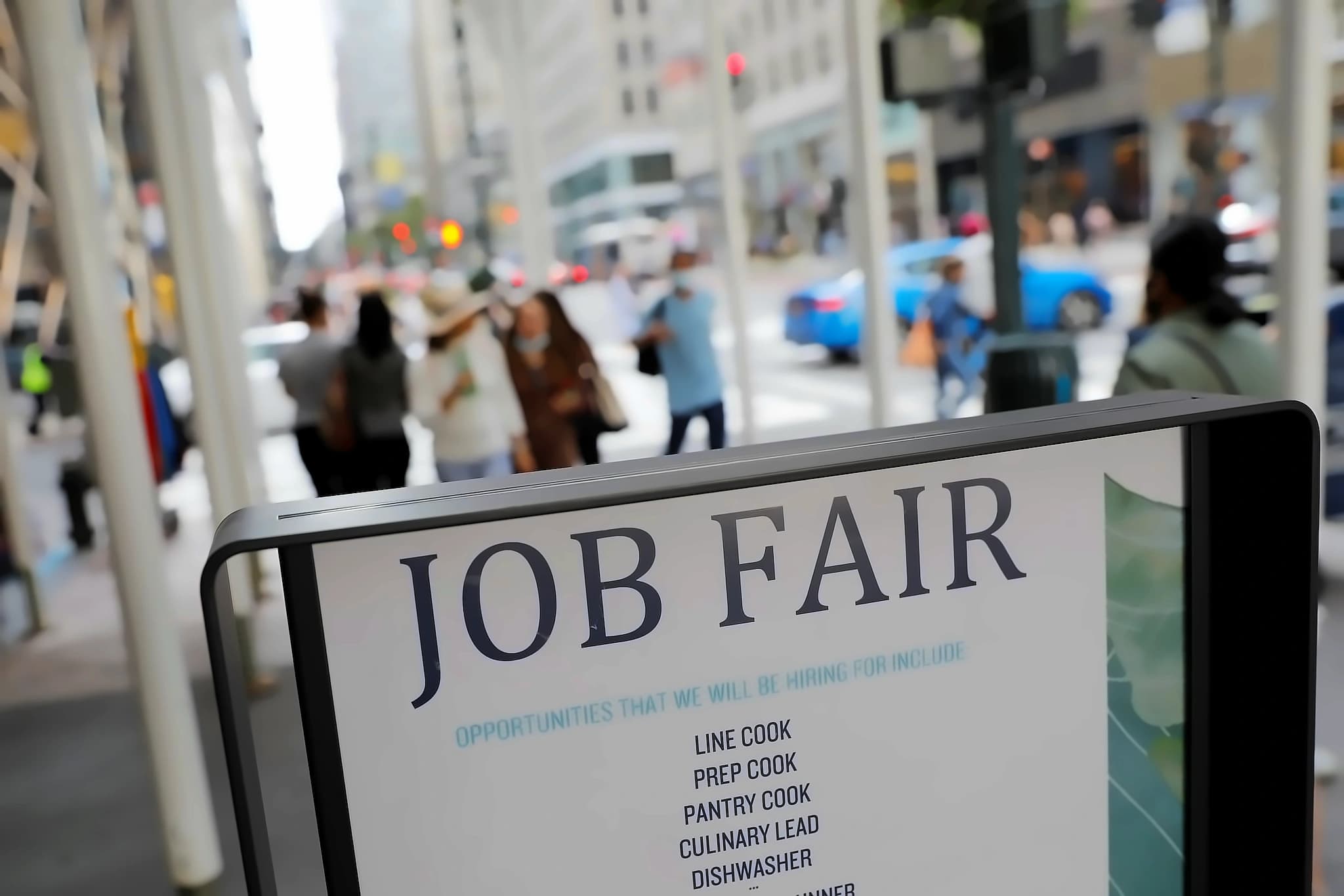
US employers added 172,000 jobs in May, according to the Labour Department, with the unemployment rate remaining unchanged at 4.3%. As reported by The Financial Express, the figures came in well above the 130,000 jobs economists polled by FactSet had projected, despite rising inflation and energy costs driven by the ongoing US-Iran war. The job market has been gradually recovering this year after a weak 2025, with job growth showing continued strength in the labour market despite higher energy prices and economic uncertainty following the United States and Israel's attacks on Iran in late February. According to Associated Press, the job gains were roughly double what forecasters had expected, with hiring showing resilience in the face of economic uncertainty and painfully high energy prices. The job gains were down slightly from a revised 179,000 in April, but hiring has averaged 190,000 a month from March through May, marking the best three months of hiring since early 2024. The Labour Department also revised employment figures for March and April higher, with March revised up by 29,000 to 214,000 and April revised up by 64,000 to 179,000, adding a combined 93,000 jobs in those months. The figures boosted bets that the Federal Reserve will consider an interest-rate increase this year in order to contain inflation, as reported by CNBC TV18.
Technology stocks bore the brunt of the sell-off, led by semiconductor names, as reported by The Economic Times. Nvidia, the largest company by market value, fell sharply, along with smaller rivals Intel, Micron, AMD and Broadcom. The stronger-than-expected employment figures underscored the resilience of the US economy, but also reignited concerns that persistent labour market strength and elevated inflation could delay any policy easing by the Federal Reserve. Markets are now closely watching upcoming inflation readings and Fed commentary for further clues on the path of interest rates through the remainder of the year. Emerging-market equities also slumped on Friday, extending a losing streak to a third day, with Asian AI technology companies leading losses as Broadcom's downbeat outlook for AI-chip sales earlier this week caused jitters among investors, as reported by CNBC TV18. According to Saxo Markets's Charu Chanana, "Broadcom was the trigger that reminded markets how stretched expectations have become. Investors have priced in a lot of perfection around AI, so even a small disappointment can lead to a pretty sharp reset."
The strong jobs data had broader implications across global markets, with the pan-European STOXX 600 index easing 0.29% and MSCI's gauge of stocks across the globe falling 2.23%, as reported by Reuters. The Middle East conflict also added to market uncertainty, with Iran reaffirming support for the Hezbollah militia and demanding Israel withdraw from southern Lebanon, complicating efforts to end the broader conflict between the U.S. and Iran. According to Wealth Consulting Group's Talley Leger, "There are some near-term pressures on the short end of the curve and it's largely because of the geopolitical impact on the price of oil and headline inflation but looking through that, we also understand that these pressures tend to be temporary and calm back down." The dollar index was on track to gain 0.62%, supported by the Middle East conflict, while cryptocurrencies extended recent declines, with bitcoin shedding 6.04% to $59,746.51 and heading for a weekly decline of nearly 18%, its biggest since the week FTX collapsed in November 2022. According to The Economic Times, cryptocurrency firms Coinbase and Strategy were pulled lower by bitcoin's sharp drop. The broader market damage is severe, with South Korea's Kospi tumbling 6.3% and the MSCI Asia-Pacific gauge dropping 2.5% for its fourth loss in five sessions, as reported by CoinDesk.
The job market faces significant challenges, particularly for younger workers and those who have been laid off. As reported by The Financial Express, the number of long-term unemployed - those out of work for 27 weeks or more - stood at 2.0 million in May, up by 524,000 over the past year. Long-term unemployed workers now account for 27.5% of all unemployed people. The labour force participation rate held at 61.8%, and around 6.2 million people outside the labour force said they currently want a job but were not actively searching. Seeing their prospects diminished, Americans are reluctant to leave their jobs and seek something better elsewhere, with the number of people who quit dropping to the lowest level since August 2020. According to Associated Press, nearly 28% of the unemployed in April had been jobless for more than six months, the biggest share since December 2021. Many young people are still finding it tough to break into a stagnant job market, with companies like Uncle Giuseppe's struggling to find skilled workers despite being on a hiring spree to add 1,000 workers over the next year. A new study by the Federal Reserve Bank of New York identified that the rise of remote work is making it harder for businesses to hire new graduates for work-at-home positions because it's harder to train and mentor them when they aren't coming into the office.