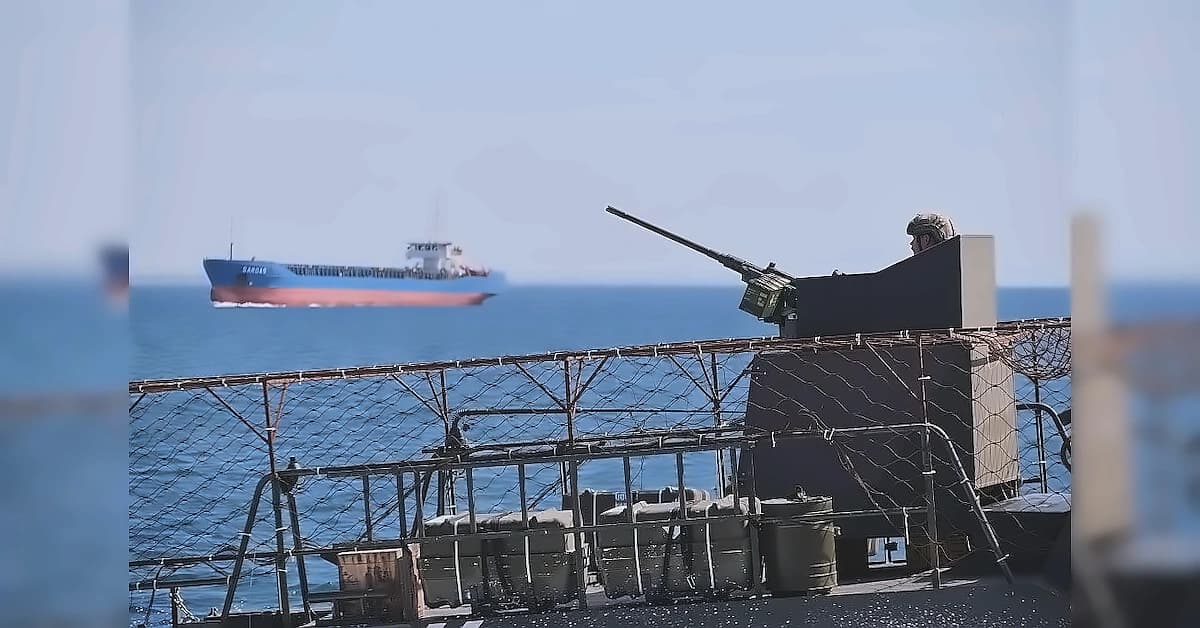
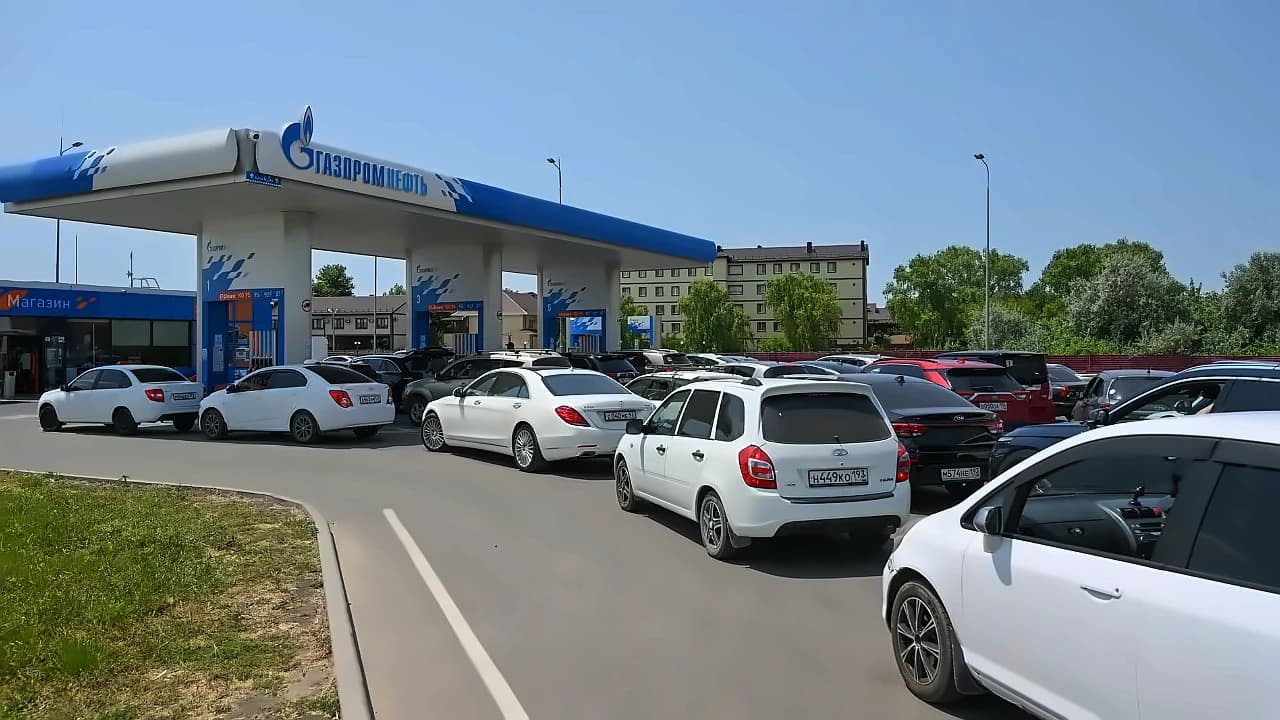
Ukraine launched a second drone barrage on St Petersburg on Saturday, the final day of the major St. Petersburg International Economic Forum, targeting Russia's second-largest city with 141 drones according to local officials. As reported by POLITICO, the strikes hit 'the enemy navy's arsenals and a base in Kronstadt' in the St. Petersburg region and an oil depot in the southern Krasnodar region. The latest attacks set a defense ministry facility ablaze and disrupted operations at Russia's second-largest commercial airport for several hours. Russian air defense shot down 144 drones over the Leningrad region, Governor Alexander Drosdenko said in a post on Telegram, describing it as an 'unprecedented assault'. A fire broke out at a defense ministry site in the Lomonosovsky district, prompting a partial evacuation of nearby residents. The nearby island of Kronstadt in the Gulf of Finland, home to Russia's Baltic Fleet, was also briefly closed to traffic, according to the district administration. St Petersburg Governor Alexander Beglov urged residents to shelter indoors and warned of possible disruptions to mobile internet service. Falling drone debris from an attack elsewhere, in the Tver region, killed a man, while three people were injured in the St Petersburg area, officials said. Beglov described the injuries as 'minor' and said that Russian air defenses had prevented any serious damage.
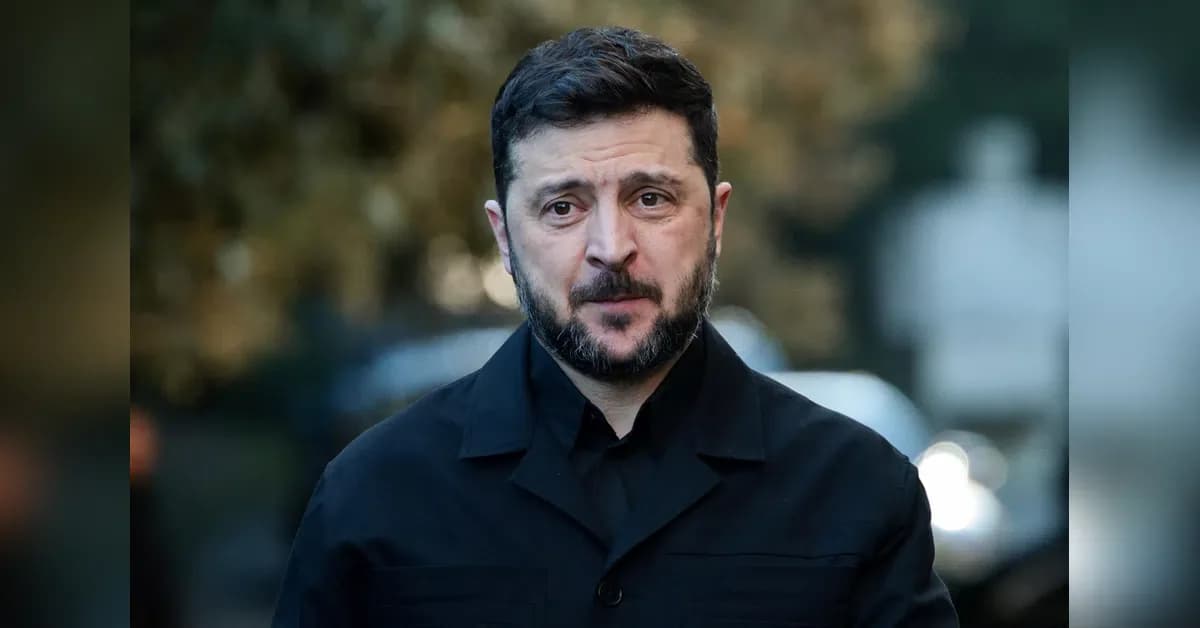
The latest attacks came within hours after Ukrainian President Volodymyr Zelenskyy's Thursday letter to Russian President Vladimir Putin, marking the first public message Zelenskyy has written directly to Putin since Russia sent troops into Ukraine in 2022. Speaking Friday at the St. Petersburg International Economic Forum, Putin rejected Zelenskyy's proposal for a face-to-face meeting on the four-year-old conflict, stating he sees 'no sense' in such discussions. The letter was described as a sweeping critique of Putin's 26 years in power, including some taunts about his age. Zelenskyy wrote online Saturday that the Ukrainian drones hit 'the enemy navy's arsenals and a base in Kronstadt' in the St. Petersburg region and an oil depot in the southern Krasnodar region. Zelenskyy stressed the distance that the drones had flown, about 1,000 kilometers (620 miles), to strike the naval base at Kronstadt, on an island just west of St. Petersburg, as well as a naval arsenal. Zelensky wrote on X: "It is time to end this war," but added that 'Russia's ruler wants to keep fighting.' Ukrainian Foreign Minister Andrii Sybiha responded to Putin's dismissal, warning that 'the failures will get more humiliating' and claiming there are 'no safe places in Russia that are exempt' from long-range Ukrainian attacks. Sybiha warned on Saturday that the intensity of attacks would 'continue to grow', stating that things would 'only get worse for Russia'.
Ukraine reported that a Russian Shahed drone struck a spent nuclear fuel storage facility near the mothballed Chernobyl power plant, drawing sharp concern from the UN's atomic watchdog. The Ukrainian General Staff said the drone hit a building within the centralized spent fuel storage facility within the Chernobyl exclusion zone, with a small fire extinguished within an hour. As reported by Business Standard, the facility, located about 9 miles (14.5 kilometers) from the Chernobyl plant, is used to provide long-term storage for spent nuclear fuel from Ukraine's operating atomic power plants. The IAEA said it had been informed of the attack and its team would soon visit the facility and inspect the damage. The UN's nuclear watchdog reported that the strike caused significant damage to the facility's fuel reception building — including to the facade, windows and doors — and nearby buildings were also affected by the blast wave. Radiation levels at the facility remain within established limits, according to Energoatom, Ukraine's nuclear power plant operator. President Zelenskyy described the strike as 'extremely vile' and said there is 'certainly an increase in Russia's brazenness'.
Both sides continue targeting each other with long-range strikes as the front line remains largely static. As reported by Business Standard, Russia targeted Ukraine overnight with 272 strike drones, with Ukrainian air defences shooting down 249 of them. In Ukraine, at least one person was killed and three injured overnight into Saturday in the Dnipropetrovsk region, according to regional authorities on Saturday. In the Donetsk region, six people were killed and another six were killed and 27 others were injured in the Kherson region, according to regional governors. In Zaporizhzhia, five people sought medical care after a Russian drone strike started a fire at a parking lot, according to regional head Ivan Fedorov. The attacks on St. Petersburg and the surrounding region, some 1,000 kilometers north of Ukraine, were part of a broader wave of attacks across several Russian regions. The Russian Defense Ministry said a total of 376 Ukrainian drones were 'intercepted' over Belgorod, Bryansk, Kaluga, Kursk, Leningrad, Novgorod, Oryol, Pskov, Rostov, Ryazan, Smolensk, Tver, and Tula regions, Moscow region, Crimea Republic, Abkhazia Republic, and over the waters of the Azov and Black Seas. Russian forces also attacked two civilian search and rescue vessels in Ukrainian waters, causing injuries, according to Ukrainian Deputy Prime Minister Oleksiy Kuleba.

The renewed attacks on St Petersburg strike a further embarrassing blow to Putin's efforts to cast the conflict as a distant event that doesn't affect Russian daily life. The attacks follow a Ukrainian drone strike that set ablaze an oil terminal in the city and hit a nearby naval base Wednesday, hours before the opening of the St Petersburg International Economic Forum. Speaking at the forum, Putin said Thursday that Russia will strengthen its air defences to counter recent Ukrainian drone attacks, which have reached deep inside his country. The timing of the latest strikes, just before the final day of Putin's Davos-style economic forum, highlights the ongoing military pressure despite diplomatic overtures. Zelenskyy has described the St Petersburg strikes as 'just a response' to Russia's aggression against Ukraine, with the President writing on social media: 'Last night, our drones covered a distance of about 1,000 kilometers to the St Petersburg region — to the enemy navy's arsenals and a base in Kronstadt.' The nuclear facility strike near Chernobyl adds another dimension of concern, with Rafael Mariano Grossi, director general of the IAEA, calling the incident 'deeply concerning' as it occurred at a facility containing large amounts of nuclear material just meters away from the attacked building.
On Sunday, President Zelenskyy is set to travel to London for a meeting with British Prime Minister Keir Starmer, French President Emmanuel Macron and German Chancellor Friedrich Merz. The leaders are expected to discuss further support for Ukraine and the latest developments in the so-called 'Coalition of the Willing' of 35 largely European nations working to support Kyiv. According to dpa news agency, 'Slowly, a window for talks between the European side and Russia is opening' despite Putin's rejection of Zelenskyy's proposal. Meanwhile, NATO forces have begun operations aimed at boosting defenses in Sweden and Finland, two Scandinavian neighbors of Russia who abandoned decades of military non-alignment to join the alliance following the invasion of Ukraine. US General Alexus Grynkewich, NATO's Supreme Allied Commander Europe, said NATO's northeastern flank is 'one of the most strategically significant and environmentally challenging areas in the world.'