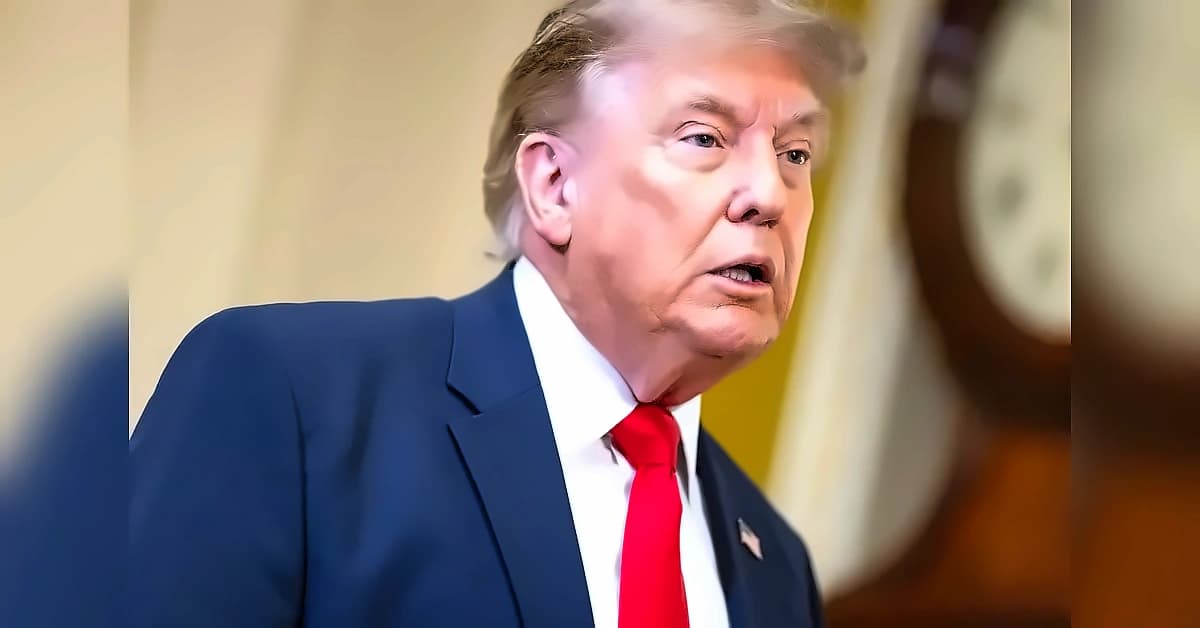
President Donald Trump extended the US-Iran ceasefire at Pakistan's request while awaiting a 'unified proposal' from Tehran, creating renewed uncertainty in global markets. However, the two-week ceasefire is nearly over without a deal between the US and Iran, with Iran saying the Strait was again closed over the weekend, firing on some ships attempting to pass through the waterway. According to Newsday, the extension comes as diplomats work through back channels to arrange new talks between the United States and Iran. US Vice President JD Vance called off a trip to Pakistan where he was expected to lead US negotiators in talks with Iran to extend the ceasefire, causing markets to retreat from earlier gains. The S&P 500 fell 0.6% to 7,064.01, while the Dow Jones Industrial Average dropped 0.6% to 49,149.38 and the Nasdaq composite also slipped 0.6% to 24,259.96. Tech stocks wavered on Tuesday amid concerns about the stability of the ceasefire in the war in Iran, with some slight gains following a resurgence in the artificial intelligence trade.
Traders placed a series of bets worth $430 million on a drop in crude prices just 15 minutes before President Trump announced the ceasefire extension on Tuesday. As reported by The Economic Times, between 1954 and 1956 GMT on Tuesday, 4,260 lots of selling hit the oil market, worth a combined $430 million based on the prevailing Brent futures price. The trades took place in post-settlement hours when volumes are usually extremely limited, with the Brent market settling at 1830 GMT. These trades did not have much impact on the price, which edged down to $100.66 a barrel from $100.91 before the trades took place. After Trump's announcement, Brent crude futures fell to a low of $96.83 in the minute that followed, before settling at $99.2 a barrel at 1200 GMT on Wednesday. This marks the third time this month, and the fourth in total that large, well-timed directional bets on the oil price have been made shortly before major announcements on the Iran war. On March 23, $500 million was bet on a drop in the oil price just 15 minutes before Trump announced a delay to threatened attacks on Iranian power infrastructure, while April 7 saw bets worth $950 million just hours before Trump's announcement of a two-week ceasefire.
Asian benchmarks showed mixed trading Wednesday as investors watched for next steps in the US-Iran conflict. Japan's Nikkei 225 gained 0.5% to 59,653.56, while South Korea's Kospi edged 0.2% lower to 6,374.46. Australia's S&P/ASX 200 fell 0.9% to 8,866.20, and Hong Kong's Hang Seng shed 1.3% to 26,137.59. Taiwan's Taiex was up 1.1%, showing regional divergence in response to the ceasefire developments. The Shanghai Composite gained 0.1% to 4,090.24, with the US military maintaining its blockade of Iranian ports. Markets have whipsawed as traders continue to digest developments between the US and Iran, with traders embarking on a jubilant rally after Iran announced the Strait of Hormuz was open to commercial traffic on Friday, only to see the situation again become volatile.
Jefferies' Michael Toomey warns that the stock market's relief rally might have already hit the upper limit, pointing to five technical signals that suggest the market is about to "stall" following last week's big rally that took major indexes to all-time highs. Call volumes over the last three trading sessions in the US are hovering around their highest level in five years, reflecting heightened investor bullishness that could be a contrarian sell signal. The Relative Strength Index (RSI) reading for the S&P 500 rose 46 points over the last 13 days, the largest increase over that time frame in over thirty years, while the Nasdaq has seen a similar increase. Around 23% of companies in the technology, media, and telecom sectors look overbought, with an RSI reading of over 70. The S&P 500 gained more than 3% for three straight weeks as of last Friday, a rare occurrence that has only happened twice over the last 75 years, while the Nasdaq Composite hit its longest win streak since 1992 on Friday.
Market analysts suggest the ceasefire extension has created an uneasy status quo rather than a genuine breakthrough, as noted by KCM Trade chief market analyst Tim Waterer. The absence of a genuine resolution means traders remain inclined to tiptoe rather than trade with real conviction. Asian nations, including resource-poor Japan, depend on access to the Strait of Hormuz, a narrow waterway that's the main avenue for crude oil produced in the Persian Gulf area to reach customers worldwide. The S&P 500 was up 9% since the start of April as of last Friday, above five times the index's historical average of 1.7 percentage points for the month over the last 30 years. The US dollar fell to 159.27 Japanese yen from 159.38 yen, while the euro cost $1.1746, down from $1.1744. The IMF also downgraded its forecast for global economic growth to 3.1% this year from the 3.3% it had forecast in January.