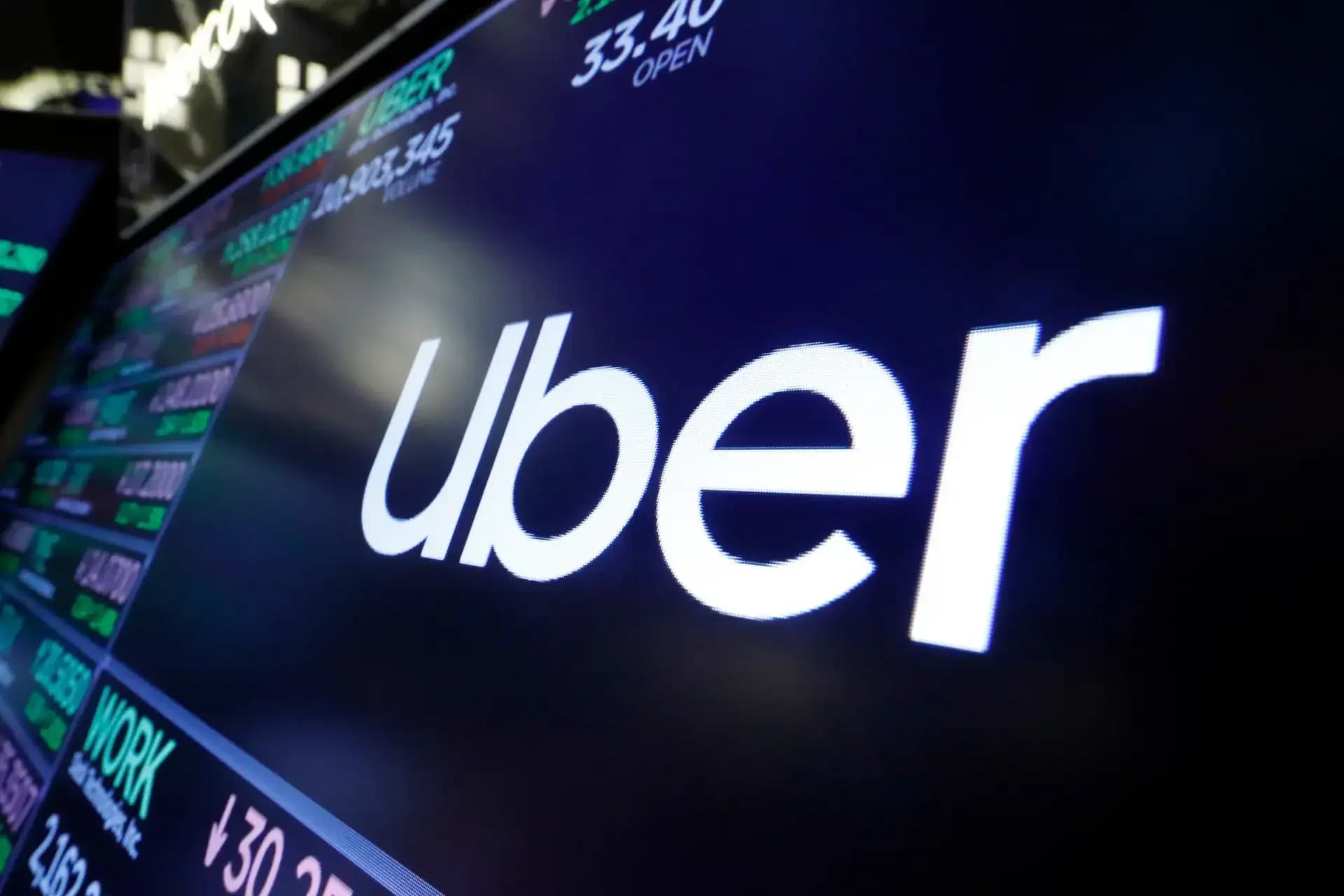
Uber Technologies shares fell 3% in premarket trading following the company's earnings forecast that missed analyst expectations. According to CNBC, the stock has declined 12% so far this year in the lead-up to Wednesday's report, reflecting investor concerns about the company's ability to evolve in the robotaxi era. The market reaction highlights growing skepticism about Uber's capital allocation strategy and its long-term autonomous vehicle plans, occurring against the backdrop of broader market movements that saw the Dow Jones Industrial Average rise 263.24 points to a record close of 54,349.12 for its fifth straight positive session.
Uber forecast current-quarter (Q3) adjusted earnings per share of 84 cents to 88 cents, broadly in line with analyst projections. The company reaffirmed plans to invest heavily in robotaxis and acquisitions despite robust second-quarter demand. Uber outlined plans to spend more than $10 billion on autonomous vehicles over the coming years, as reported by Business Standard. CEO Dara Khosrowshahi emphasized the company's strategy to avoid dependence on any single autonomous vehicle partner, citing partnerships with Zoox, Wayve, WeRide, Avride, and Nvidia to ensure diversified ecosystem development.
Uber forecast Q3 gross bookings of $59.25 billion at the middle of its range, falling below the consensus estimate of $59.33 billion, according to StreetAccount. The company attributed the shortfall to currency headwinds, which it said shaved off roughly one percentage point from reported growth. Uber's Q2 gross bookings of $58 billion exceeded Wall Street expectations of $57.2 billion, fueled in part by significant demand spikes during the World Cup. However, trips volume grew 18% to 3.87 billion in the second quarter, falling short of analyst estimates of 3.9 billion, with the moderation entirely attributable to Brazil competition from Chinese rivals like Didi Global and Meituan.
Uber announced significant robotaxi developments, including plans to launch robotaxis with UK startup Wayve Technologies in London in the coming weeks, putting it ahead of planned rollouts by Baidu and Alphabet's Waymo. However, the Wayve vehicles will still have safety drivers aboard, as the companies operate under regular private-hire vehicle licenses that require further regulatory approvals for truly driverless operations. CEO Khosrowshahi confirmed Uber remains on track to have robotaxis in as many as 15 cities by the end of the year, including the San Francisco Bay Area, Los Angeles, Zurich, Madrid and Tokyo. The company already operates autonomous vehicles in seven cities globally, though deployments are currently limited in scale.