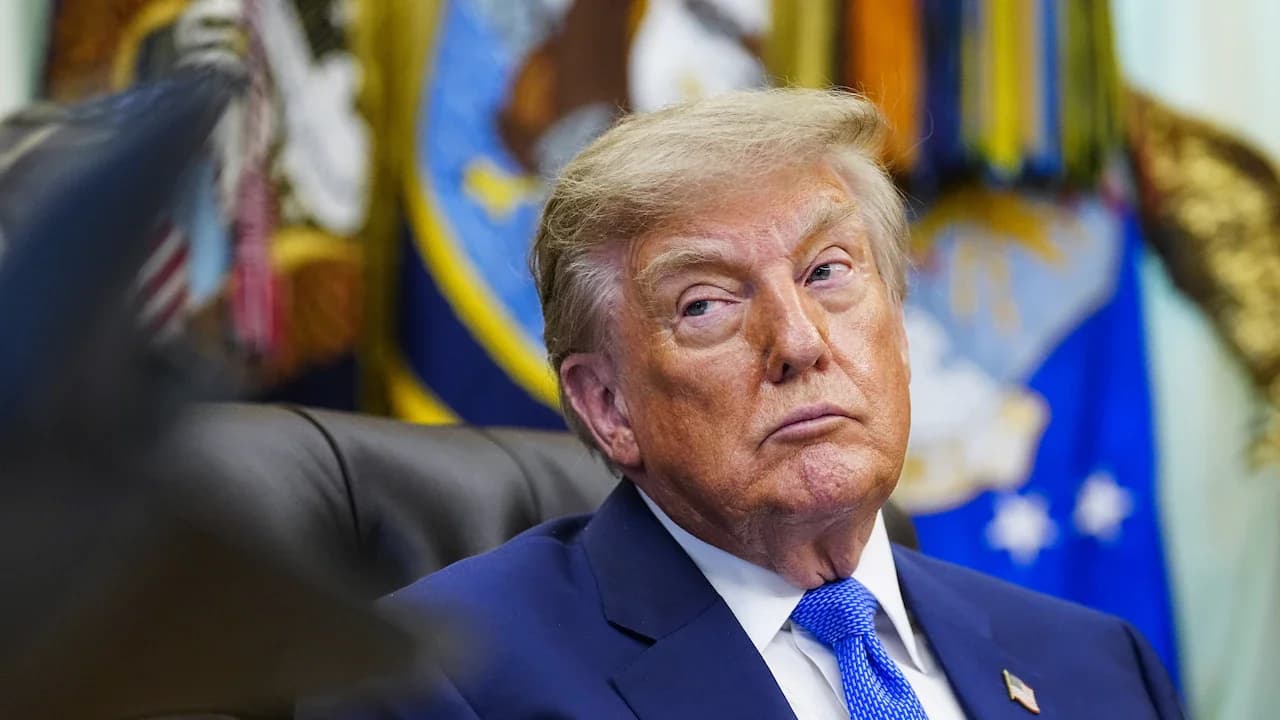
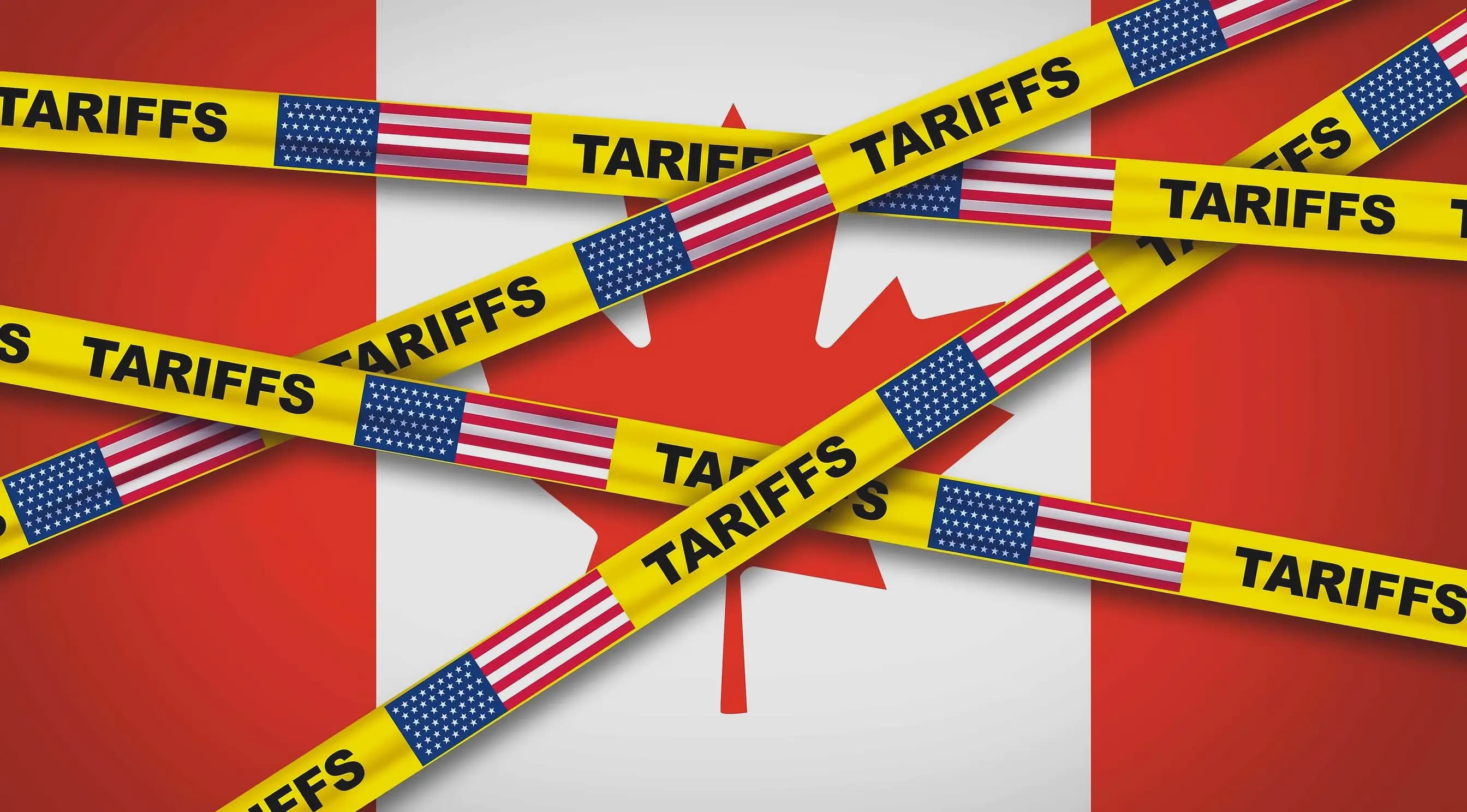
The United States has banned dairy products, most alcoholic beverages, motorcycles and mopeds from Canada, with the ban taking effect on September 29 at 12:01 a.m. Eastern time as the trade war between the two nations escalates. According to The Times of India, this latest development comes after Canada imposed retaliatory tariffs on $20 billion in US imports following the breakdown of trade talks last month. US President Donald Trump has also directed the US General Services Administration to declare Canadian products ineligible for large, long-term US government contracts until Canada allows "full and fair reciprocity" for American products. The ban represents a significant escalation in the ongoing trade dispute that has now affected multiple sectors beyond traditional goods, with the White House stating the new import restrictions will take effect on September 29. Trump's latest move targets most alcoholic beverages from Canada, along with some dairy products including whey, motorcycles, mopeds and various types of molasses, marking a direct response to Canada's counter-measures. As reported by Business Standard, the import bans for some Canadian dairy products and alcohol will take effect in three weeks, while modifications to the Section 338 tariffs will come into force in one week. A senior administration official told reporters that the measures were designed to counter Canadian retaliation, protect American production and restore what the White House considers a level playing field.
Despite the ongoing trade war uncertainty, Canada's major banks have demonstrated remarkable resilience in their third-quarter earnings. According to Financial Post, each of Canada's biggest banks comfortably beat analysts' third-quarter earnings expectations last month, primarily due to a bump in their capital market business segments. RBC CEO David McKay expressed cautious optimism about the long-term prospects, stating at the Scotiabank Financials Summit conference that "there's enormous benefit on both sides of the border," while acknowledging concerns about the trade war expansion. RBC announced a $1.4-billion initiative to invest in Canadian technology companies that have the potential to become global powerhouses, with the lender planning direct equity investments in Canadian companies. The banking sector's stability is further supported by the federal government's desire to accelerate the growth of crucial energy-related projects, which would help Ottawa boost its economy and reduce the country's reliance on the US in the long run. RBC is keeping its common equity tier 1 ratio higher than regulators require due to significant uncertainty in sectors impacted by tariffs, while maintaining stable provisions for credit losses.
Canada has implemented tariffs of 15-50% on $20 billion worth of US goods as of Tuesday, marking a direct response to Trump's new trade levies targeting the country. According to The Times of India, the counter-tariffs cover products from steel, aluminium, cheese, appliances, clothing, cosmetics and farm equipment, representing a dollar-for-dollar retaliation that intensifies an 18-month-old trade war. Canadian Prime Minister Mark Carney announced that Canada is "ready to sit down and strike that deal when the Americans are ready," though he emphasized that Canada will reject any agreement that substantially weakens its auto and metals industries. The measure targets a roughly equal dollar amount of American goods, with Canadian officials announcing the details three days after US tariffs took effect on August 22. As reported by Business Standard, Canadian Prime Minister Mark Carney's government also increased duties on many US steel items to 50% from 25%, while Canadian retaliatory duties threaten to wreak havoc on closely integrated supply chains, impacting key industries including auto manufacturing. Canadian Minister Dominic LeBlanc said he is in contact with US Trade Representative Jamieson Greer and that Ottawa is assessing Washington's latest move, stating "When the US is ready to engage, our government will work in good faith and constructively towards a more secure mutually beneficial trading relationship that fully respects Canadian sovereignty."
Canadian consumers have demonstrated remarkable resilience in the face of ongoing trade war uncertainty, with banking executives reporting minimal deterioration in credit performance. According to Financial Post, Toronto-Dominion Bank chief executive Raymon Chun noted that "we are definitely seeing some deterioration in that cohort," referring to clients with credit scores below 650, but emphasized that "it's within the range that we would have expected. Even in that more sensitive cohort, you are not seeing unusual behaviour." Bank of Nova Scotia chief executive Scott Thomson added that only a relatively small amount of trade between the two countries is being tariffed, stating "I don't think that's going to have a huge impact on the credit performance." The Canadian Chamber of Commerce stated that the US is "punishing Canada — by punishing themselves — for the whole world to see" with its latest trade measures, with Candice Laing, the chamber's president and CEO, noting that "Ultimately, we will end up back at the table because the math is the same. Together, we're stronger. Apart, we're weaker."
Canadian Prime Minister Mark Carney has announced that Canada is "exploring ties with the European Union that could stop short of membership," according to a Canadian official familiar with the discussions. As reported by The Times of India, possible options include expanding existing agreements, negotiating a new treaty or creating other forms of cooperation. The official said Canada is already consulting provinces, territories and labor groups about what a deeper relationship with the EU could look like, but no model has been chosen. Carney is due in Strasbourg, France, next week, where he will attend European Commission President Ursula von der Leyen's State of the European Union address September 16 and address the European Parliament the following day. Carney acknowledged the trade actions would cause short-term pain but said they would push Canada to move faster on investment, infrastructure and trade diversification. "It was easy business, but it meant we relied too much on one economic partner," he said. "That time is over." More than 70% of Canadian exports still go to the United States, underscoring the scale of Carney's push to diversify trade. According to The Times of India, Canadian provinces have responded by banning the sale of US alcoholic products, with British Columbia Premier David Eby stating that the province would install new signs at US border crossings reading: "Welcome to British Columbia, Canada. Strong, proud and will NEVER be the 51st state. Sorry!"