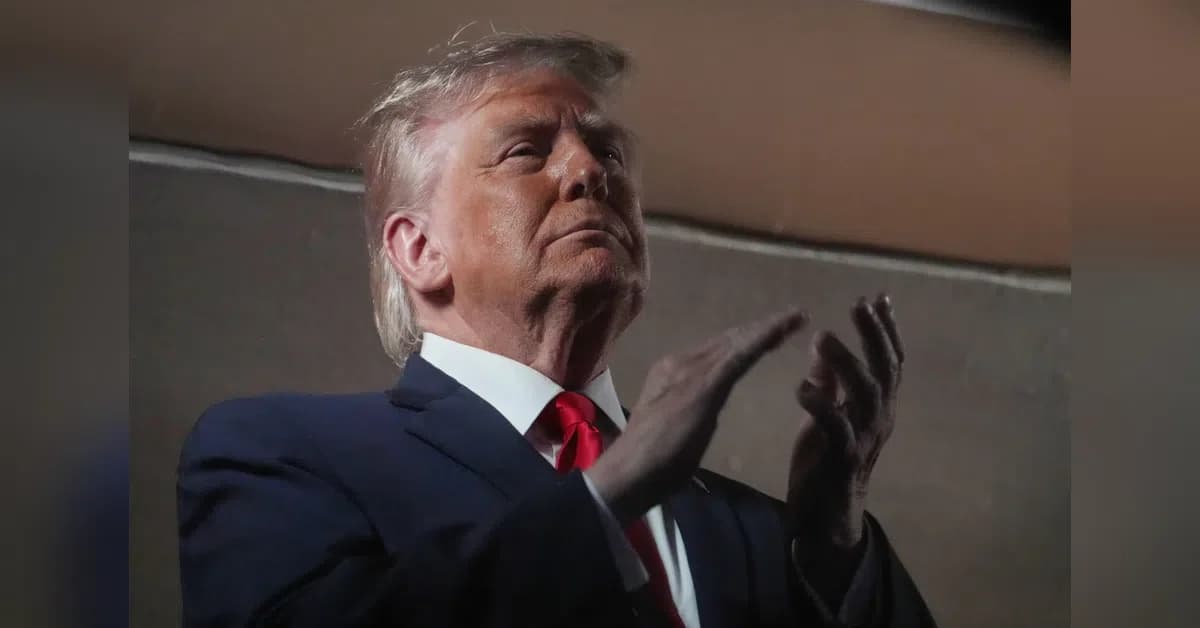
President Donald Trump took an unexpectedly optimistic stance on inflation on Wednesday, telling reporters he 'loves the inflation' after the consumer price index jumped 4.2% in May over the previous year. According to reports from The Times of India, Trump responded to a reporter's question about the latest inflation figures by saying, 'You know what I really love? I love inflation.' He later elaborated, saying that 'the numbers were great' and adding, 'I love it.' This marked the highest inflation level since April 2023, but Trump praised the numbers rather than dismissing them as a political hoax. The remarks came as voters ahead of the November midterm elections have ranked the economy as a top concern and given Trump low marks on economic issues. Within minutes of his on-camera comment, Democrats quickly rushed to promote it on social media, with Senate Democratic Leader Chuck Schumer calling his contempt for voters 'boundless' and House Democratic Leader Hakeem Jeffries noting that Trump's love of inflation was something he loved as much as himself.
Trump attributed the inflation spike to the Iran war raising energy costs, claiming that 'millions of barrels every night' of oil had been shipped through the Strait of Hormuz since the previous month. As reported by The Times of India, he stated that 'we've been taking out millions of barrels of oil, millions of barrels every night' and that the effort had begun the previous month. According to government data, energy accounted for more than 60% of the monthly increase in inflation, with the Strait of Hormuz having been effectively shut by the conflict since February 28. Before that, roughly 20 million barrels of oil moved through the route each day, meaning the volume cited by Trump represented the equivalent of five days of normal shipments. Trump claimed this military action was responsible for oil prices falling below $90 per barrel after surpassing $110 at the start of April. However, oil markets moved in the opposite direction on Wednesday, with US crude futures rising around 4% to nearly $92 per barrel amid further US airstrikes against Iran and retaliatory action by Tehran against countries in the region.
The latest inflation data reveals a concerning trend with energy prices accounting for more than 60% of the overall monthly increases in the consumer price index, according to new data from the Bureau of Labor Statistics. As reported by The Times of India, inflation had been steadily rising from 2.4% in February before the conflict began, reaching 3.3% in March, 3.8% in April, and now 4.2% in May. The national average price for a gallon of gas is $4.15, according to AAA, which is slightly lower than where the price was a month ago but still $1 per gallon more than a year ago. Airline fares also increased 2.7% during May and were almost 27% above year-ago levels, creating additional pressure on travelers before the busy summer season. Clothing prices rose 0.3% in May and were 4.8% higher than a year earlier, while electricity prices increased 0.6% in May and 5.9% over the past 12 months. Food prices showed a slower pace of growth, with grocery costs edging up 0.1% from April and remaining 2.7% higher than a year ago. When paired with wage changes, there is a concerning sign that people's spending power relative to their earnings has declined, with Americans increasingly relying on savings to sustain spending and growing numbers falling behind on credit card repayments.
Excluding food and energy, core inflation rose 0.2% in May, down from 0.4% in April, according to the latest data. On an annual basis, core prices increased 2.9%, slightly higher than April's 2.8% reading. The White House defended the administration's position, noting that several household expenses had declined in May compared with the previous month, including the prices of new vehicles, prescription medicines and motor insurance. However, the latest inflation figures pointed to continued strain on household budgets, with prices increasing faster than wages for months, weakening consumers' purchasing power. The data showed that rising costs were not confined to energy, with the president arguing that inflationary pressures would ease once the conflict ended. US crude oil futures climbed roughly 4% on Wednesday afternoon, trading at nearly $92 per barrel, despite Trump's claims of price reductions. The financial markets remained cautious about Trump's claims that he was lowering prices by getting oil tankers through the strait, coming as the United States also launched airstrikes against Iran and Tehran fired back at countries in the region.