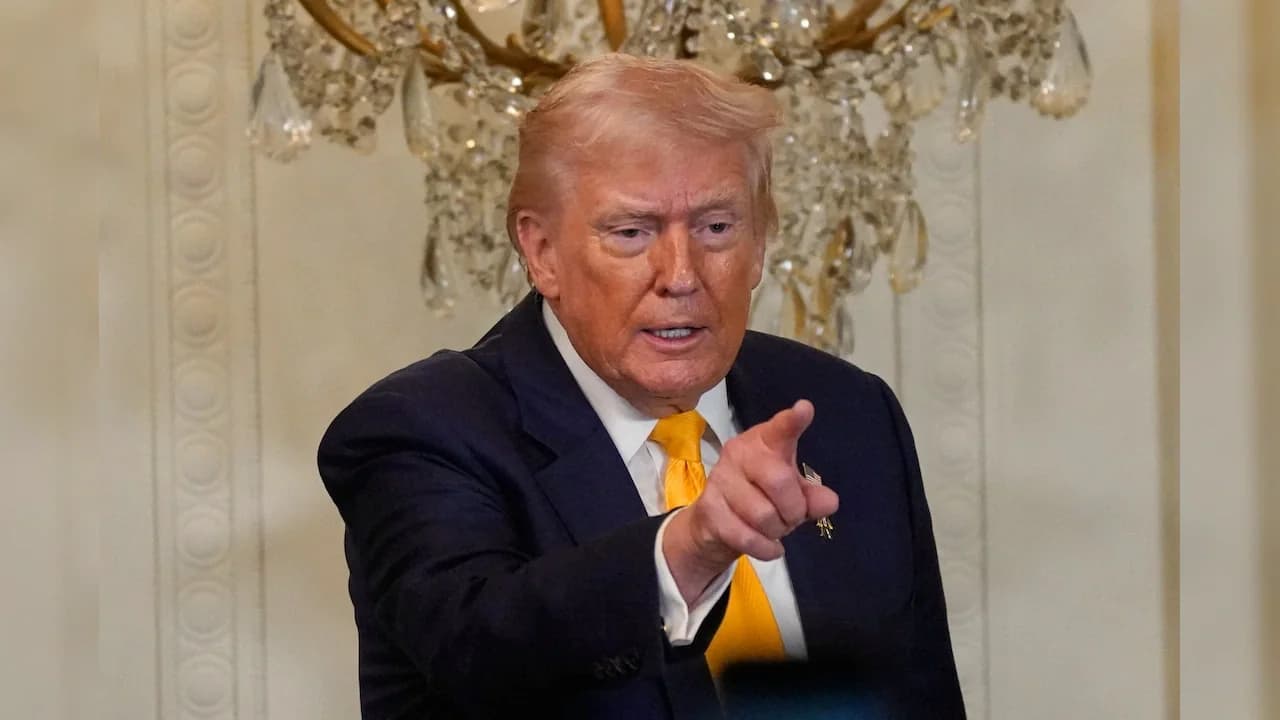
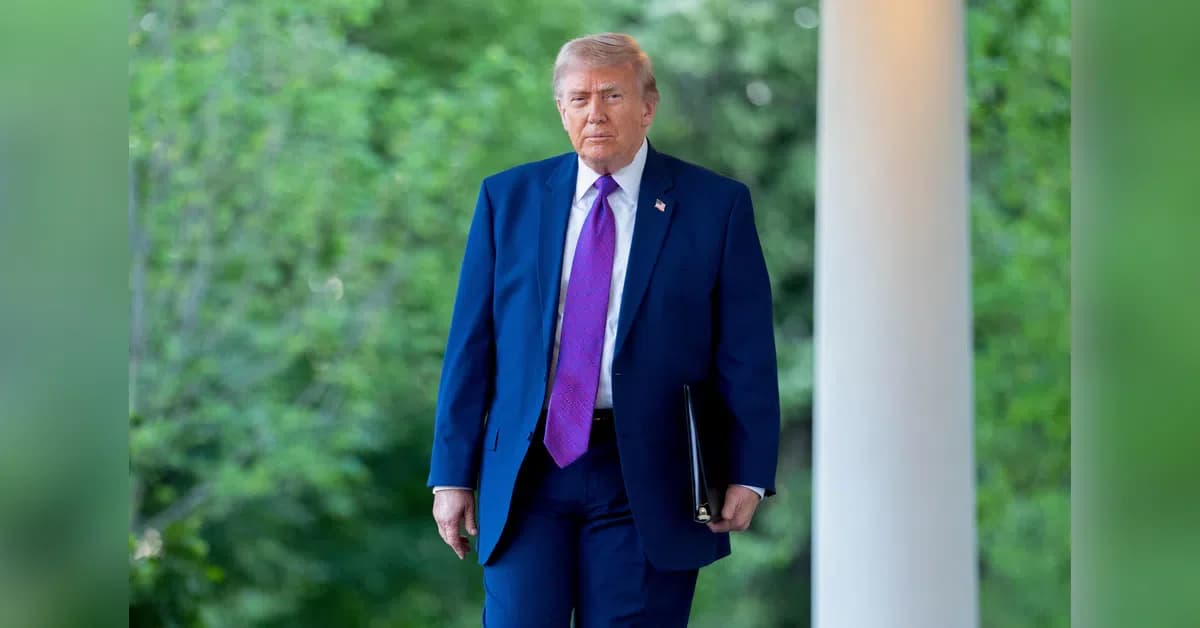
US President Donald Trump sparked immediate backlash during his latest visit to Ireland, with thousands of protesters taking to the streets of Dublin to oppose his comments about Irish reunification. As reported by Associated Press, the protest march drew thousands to central Dublin, with many waving Irish or Palestinian flags and chanting 'Donald Trump not welcome here' and 'Irish government, shame on you!' The demonstration occurred as Trump was leaving the city en route to his Doonbeg golf course on the country's Atlantic coast, missing the full impact of the public opposition. Paula Butler from the Dublin Rape Crisis Centre expressed frustration with Trump's unification stance, stating 'What he knows about Irish unity, I'd say I know more on my little finger.' Kim Mathis, who moved from Florida to Dublin last year, said 'part of the reason we moved to Ireland was to get away from Trump and all of his horrific policies.'
US President Donald Trump made a brief two-day visit to Ireland on Saturday, receiving a ceremonial welcome despite strained relations with the European ally. During his visit, Trump made controversial comments about Irish reunification, stating he would 'love to see it unified' and predicting it 'may as well happen now.' As reported by Associated Press, Trump told a reporter he would 'love to see it unified' and acknowledged there's 'no good answer' to the reunification question. The comments prompted an immediate backlash from unionist parties and UK politicians, with DUP leader Gavin Robinson posting on X that 'President Trump knows better than most that elections matter' and 'Northern Ireland's constitutional future will be decided by the people of Northern Ireland.'
Trump was greeted with pomp and pageantry at Dublin's Áras an Uachtaráin, where he met President Catherine Connolly and reviewed the Irish Defence Forces' Guard of Honour. The visit came as Irish leaders sought to downplay tensions that threatened to upend ties between close allies, with Irish Prime Minister Micheál Martin calling the relationship 'very strong.' However, the timing of Trump's unification comments drew particular scrutiny, with Irish President Catherine Connolly using their meeting to stress Ireland's opposition to war and genocide, saying the normalisation of either 'can never be accepted.' According to Associated Press, Connolly gave Trump several gifts, among them a collection by the late Irish poet Michael Longley that includes the sonnet 'Ceasefire.'
Northern Ireland's leading unionist parties swiftly condemned Trump's unification comments, with TUV leader Jim Allister stating 'Trump is not the first US president to meddle in the affairs which don't concern him.' Ulster Unionist Party Leader Jon Burrows MLA acknowledged that 'the US president is entitled to express his view on the constitutional future of another country,' but emphasized that 'the only people whose decision counts are the people of Northern Ireland.' Conservative leader Kemi Badenoch accused Trump of 'shooting from the hip' and described his remarks as 'deeply unhelpful' and creating unnecessary tension. Andy Burnham's position on Irish unification remains unchanged, a spokesperson for the prime minister confirmed, with Burnham earlier stating he would stick to the Good Friday agreement '100%' and that there would be no referendum without majority public support. Gavin Robinson, leader of the pro-British Democratic Unionist Party, responded to Trump's comments by stating 'As unionists we are not interested in the destruction of our country by joining with the Irish Republic.'
Despite the diplomatic welcome, Trump used the visit to criticize Europe on multiple fronts during his address to business leaders from the US and Ireland. As reported by Associated Press, Trump stated he 'hates to see what's happening on trade, I hate to see what's happening on energy, and I hate to see what's happening on immigration' in Europe. He also criticized Europe's regulatory approach, saying 'they have regulations that are just unacceptable,' while expressing his 'natural inclination' to support Europe despite his grievances. Trump also weighed in on other international issues, stating he expected the 'war with Iran would end very soon' possibly after the US midterm elections in November, adding that he expected oil prices to 'come tumbling down' afterwards. According to Associated Press, Trump expressed skepticism about Britain's ability to retake the Falklands, stating 'I'm sure I'll be called into that potential disaster, but if they do, I'll probably be able to settle, settle it out.'
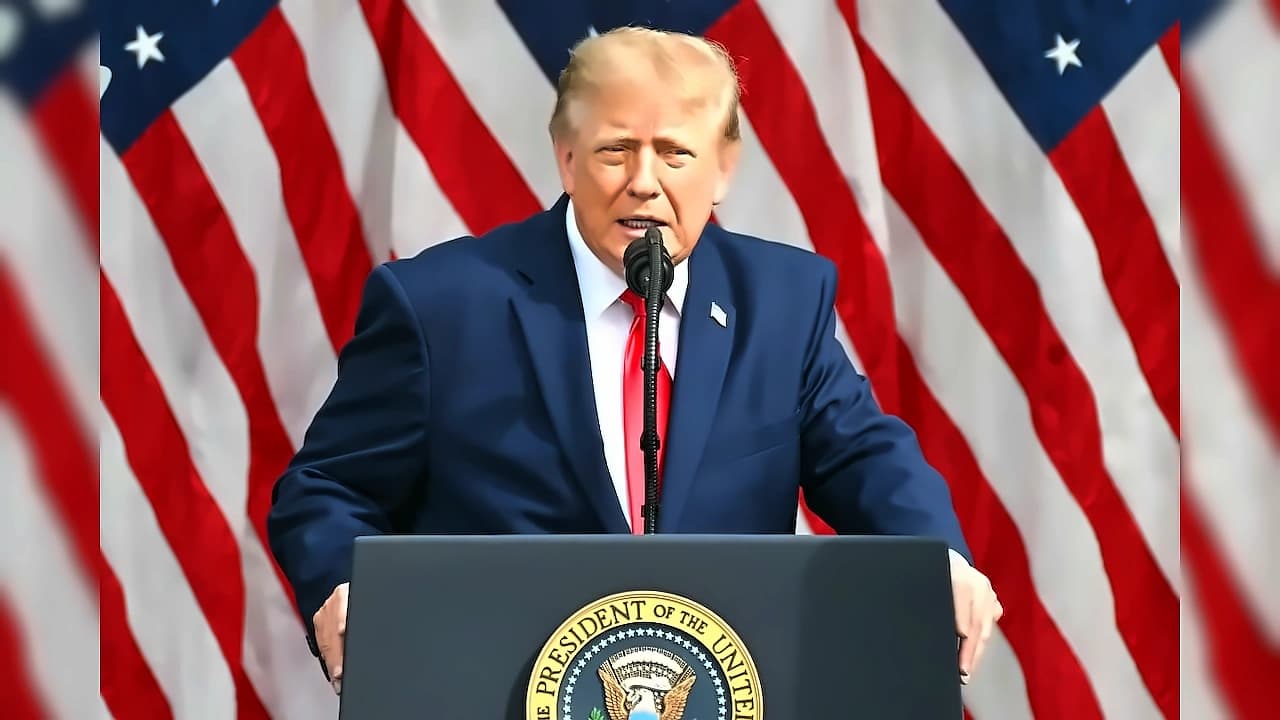
Trump specifically addressed Ireland's successful economic strategy of attracting US business giants, stating the country 'took all of our medical companies' and suggesting Ireland had 'fleeced' the US. According to Associated Press, Trump said 'you people did very well' while acknowledging there's 'a lot of room to go around' in the relationship. Ireland generates billions of euros in tax revenue annually from these firms, a point of contention for Trump who has pushed US companies to shift operations stateside. The visit demonstrated the delicate diplomatic balancing act Irish leaders must maintain with their longtime close ally while managing the strains brought by Trump administration policies. As reported by Associated Press, Trump said he would 'absolutely' return to Ireland next year for the Ryder Cup, continuing his trend of attending golf tournaments at his family business properties. Trump's attendance at the Irish Open continues his trend of appearing at high-profile sporting events, with his clubs in Doral, Florida, and Bedminster, New Jersey, each hosting professional golf tournaments this year.