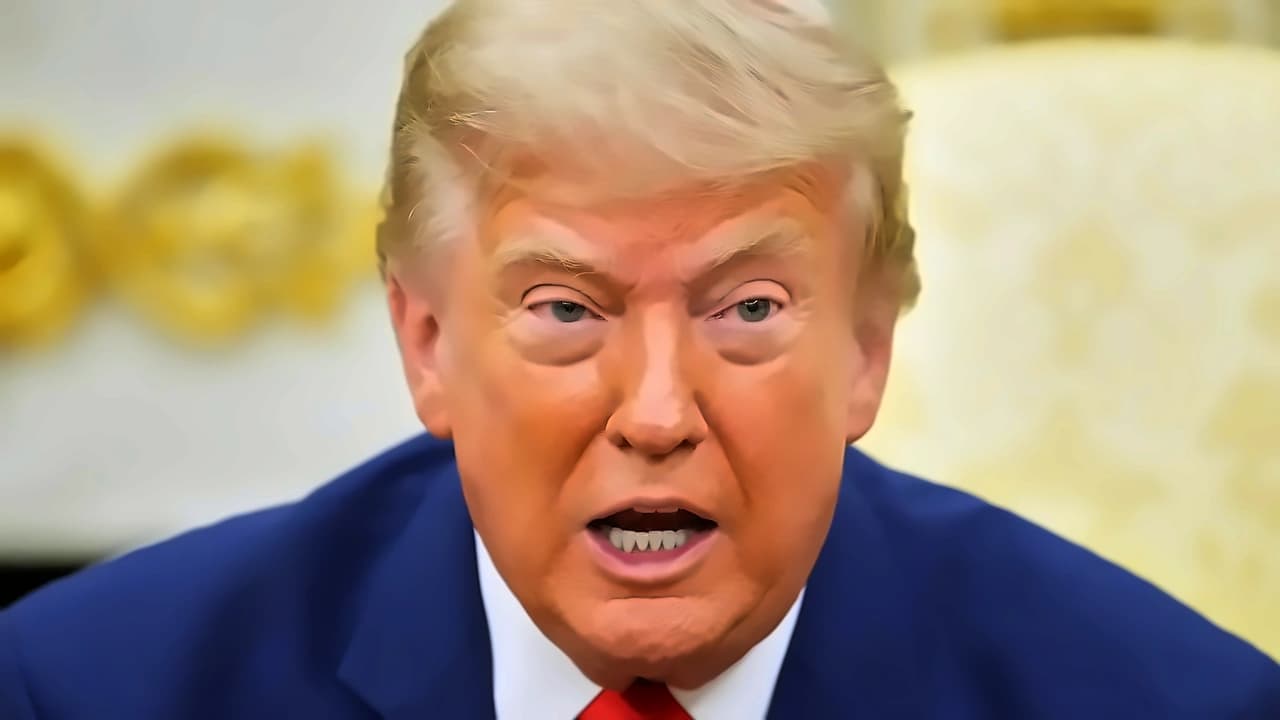
US President Donald Trump announced the final stage of his pharmaceutical tariff plan on Wednesday, July 22, completing his strategy to bring nearly every category of pharmaceutical imports under a tariff framework. The policy will continue to allow duty-free entry for two years before implementing steep tariff increases. According to Business Standard, this puts Indian pharmaceutical companies including Sun Pharma, Lupin, and Cipla in the spotlight as the policy targets generic drug imports. Trump stated that the move was intended to 'RESHORE Generic Pharmaceutical Production into America' and penalise companies that do not build plant and equipment within the stated period. As per The Times of India, the latest announcement effectively completes Trump's broader strategy to bring virtually every major pharmaceutical category under his reshoring strategy.
Indian pharmaceutical stocks experienced significant declines in early trading following Trump's announcement. Cipla traded 1.64% lower at ₹1,409.10, Dr Reddy's Laboratories dropped 1.25% to ₹1,191.50, Lupin fell 2.97% to ₹2,439.80, and Aurobindo Pharma declined 3.13% to ₹1,531 as of 11:00 am on the National Stock Exchange. The Nifty Pharma index was down 1.04% during early trade. According to The Financial Express, India is the leading exporter of finished generic medicines to the United States and Indian pharmaceutical companies account for around 40 to 50% of generic prescriptions dispensed in the country. Pharmaceuticals are among India's top three exports to America, totaling $10.5 billion in 2024-25, with duties on drugs leaving over 40% of India's exports to the US adversely affected. As per The Times of India, India's pharmaceuticals exports to the US were $9.7 billion in 2025, which is 37.7% of its total pharma exports which stood at $25.8 billion globally, making it the country's largest overseas market for pharmaceutical products.
As reported by Reuters, CNBC TV18, Firstpost, NDTV Profit, Business Standard, and The Times of India, the updated tariff structure will be implemented in phases starting August 1st, 2026. The policy will maintain zero percent tariffs for two years, followed by a 100% tariff for one year from August 1, 2028, and ultimately reaching 200% thereafter by August 1, 2029. Under the timeline outlined by Trump, imported generic drugs will remain exempt from tariffs until July 31, 2028. This phased approach is designed to provide companies with a transition period while encouraging domestic manufacturing investments. Trump's earlier tariffs in this sector pertained to branded and patented drugs, with the policy for these remaining unchanged. The latest announcement came just three months after Trump issued a proclamation saying that generic pharmaceuticals "are not subject to tariffs at this time" but that decision was later replaced. According to The Times of India, this completes the tariff framework that began with Trump's 100% tariff proposal on September 25, 2025 for branded medicines, followed by tariffs of up to 100% on selected branded medicines and key pharmaceutical ingredients under the Section 232 national security framework on April 2, 2026.
According to Business Standard, Suresh Nair of EY India noted that "the proposed policy has the potential to strengthen incentives for pharmaceutical manufacturing investment within the United States. However, practical, regulatory and economic considerations suggest that any transition is likely to be gradual and selective rather than transformational." The economics of generic medicines make relocation far more complicated than the tariff proposal suggests. Unlike patented drugs, generic medicines operate on razor-thin margins, with manufacturers competing aggressively on price. Industry analysts estimate that manufacturing costs in India remain 40 to 60% lower than in the US due to lower labour costs, established supply chains and economies of scale. Many active pharmaceutical ingredients (APIs) continue to be sourced from India and China, making a complete shift to domestic US production difficult. Building new pharmaceutical facilities presents additional challenges, with companies requiring several years for construction, USFDA inspections, and product-specific approvals before commercial production can begin. As per The Times of India, setting up a manufacturing facility itself would take at least two years, after which plant inspections and product approvals could take another 12 to 15 months.
Despite the tariff threat, Indian pharmaceutical companies are already diversifying their geographic presence. Indian pharma exports to the US fell almost 10% to $9.7 billion in FY26, with top firms like Dr Reddy's, Aurobindo Pharma, Zydus, Lupin and Cipla garnering between 30% to 50% of their revenue from the US. According to The Times of India, Indian companies supply 47% of all generic prescriptions dispensed in the United States, making India the country's largest source of affordable generic medicines, though because generics are sold at very low prices, India's share of the value of US generic imports is estimated at only 30%, well below its share of prescriptions. Among Indian companies, Cipla is expanding capacity at its manufacturing plants in Massachusetts and New York, Dr. Reddy's Laboratories has indicated it is prepared to increase production in the US if doing so is commercially viable, while Sun Pharma has said its current manufacturing footprint in the United States is adequate and has no immediate plans to expand further. According to Business Standard, leading exporters such as Sun Pharmaceutical Industries, Dr Reddy's Laboratories, Aurobindo Pharma, Lupin, Zydus Lifesciences, Cipla and Granules India already have manufacturing facilities or other operational footprints in the US, putting them in a relatively stronger position. The Indian Pharmaceutical Alliance (IPA) believes Indian companies are already deeply integrated into the US healthcare ecosystem, with over 40 facilities supporting American jobs and investing in manufacturing, research and resilient supply chains.