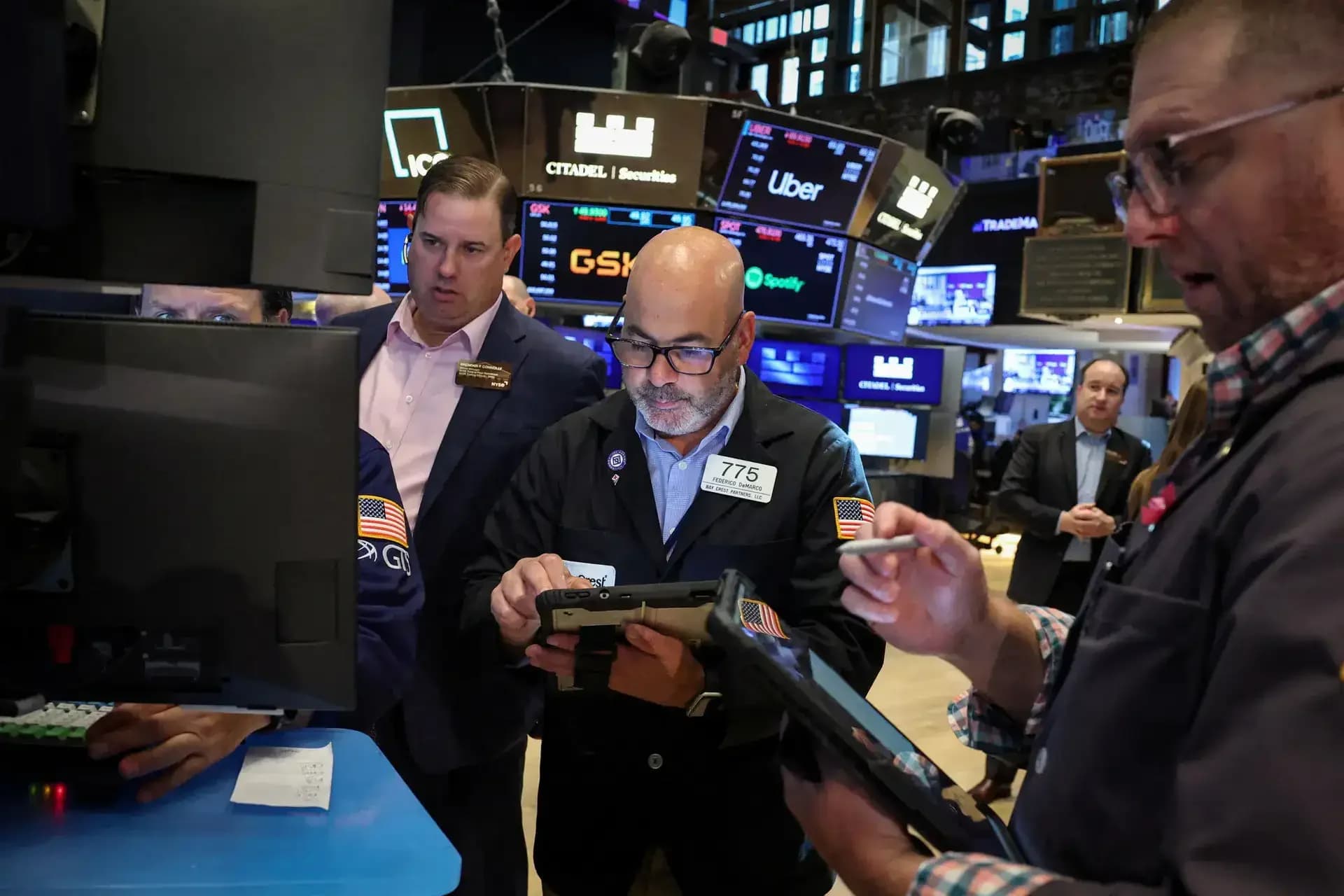
The Magnificent Seven group of companies suffered their biggest four-day market cap wipeout since April 2025, losing a combined $1.2 trillion as the selloff stretched into a fourth straight trading session. According to CNBC TV18, this marks the largest sustained decline since President Trump's tariff announcements last year. The latest session saw Tesla leading losses after tumbling more than 16% over the past four trading sessions, while Sandisk, T-Mobile, Meta Platforms, Alphabet and Amazon fell between 7% and 10% over the same period. The broader tech sector decline saw the Nasdaq 100 extend its decline, with the selloff primarily driven by disappointing results from Tesla and Alphabet, with both companies reporting negative free cash flow in their most recently concluded quarter. As reported by Investing.com India, the market has demonstrated no patience for companies announcing weak earnings, with investors demanding strong sales, earnings, surprises and guidance during this strong earnings announcement season.
Tesla shares plunged 14.5% to around $319 on Thursday, marking their worst intraday drop in over a year and triggering approximately $4.12 billion in one-day gains for short sellers. The electric vehicle maker reported disappointing quarterly earnings that fell short of analyst expectations, with the company posting adjusted earnings of 33 cents per share, significantly below Bloomberg analysts' consensus estimate of 51 cents. Despite revenue rising to $28.2 billion, beating market expectations, profitability came under pressure from aggressive spending, lower vehicle prices, and rising operating costs. As reported by LiveMint, Tesla is trading at 151 times estimated earnings over the next 12 months, making it the most expensive member of the Magnificent Seven and its worst performer this year. Following Thursday's decline, Tesla shares are down nearly 30% in 2026, leaving short sellers with paper gains of about $8.92 billion year-to-date. The company faces a different AI debate than its mega-cap technology peers, with investors worrying about the company's AI and robotics ambitions while Tesla has the highest short interest among the Magnificent Seven at 3% of its shares sold short.
Tesla's spending on long-term growth initiatives surged to $5.8 billion during the quarter, marking a 142% increase from a year ago and resulting in the company's first quarterly cash burn in two years. As reported by LiveMint, the company continues to expect capital expenditure of more than $25 billion this year, with management signalling even higher investments in the years ahead. The company reported negative free cash flow of $1.09 billion, while stronger-than-expected quarterly deliveries of more than 480,000 vehicles helped drive revenue growth. Speaking to investors, Elon Musk conceded that "this is a massive capex year," but argued that it is necessary to eventually "yield incredible returns." The elevated expenditures offset a jump in revenue fueled in part by resilience in its competition-hit core automotive unit. BNP Paribas analyst James Picariello expressed severe caution on the speed of Tesla's AI progress ramp, reiterating his sell-equivalent rating and $280 price target on the stock. According to the latest data, money flow confirmed the damage with Chaikin Money Flow (CMF) worsening from −0.06 to −0.12, meaning sellers pressed harder on record deliveries, while put volume climbed from 0.78 to 0.83 times calls.
Alphabet tumbled 7.1% on Thursday after raising its projected 2026 capital expenditure to $205 billion, up from its earlier guidance of $190 billion, while warning that spending would increase further in 2027. According to CNBC TV18, the Google parent recorded more than $119 billion in total revenue during the second quarter, up 24% compared to the same period last year, with net profit tripling to over $112 billion. The company had even raised funds during the quarter gone by, yet reported negative free cash flow. During the second quarter, the company recorded more than $119 billion in total revenue, up 24% compared to the same period last year, with net profit tripling to over $112 billion. The stock led the Dow Jones Industrial Average lower and was among the worst-performing stocks in the S&P 500 and Nasdaq on the down day for major indexes. However, shares retreated by more than 2% in extended hours trading, though they have advanced by over 8% so far this year. Despite posting the week's best numbers with Cloud growing 82%, the money left before the headlines did with Chaikin Money Flow (CMF) fading from 0.14 on July 20 to 0.03 after the report, so institutional buyers were stepping back all week. Analysts kept Buy ratings while JPMorgan, Piper Sandler, and UBS cut targets, and open interest edged up from 0.68 to 0.70.
The broader tech selloff enabled Apple to reclaim the title of the world's most valuable listed company for the first time since April 2025, as Nvidia shares fell 5% on Monday, reducing the chipmaker's market value to $4.77 trillion. According to CNBC TV18, Nvidia had been the world's most valuable company since June 2025 after overtaking Microsoft, and it also briefly crossed a $5 trillion market capitalisation in October. The decline came as AI chip stocks weakened amid concerns over the growing cost of building AI infrastructure. So far this year, Nvidia shares have gained 4% while Apple has advanced 24%, with investors favouring Apple's approach of limiting capital expenditure on AI infrastructure by renting computing capacity instead of building large-scale facilities. Although Nvidia remains in its third year of AI-led sales growth, investor interest has broadened beyond graphics processing units to memory chips and other data centre infrastructure, with companies such as Micron Technology, SK Hynix and Sandisk also benefiting from that shift.