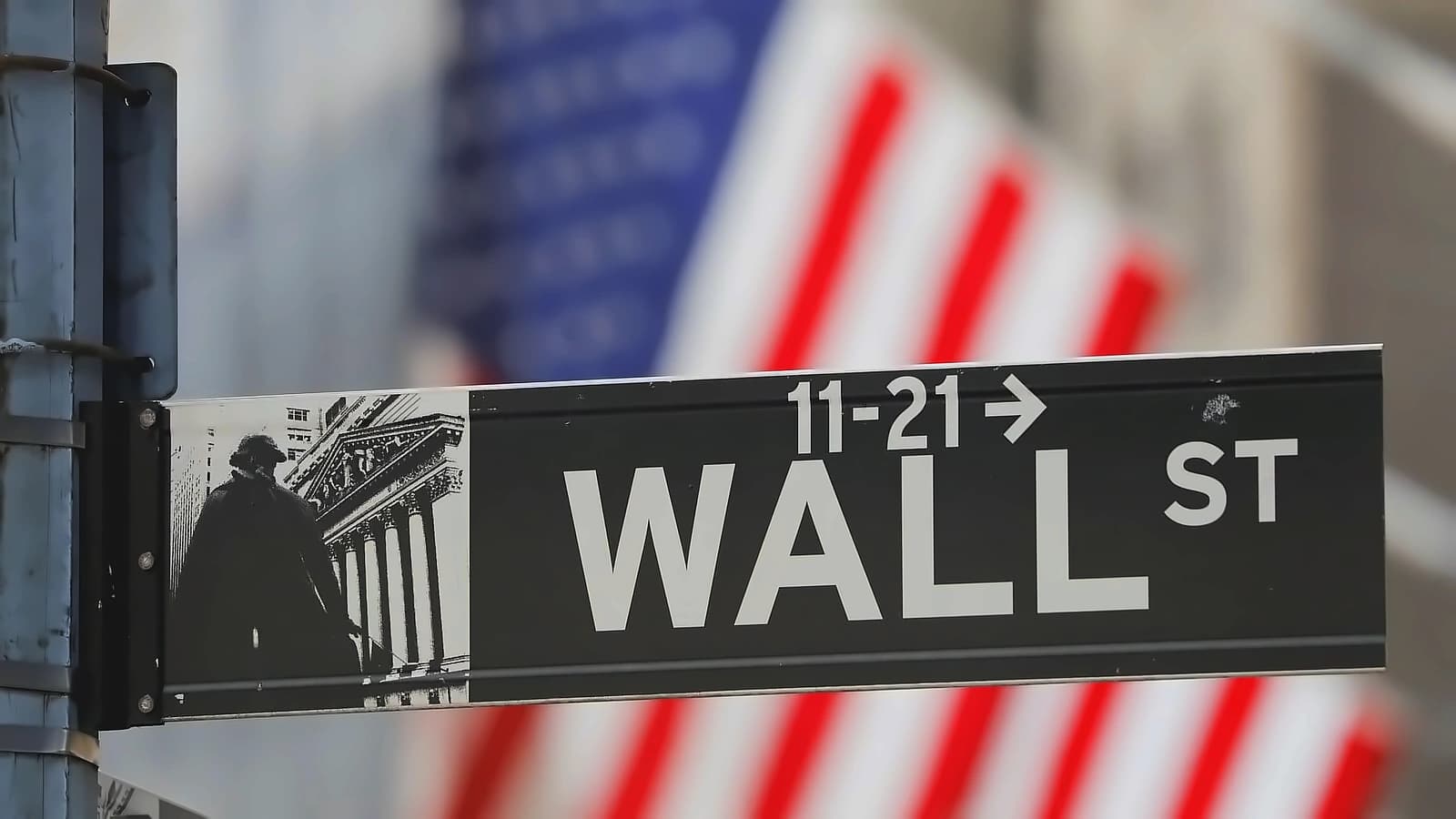
Wall Street achieved new record highs on Wednesday despite concerning inflation data, with the S&P 500 rising 0.58% to top its previous all-time high set at the start of the week. The Nasdaq composite set its own record after climbing 1.2%, while the Dow Jones Industrial Average declined 0.14% to 49,693.20. According to Anadolu, this performance came despite discouraging updates on inflation that weighed on the majority of U.S. stocks. The 10-year Treasury yield edged up to 4.47% from 4.46% late Tuesday and is well above its 3.97% level from before the war, helping send stocks of utilities and real-estate owners to some of the sharper losses in the S&P 500. The S&P 500 rose 43.29 points to 7,444.25, the Dow Jones Industrial Average dipped 67.36 to 49,693.20, and the Nasdaq composite climbed 314.14 to 26,402.34. The Volatility Index (VIX) fell 0.67% to 17.87, indicating reduced market fear levels despite the mixed performance.
Technology stocks emerged as the primary drivers of Wednesday's gains, with Micron Technologies surging 4.8% and Nvidia rising 2.3%. As reported by Anadolu, the VanEck Semiconductor ETF advanced about 2%, demonstrating broad-based strength in the chip sector. The rally gained additional momentum from Nvidia CEO Jensen Huang joining US President Donald Trump on his China trip to meet President Xi Jinping, raising expectations of possible progress on Nvidia's access to Chinese markets. This development provided additional momentum to the technology sector's strong performance. Japan's SoftBank Group Corp. reported that its profit for the 12 months through March zoomed by nearly five-fold from the previous year as its AI investments paid off, while China's Alibaba Group said its AI and cloud growth accelerated in the latest quarter, with its U.S.-trading stock rising 8.2% despite overall results falling short of analyst expectations.
The market's resilience came despite concerning inflation developments, with a report showing U.S. wholesale inflation was considerably worse last month than economists expected. According to Anadolu, the producer price index rose 1.4% in April, marking the largest monthly gain since March 2022 and exceeding market expectations of a 0.5% increase. Producer inflation rose 6% year-on-year, the largest annual increase since December 2022 and above expectations of 4.9%. This followed a report on Tuesday showing accelerating inflation at the U.S. consumer level, creating additional pressure on market sentiment. Prices are rising for fuel, transportation and all kinds of other things because of tariffs, bad weather affecting food prices and other reasons. But atop them all is the jump in oil prices created by the war with Iran, which has slowed the global flow of crude to customers worldwide. Oil prices moved more modestly following big gains early in the week, with the price for a barrel of Brent crude oil falling 2% to settle at $105.63. However, it remains well above its price of roughly $70 from before the war, and the International Energy Agency said Wednesday that oil inventories worldwide are depleting at a record pace.
Global markets showed mixed but generally positive performance, with European stocks posting gains across the board. As reported by Anadolu, the pan-European Stoxx Europe 600 index rose 0.79% to close at 611.42 points. Germany's DAX 40 gained 0.76% to 24,136.81 points, while Italy's FTSE MIB 30 climbed 1% to 49,480.7 points. The UK's FTSE 100 advanced 0.58% to 10,325.35, France's CAC 40 added 0.35% to finish at 8,007.97, and Spain's IBEX 35 increased 0.46% to 17,654.90. Despite the S&P 500's record close, roughly two-thirds of the index's members ended the session lower, with losses seen in economically sensitive stocks, including retailer Home Depot and banking giant JPMorgan. The rebound in European markets demonstrates how quickly sentiment can shift when policy concerns are clarified.

A significant development emerged with the US Senate confirming Kevin Warsh as chair of the Federal Reserve for a four-year term, placing President Donald Trump's nominee at the helm of the US central bank at a time of heightened scrutiny over interest rates and the Fed's independence. According to Anadolu, this confirmation comes as the resulting jump in oil prices has forced traders to give up most hopes for a cut to interest rates this year by the Federal Reserve. The rise in yields helped send stocks of utilities and real-estate owners to some of the sharper losses in the S&P 500, as such companies tend to pay relatively big dividends, which become less attractive to investors looking for income when bonds are paying more in interest. Corporate earnings and AI momentum are acting as the market's primary shock absorbers, as noted by Tim Waterer, chief market analyst at KCM Trade, but the road is getting significantly rougher as investors navigate between inflation concerns and technology sector opportunities.