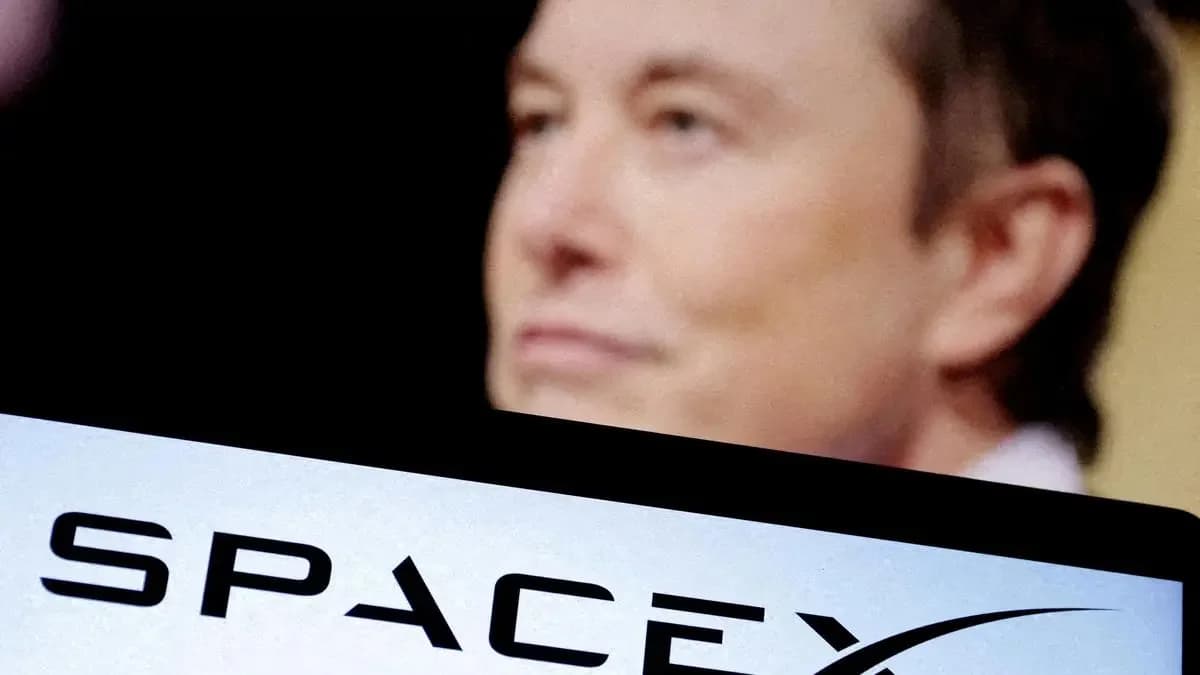
Elon Musk's space exploration company SpaceX has filed confidential papers ahead of a planned public company listing on the US NASDAQ stock exchange, targeting a total valuation of $2 trillion. According to reports from The Hindu BusinessLine, Musk plans to list only a small fraction of the company to raise $75 billion from public investors, which would still make it the largest IPO in history. The IPO represents just 3.75% of the company's total value, meaning the vast majority of SpaceX would remain in private hands owned by Musk and early investors. Recent reports suggest the IPO could arrive as early as June 2026, with the big launch drawing significant investor attention and potentially reshaping the top 10 most valuable companies by market cap.
Despite its ambitious valuation, SpaceX earned only $15 billion in revenue last year, as reported by The Hindu BusinessLine. At that rate, it would take 133 years of revenue just to match its current asking price. The company derives 50-80% of its revenue from Starlink, its communications business that provides satellite internet to over 10 million users worldwide. SpaceX has completed approximately 600 successful rocket landings and aims to launch up to one million data centre satellites into space, powered by solar energy to bypass Earth's electricity and water constraints. However, recent reports suggest the company's estimated revenue has been revised upward to $18.5 billion, which would still imply a price-to-sales ratio exceeding 100 times, significantly higher than historical IPO benchmarks.
According to a recent Bloomberg report, Alphabet is positioned for a massive windfall from its early investment in SpaceX, with its stake now estimated to be worth around $100 billion. Google held a 6.11% stake in SpaceX at the end of 2025, though this has fallen to around 5% after the company's merger with xAI earlier this year. The potential gain highlights how one of Silicon Valley's early bets on private space companies could deliver one of the biggest returns in recent years. Alphabet first invested in SpaceX in 2015, when the company was worth about $10 billion, making this one of the most successful long-term technology investments in history.
To accommodate the SpaceX listing, the NASDAQ has introduced special adjustments to its rules. According to The Hindu BusinessLine, the exchange has reduced the normal seasoning period from three months to just 15 trading days and removed the 10% minimum free float requirement that normally applies to major indices. The NASDAQ 100 currently tracks over $600 billion in passive funds, and if SpaceX joins the index, these investors will automatically purchase shares. Other major indices, including the S&P 500 and FTSE Russell, are also bending their rules to fast-track inclusion of large, newly listed companies. Recent reports suggest the company is poised to be a top-10 holding in the S&P 500, potentially reshaping market capitalization rankings.
For investors seeking exposure to SpaceX ahead of its public debut, several options are available. According to recent market analysis, Ark Venture Fund (ARKVX) holds 17% SpaceX, 11.5% OpenAI, and 3.5% Anthropic, offering early access to private tech companies before their IPOs. The fund carries a 2.90% expense ratio, which is considered steep but provides access to a broad basket of private innovators. Other potential holdings include Epic Games, Neuralink, and predictions markets platform Kalshi. Recent market conditions suggest SpaceX is positioned for a potential Starship v3 launch in May, which could set the stage for an epic IPO with investor demand outweighing supply. With markets heating up again and tech leading the recovery, the big SpaceX IPO day could be a significant market event that reshapes the technology landscape.