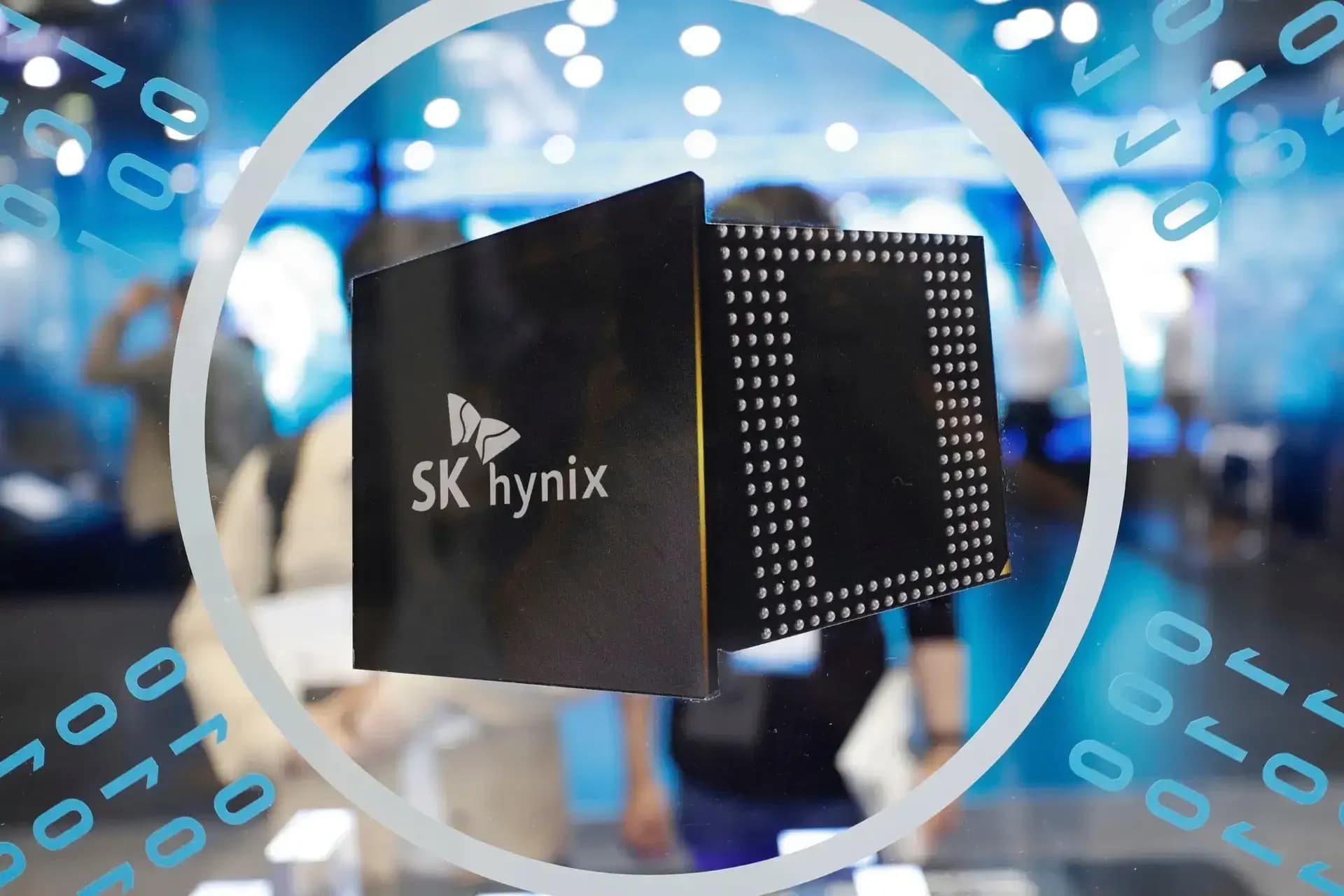
SK Hynix has issued a stark warning that 2027 will be 'the worst year in the industry's history from the supply perspective' for memory chips, with CEO Kwak Noh-jung telling Reuters that customer demand continues to outstrip supply capacity. According to the latest comments, customer demand will remain higher than supply capacity 'even beyond 2030', as the company's capacity has limitations while demand continues to grow faster than the industry's ability to expand manufacturing capacity. The warning underscores the structural imbalance emerging in the semiconductor industry, where AI data centers and server manufacturers are becoming the main buyers, benefiting memory suppliers from price increase expectations. Market dynamics indicate that AI-driven demand for high-bandwidth memory (HBM) is accelerating capital inflow into advanced memory capacity, while the traditional consumer electronics supply chain faces pressure. As a major global memory manufacturer, SK Hynix has long benefited from server and AI demand, having previously significantly expanded HBM production, but the current shortage is expected to be more severe than any previous cycle.
SK Hynix is exploring new fabrication facilities in regions like the United States as part of its global expansion strategy. As reported by Reuters, Kwak said the United States remains under consideration for a future wafer fabrication facility, although the company has yet to make a final investment decision. The company will prioritize regions that offer adequate land, reliable electricity and water supplies, a skilled workforce and competitive manufacturing costs. Besides the U.S., Japan and Southeast Asia are also being evaluated as potential locations for future expansion. Currently, SK Hynix operates major manufacturing facilities in Icheon and Cheongju in South Korea and is constructing a large semiconductor complex in Yongin. The company is increasing capital expenditures in advanced processes and HBM capacity, motivated by the explosive demand for AI training and inference, concentrating resources from traditional memory to high-bandwidth AI-specific memory.
SK Hynix and Samsung Electronics are participating in South Korea's ambitious plan to significantly expand domestic memory chip production over the next five years. According to Reuters, the government-backed initiative involves investments of approximately 400 trillion won ($266 billion) each in new semiconductor production facilities in the country's southwest. While the plan is designed to strengthen South Korea's leadership in memory chips, some investors have expressed concerns that such large-scale capacity expansion could expose manufacturers to cyclical downturns. In the United States, SK Hynix is already investing around $4 billion to build an advanced chip packaging plant in Indiana and plans to invest another $10 billion in developing AI-focused businesses in the U.S.
SK Hynix has emerged as one of the biggest beneficiaries of the AI revolution, establishing itself as a leading supplier of HBM chips used in Nvidia's AI accelerators. The company has gained a strategic position in the AI supply chain, helping power the rapid expansion of generative AI and cloud computing infrastructure. The AI boom has transformed SK Hynix's financial performance, with the company reporting a record operating profit of 47 trillion won ($31 billion) in 2025, more than double the previous year's earnings and a dramatic turnaround from its operating loss in 2023. Analysts expect the momentum to continue, with LSEG SmartEstimate projecting operating profit of approximately 65.5 trillion won for the April-June quarter. The current memory industry is in a supercycle expansion phase driven by AI, similar to the impact of the chip shortage in 2021-2022 on industries like automotive, with the demand for AI computing power pushing memory supply towards extreme shortages.
Despite recent concerns about AI-related valuations, Wall Street remains bullish on AI infrastructure spending. Bank of America estimates that global hyperscaler capital expenditure will reach about $851 billion this year before climbing to roughly $1.15 trillion next year. However, the memory shortage is already impacting consumers, with Apple, HP, Dell, and Lenovo announcing major price hikes due to the memory crunch. Nvidia CEO Jensen Huang recently indicated that shortages of AI memory are likely to continue for several years because demand remains exceptionally strong, with SK Hynix expected to remain Nvidia's largest memory supplier. Micron CEO Sanjay Mehrotra anticipates the memory shortage to last through 2027, though he predicts it will eventually ease in 2028. While some analysts like Bloomberg Intelligence's Shuli Ren argue the global memory shortage likely peaked during Q2 2026 and could see oversupply in 2028, the current shortage represents capital concentration: the demand for AI computing power is pushing memory supply towards extreme shortages, forcing industry capital expenditures to focus on high-end capacity.