Samsung Electronics shares fell 6.31% on Monday following the company's announcement of its shareholder return plan, as reported by The Economic Times. The stock decline came despite Samsung's announcement of a shareholder return of 90-110 trillion won ($65-80 billion) this year, including cash dividends of 30 trillion won in the third quarter. According to The Economic Times, investors had been looking for a larger share of the company's AI-driven cash windfall and greater clarity on its plans for share buybacks. As per Eugene Securities analyst Sohn In-joon, "Unlike SK Hynix, Samsung Electronics did not mention the possibility of raising its existing shareholder return policy, nor did it announce a plan to cancel treasury shares that could more directly contribute to the stock price increase, which is disappointing." Morgan Stanley described the plan as "big capital returns, slightly below expectations."
According to reports from Reuters, Samsung Electronics Co. announced on Friday that it anticipates a shareholder return of 90-110 trillion won ($65-80 billion) this year, including cash dividends of 30 trillion won in the third quarter. This enormous compensation package follows record-breaking profits fuelled by a chip supercycle powered by artificial intelligence. The 90 trillion won return is five times the previous peak in 2020 of 20.3 trillion won, demonstrating the unprecedented scale of the current AI-driven demand surge. As reported by Reuters, Samsung repurchased 15 trillion won worth of shares as employee stock bonuses this year, with the board set to determine remaining payouts in January 2027, taking into account cash dividends, share buybacks, and share cancellations. According to The Economic Times, the Q3 dividend alone is equivalent to around ₹2.1 lakh crore, or more than 40% of the total dividends distributed by India Inc in FY26, underscoring the scale of Samsung's shareholder returns.
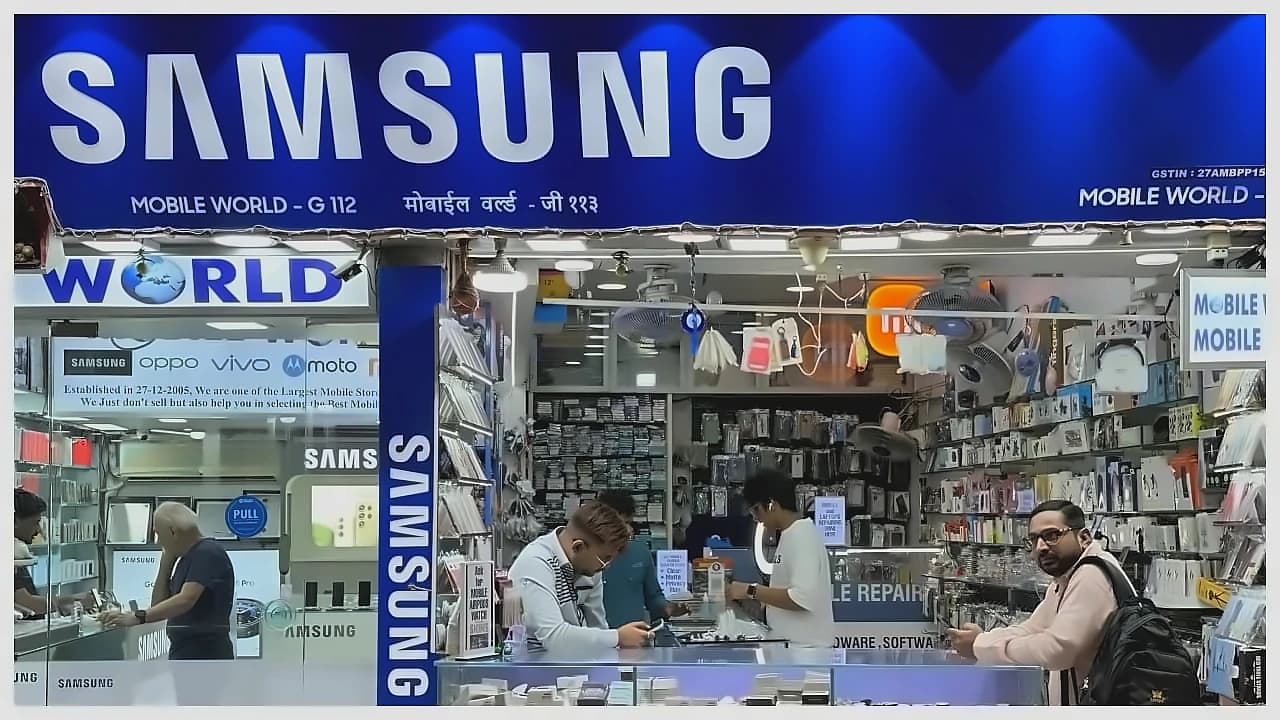
The decline in Samsung shares overshadowed gains in other major South Korean stocks, with the KOSPI falling 1.31% to 6,822.66 as of 0126 GMT, as reported by The Economic Times. SK Hynix rose 1.91% while battery maker LG Energy Solution advanced 3.93%. Samsung SDI surged 8.58% after an announcement by Samsung Display regarding a share sale plan. However, Hyundai Motor fell 0.84% and Kia Corp declined 0.31%. Of the 901 stocks traded, 506 advanced and 346 declined, with foreign investors being net sellers, offloading shares worth 1.3 trillion won. In currency markets, the won strengthened 0.35% to 1,381.1 per dollar compared with its previous close of 1,386.0, while Korean bond prices gained with the benchmark 10-year yield falling 6.4 basis points to 4.350%.
According to Reuters, Samsung, like competitor SK Hynix, has been under intense pressure to return gains to shareholders as the AI boom produces an insatiable demand for chips. This Monday, SK Hynix announced that it will use more than half of its free cash flow from 2025 to 2027 to increase shareholder distributions and repurchase and cancel 40 trillion won ($28.6 billion) worth of Treasury shares. In accordance with its 2024–2026 shareholder return policy, Samsung is pledging to shareholders 50% of the free cash flow that has amassed over the course of the three years. The shareholder returns underscore the chipmakers' confidence that they have the financial firepower to support their stocks while continuing to fund the heavy investment needed to capitalize on AI-driven demand. However, as noted by analysts, Samsung's approach differs from SK Hynix's more aggressive buyback strategy, which could have created additional demand for shares in the market.
Samsung's dominance in Korea's equity market is significant, as the chipmaker accounts for around 27% of the Korean equity market with a market capitalisation of about $1.14 trillion. Rival SK Hynix, which recently announced plans to buy back 40 trillion won worth of shares and return more profits to investors, has a market capitalisation of around $914 billion. Together, the two chipmakers account for nearly half of South Korea's equity market, which is the eighth-largest globally with a combined market capitalisation of around $4.3 trillion. The broader market remained under pressure as investors weighed corporate shareholder-return policies alongside movements in bond yields and currency markets, highlighting the market's expectation for even larger payouts from major technology companies.
According to Reuters, Samsung said it had no comment on the report, pointing to remarks made by its chief financial officer during its July earnings call. CFO Park Sooncheol stated that the company would soon share a plan to find the optimal balance between maximizing shareholder value and reinvestment for future growth while maximizing shareholder returns. On July 30, 2026, during the company's Q2 earnings call, CFO Park Soon-cheol confirmed the board is actively examining implementation measures for an updated return policy and signaled that a special cash dividend is one of the options on the table. A concrete announcement is expected as early as August 2026, with the August announcement window being the next date to watch. Morgan Stanley noted that investors would now need to watch Samsung's January decision on how it allocates the remaining 60-80 trillion won, along with the company's next capital-return framework, which will take effect next year.