The S&P 500 has just delivered its best quarter in six years, with the Nasdaq finding its stride again and semiconductors posting their strongest quarter on record. According to Investing.com India, roughly $8 trillion has been added to the value of the S&P 500 in three months, which looks like a clean risk-on victory when viewed from 30,000 feet. However, the path here ran through an Iran war, an oil spike, a violent reversal in crude, a sharp repricing of Fed expectations, a stronger dollar, and another ugly quarter for Bitcoin. As per Charles Schwab's Head Trading & Derivatives Strategist Joe Mazzola, the June 2026 quarter turned out to be the best quarter for the S&P 500 and Nasdaq in six years, despite the Iran war, with the Dow Jones Industrial Average reporting its best quarter since 2022. The three major indexes ended the quarter on strong footing, with the S&P 500 rallying more than 14%, the Nasdaq soaring about 20%, and the Dow adding over 12%.
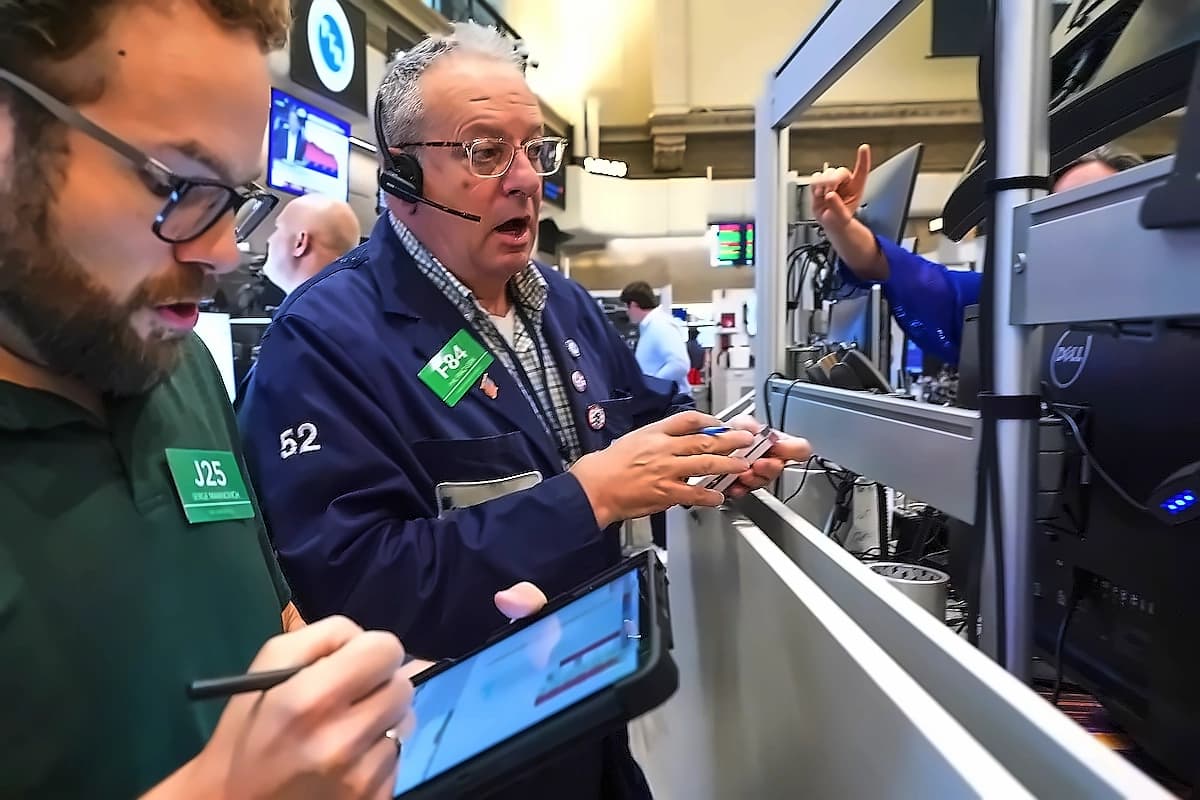
US stock futures traded higher on Tuesday, with the S&P 500 and Nasdaq 100 seeing notable gains as technology and chip stocks continued to rebound. According to Mint, futures tied to the S&P 500 and Nasdaq 100 were up by 0.01%, while Dow Jones Industrial Average futures advanced 0.2%. In the final stretch of what is set to be the best quarter for US equities in six years, the S&P 500 rose 1.2% in the previous session, while the Nasdaq 100 climbed about twice as much. The Magnificent Seven megacap stocks, which had largely underperformed the broader market this month, surged 2.5%, indicating a broadening of the rally beyond the narrow group of stocks that had been driving gains. This performance puts Wall Street on course to wrap up a strong first half of the year and second quarter, with the resurgence defying skeptics despite the backdrop of war, oil supply disruptions, and inflation concerns.
The S&P 500 experienced a significant rally on Monday as the CBOE Volatility Index (VIX) collapsed from 17.6 on Friday to around 12 during trading. According to reports from Investing.com India, this dramatic decline in implied volatility provided the catalyst needed to push indexes higher throughout the session. However, Scotiabank strategist Hugo Ste-Marie published a report Monday welcoming last week's volatility, noting that while the index level was buffeted by selling in megacap tech stocks, under the surface, a whole bunch of smaller stocks were rallying. The S&P 500 advance/decline reading – the number of stocks rising versus falling – hit a new high last week, demonstrating what healthy rotation and recovering economy look like, with the rally spreading to more market sectors as growth recovers. Vested Finance commented that after last week's brief sell-off in technology stocks, buyers have quickly stepped back in, with chipmakers and AI-related companies among the biggest gainers in pre-market trading, suggesting investors still believe the AI investment cycle has plenty of room to run.
The volatility collapse coincided with a notable shift in market leadership patterns, though recent analysis suggests this rotation may be narrowing. As reported by Investing.com India, single-stock implied volatility rose significantly, with the VIXEQ climbing to 47.5 while the VIX Index declined to 17.6. However, the equal-weighted S&P 500, where all stocks affect the index return by the same proportion, was up 1.6% to a new high last week, indicating that the rally is spreading beyond the narrow group of stocks that had been driving gains. This broadening participation suggests the market has moved beyond the frothy conditions where momentum rather than broad participation was driving gains, with the elevated dispersion index of 44.13 indicating a healthy rotation rather than concerning concentration risks. Among the top performers included chipmakers and AI-related companies such as Nvidia (2.6%), AMD (7.7%), Intel (6%), Sandisk (10.9%) and Marvell Technology (7.3%) posting strong advances. However, the AI trade is starting to split in two, with the market still liking companies selling the picks and shovels – GPUs, memory, power equipment, data-centre capacity and grid infrastructure – while hyperscalers face greater scrutiny over free cash flow and debt issuance.
Looking ahead, several key events are expected to influence market volatility. As reported by Mint, investors now turn their attention to a series of key US economic reports, including the JOLTS job openings data, ISM manufacturing numbers, and Fridays closely watched non-farm payrolls report. These releases will offer fresh clues on the health of the labour market and could shape expectations around the Federal Reserve's next interest rate decision. Vested Finance added that for investors, the coming week could determine whether the market has enough fuel to extend its record-breaking run. If economic data remains supportive and earnings continue to validate heavy AI spending, the current rally could broaden beyond technology. However, any signs of slowing growth or sticky inflation could quickly bring volatility back to Wall Street. Charles Schwab's report pointed out that it's a shortened week due to Friday's Independence Day holiday, meaning volatility could be a factor as volume thins before the long weekend. The analysis suggests that if implied volatility moves significantly higher into these events, it will probably be difficult for the market to sustain the momentum from Monday's rally.
While AI itself is transforming industries, concerns grow over inflated valuations of AI stocks, with experts warning of potential bubble conditions. As per Mint, Paresh N. Bhagat, MD & Chairperson of Mangal Keshav Financial Services, stated that "Investing on based on AI potential is definitely not a bubble, but 'what may prove to be a bubble is the way certain AI-related stocks are being valued." The current AI investment cycle is being led by some of the world's strongest businesses - companies such as Microsoft, Alphabet, Amazon and Meta - which generate billions of dollars in annual free cash flows and have exceptionally strong balance sheets. However, Shashank Udupa from Vayu Capital noted that "In 2026 alone, big tech will spend close to $725 billion on AI, up from $410 billion last year," which means less free cash flow and more interest payments. If a valuation-led correction emerges globally, Indian markets are unlikely to remain immune, with over ₹2 lakh crore exit in four months and Nifty IT dropping 6% on AI fears already observed. Udupa warns that "Right now everything is priced on good news. One bad news in the industry can have devastating effects and the most affected country would be South Korea." The key takeaway is that AI should be viewed as a long-term structural transformation, not a short-term momentum trade, with investment success depending on owning businesses with sound fundamentals and reasonable valuations rather than simply those carrying the AI label.