US markets opened higher after stronger-than-expected jobs data boosted investor confidence, with the S&P 500 reaching a record high of 7,398.51, gaining 61.40 points or 0.84%, while the Nasdaq Composite surged 437.64 points or 1.70% to 26,243.84, marking its sixth consecutive weekly gain - the longest winning streak since October 2024. The Dow Jones Industrial Average rose 10.10 points or 0.02% to 49,607.81. This represents a significant turnaround from the previous session when the S&P 500 closed down 29.46 points to 7,335.66, ending a streak of six consecutive weeks of gains despite approaching all-time highs. As of 1:16 PM EDT, the S&P 500 rose 0.8% to 7,395.84, the Dow Jones Industrial Average added 0.1%, and the Nasdaq Composite led gains with a 1.4% rise.
U.S. nonfarm payrolls data showed employers added 115,000 jobs in April, significantly above Bloomberg estimates of 65,000, marking the first back-to-back advance in nearly a year. The unemployment rate remained unchanged at 4.3%, easing fears of a sudden economic slowdown and boosting investor confidence. According to Reuters, data showed the number of Americans filing claims for unemployment benefits rose less than expected last week. Economists surveyed by Bloomberg had estimated a median gain of 65,000 jobs following March's blockbuster increase of 178,000 roles, which was revised upward to 185,000. Private employers added 109,000 jobs in April, the fastest monthly gain since January 2025, according to ADP data. Upbeat economic readings in recent weeks have helped allay concerns about the economy.
Wall Street analysts have significantly raised their year-end price targets on the S&P 500, with Ed Yardeni, founder of Yardeni Research, now seeing the index breaching 8,000 levels by the end of the year, revising his price target to 8,235 from 7,700 earlier. Yardeni expects the S&P 500 to hit 10,000 by 2029, though he sees that happening before schedule. HSBC Holdings has also increased their target to 7,650 by the end of the year, higher than their earlier projection of 7,500. CFRA Research sees the index crossing 7,575 by the end of the year from 7,400 earlier, citing the S&P 500's 14-day Relative Strength Index at 75, while a reading above 70 indicates overbought conditions. Yardeni noted that "We've never seen consensus earnings expectations rise so quickly for the current and coming years as they have in recent months," leading to an earnings-led meltup in the stock market.
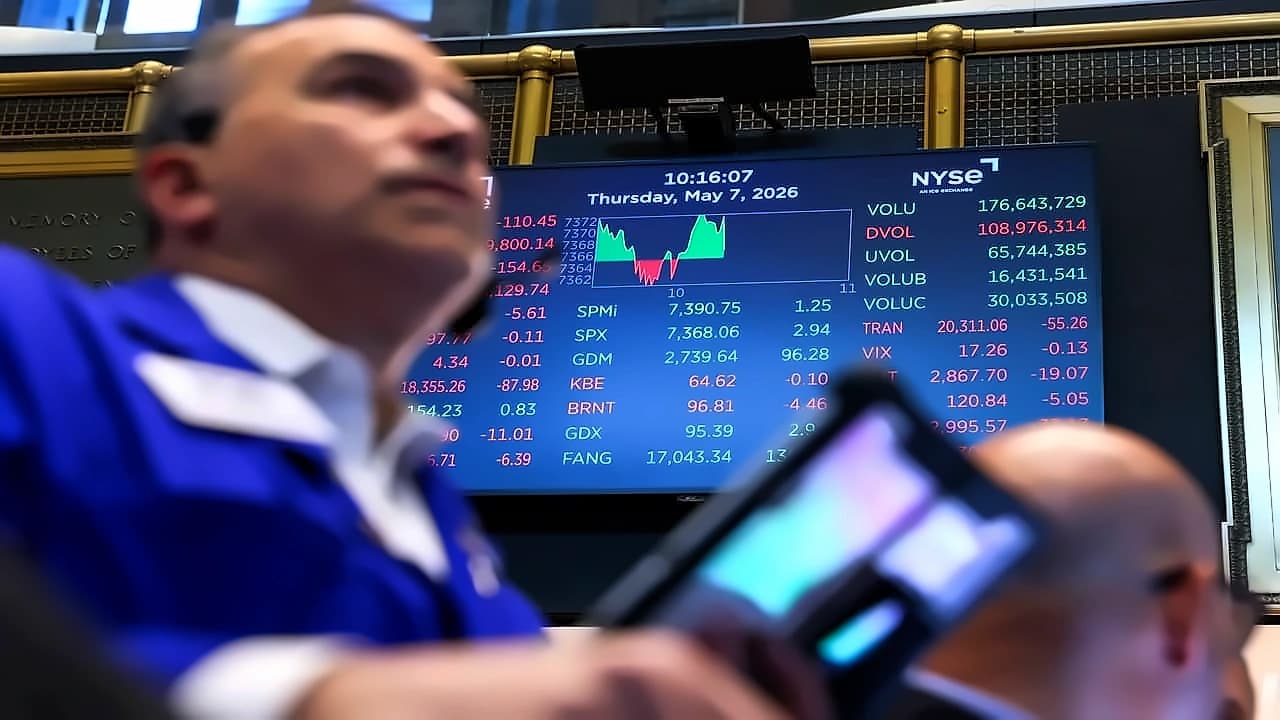
More than 85% of companies reporting on the S&P 500 have surpassed expectations this quarter, with profits growing by 27% so far in Q1, well above the consensus estimates of 12%, according to Bloomberg data. S&P 500 companies are on track for their strongest profit growth in more than four years, with about 82% of companies having beaten first-quarter profit estimates. Of the 440 S&P 500 companies that have reported first-quarter results so far, 83% have topped analysts' earnings estimates, compared with a long-term average of about 67%. Chipmakers led Friday's rally after heavy losses in the previous session, with major semiconductor stocks rebounding strongly. Nvidia climbed while memory and storage sellers Micron Technology and Sandisk soared, lifted by strong demand from the rapid buildout of AI data centers. The Philadelphia SE Semiconductor index jumped, bringing its gain so far in the second quarter to about 54%.
Despite the strong performance, analysts note that sentiment remains on "shakier ground" with the breadth of the rally being narrow, according to HSBC. However, they suggest there is more room for upside as most stocks are still below their 52-week high levels. CFRA Research thinks a digestion of recent gains would offer this bull the opportunity to 'buy the dip' and resume its run, citing that 9% of the 155 sub-industries on the S&P 1500 index are giving overbought signals. The big trigger today is going to be the inflation figures for the month of April, with analysts expecting a 0.6% increase month-on-month after the 0.9% increase in March. US equities sold off for five weeks in a row after the US attacked Iran in February-end, but announcements of a ceasefire, strong results, and a stronger outlook have propelled the S&P 500 to rally for six weeks in a row post that.