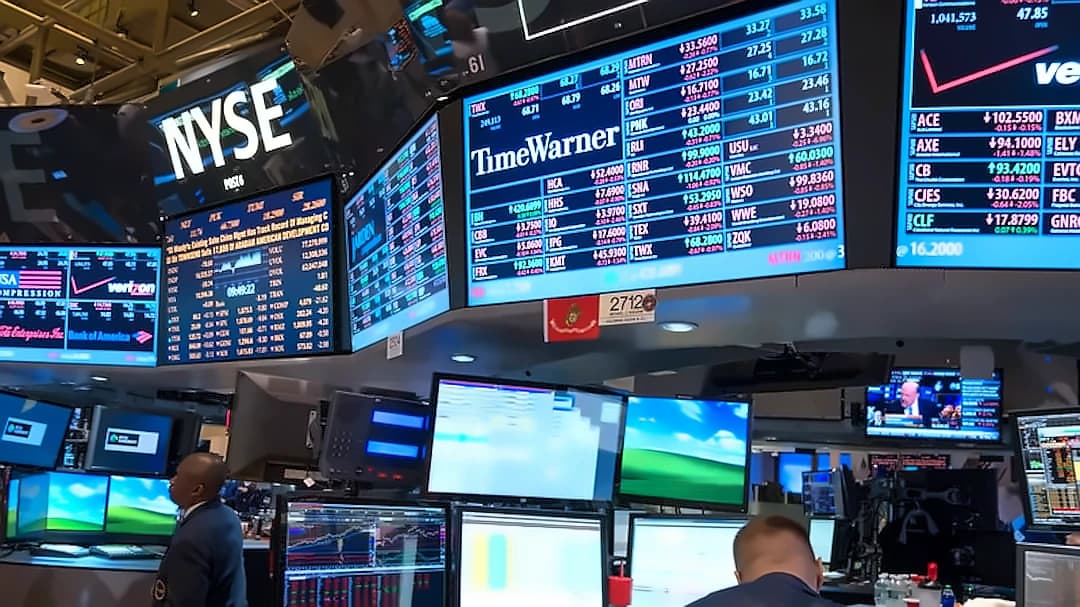
US stock markets moved closer to record levels on Tuesday as easing oil prices shifted investor focus back to strong corporate earnings, according to reports from The Times of India. The S&P 500 rose 0.6% and was on track to surpass its all-time high set last week, while the Dow Jones Industrial Average gained 248 points, or 0.5%. The Nasdaq Composite advanced 0.7%, also heading toward record territory. Markets found support after Brent crude prices fell 3.3% to $110.70 per barrel, retreating from levels above $115 seen on Monday, though prices remain significantly higher than the roughly $70 levels before the Iran conflict. The current equity environment presents a classic institutional dilemma, with the S&P 500 now just 0.5% from its all-time high of 7,002 recorded earlier this year, having rallied 5.6% year-to-date and added nearly $6 trillion in market value since late March.
A fragile ceasefire appears to be holding despite renewed tensions, including claims by the UAE that Iran launched missiles and drones. The US military is attempting to reopen shipping routes in the Strait of Hormuz to restore oil flows, though the confrontation occurred as US forces attempted to escort vessels through the key shipping route. Iran's parliamentary speaker Mohammad Bagher Qalibaf accused the US of undermining regional stability and warned of a response to efforts aimed at ending Iran's control over the strait, as reported by The Times of India. Market expert Seth R Freeman from GlassRatner Advisory noted that "we have passed the 60-day deadline that the president needed to go to Congress and get a declaration of war. So technically, the war has stopped — at least that is the message coming out of Washington." However, he cautioned that "It is extremely hard to answer how long this is going to take. The problem here is that we have trained the Iranian regime to believe it has a lot of leverage with the Strait of Hormuz." Despite geopolitical risks, US equities have remained resilient, supported by stronger-than-expected earnings for early 2026. The Brent crude has already surged over 55% since the conflict began, with recent prices touching $126.41 a barrel - its highest level since 2022.
Among individual stocks, DuPont surged 3.4% after raising its annual profit forecast, demonstrating continued confidence in business prospects despite geopolitical uncertainties. Pinterest jumped 17% after forecasting second-quarter revenue above expectations, supported by an 11% rise in monthly active users to 631 million. Intel gained over 4% after reports that Apple has held exploratory talks with Intel and Samsung Electronics on chip production, signaling potential future collaboration. Coinbase and Strategy dealing stocks are also extending gains as Bitcoin rallies over 6% so far this month, benefiting from the cryptocurrency's surge. American Electric Power and Cummins also posted gains after reporting earnings above expectations, as reported by The Times of India. Market expert Seth R Freeman highlighted that "The big financial services companies and the big banks have done fabulously because they make money on trading volume." He noted that "Some of the older, more mainstream companies in the Dow also performed quite well, so it seems to be broad-based."
Despite geopolitical risks, US equities have remained resilient, supported by stronger-than-expected earnings for early 2026. "This has been a 'why ask why' market," said Scott Wren, senior global market strategist at Wells Fargo Investment Institute. "You just have to go with it." He added that "investors are looking at earnings" and continued investments in AI infrastructure. A critical structural tailwind is the moderation of wage growth to approximately 4%, coupled with policy rates moving closer to neutral. This reduces the immediate threat of a stagflationary shock, which had been a persistent overhang. In the US bond market, the yield on the 10-year Treasury eased to 4.42% from 4.45%, following the pullback in oil prices and mixed economic data. The S&P 500 has rebounded from its 6,050 low in 2026 to a record high near 7,270, now consolidating above 7,200 with RSI hovering in overbought territory. A break above 7,270 would expose 7,300 and 7,400, while immediate support lies at 7,200. However, Seth R Freeman observed that "Who would imagine that with all of this volatility — war, oil concerns, and expectations of higher inflation — there is still significant confidence in future earnings?" He noted that "Consumer sentiment is at an all-time low, so it is rather confusing in terms of reading the tea leaves."

In global markets, European indices were mixed, with France's CAC 40 rising 0.6% while London's FTSE 100 fell 1.7%. Hong Kong's Hang Seng declined 0.8%, while several Asian markets remained closed for holidays. Australia's S&P/ASX 200 slipped 0.2% after the central bank raised interest rates to 4.35%, citing inflation pressures from rising fuel and commodity prices linked to the Middle East conflict. The 10-year yield remains above its pre-war level of 3.97%, keeping borrowing costs elevated for households and businesses. JPMorgan views the current geopolitical escalation as a tactical, short-lived event with a timeline of "days/weeks, rather than months/quarters," with position-squaring well underway and "oversold areas starting to appear."