Canada's Big Six banks delivered impressive second-quarter earnings that exceeded analyst expectations, providing a positive barometer for the economy's direction. According to reports from Financial Post, Royal Bank of Canada reported net income of ₹5.5 billion, up ₹1.12 billion or 25% from the same period last year, with net earnings per share of ₹3.85. The bank's adjusted net income reached ₹5.6 billion, up 23% year-over-year, surpassing analyst expectations of about ₹3.80 per share. Toronto-Dominion Bank posted net income of ₹4.3 billion, compared to ₹11.1 billion during the same quarter last year, with adjusted earnings per share of ₹2.38, topping analyst expectations of about ₹2.26. Bank of Nova Scotia earned ₹2.6 billion or ₹2.00 per share, compared with ₹2.0 billion or ₹1.48 per share in the same quarter last year, beating analyst expectations of ₹1.93 per share. Bank of Montreal reported earnings of ₹2.6 billion or ₹3.53 per share, up 34% from the same quarter last year, beating analyst expectations of ₹3.41 per share.
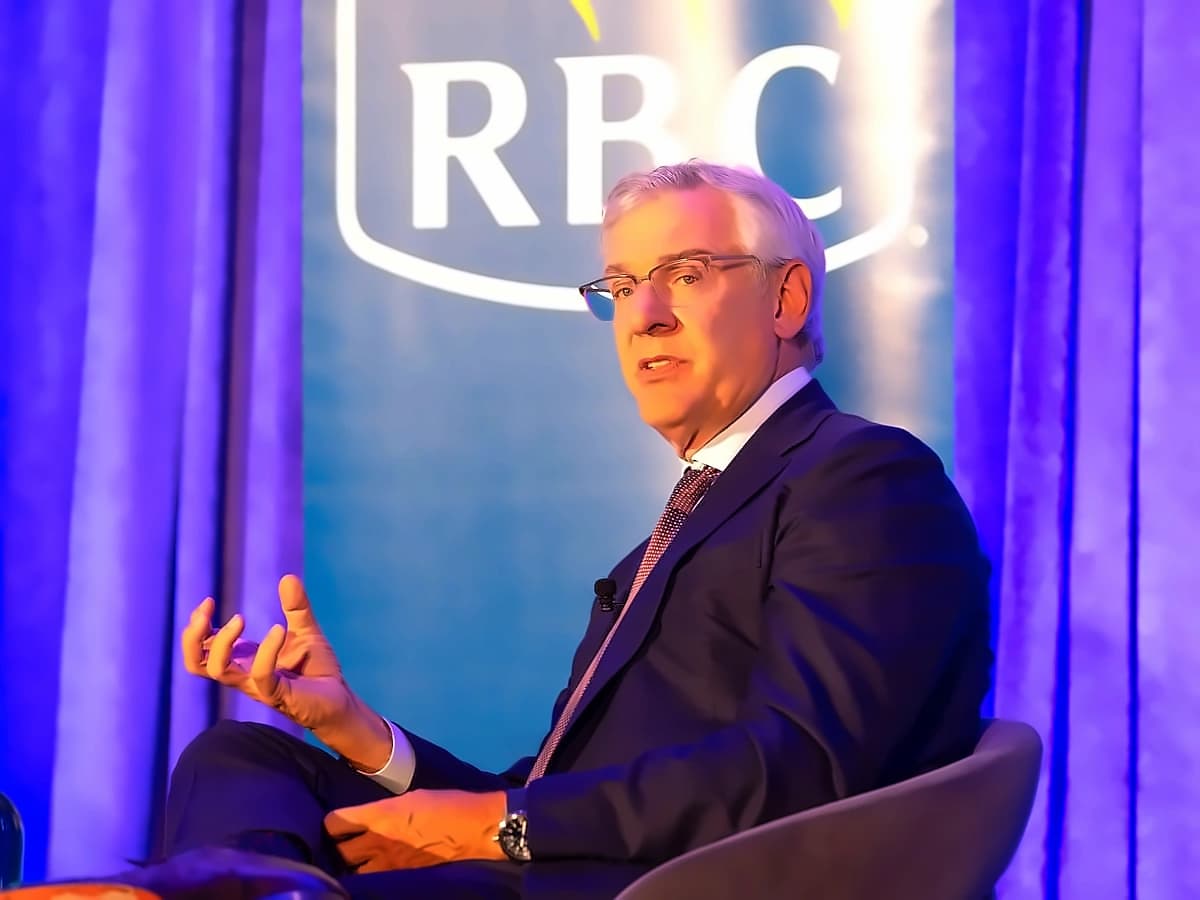
Bank executives expressed strong confidence in Canada's economic resilience despite recent economic stressors. As reported by Financial Post, RBC CEO Dave McKay stated he was 'really impressed by the resilience of the Canadian economy right now', citing positive trends across multiple sectors. McKay noted that consumers continue spending and saving despite minimal activity in the real estate sector, which plays a significant role in the economy. TD chief executive officer Raymond Chun said the results reflect 'continued momentum across our businesses and structural cost reduction', with the bank betting on its Canadian businesses to prop up growth ambitions as it cuts costs and remediates anti-money-laundering failures in the United States. The optimism is reflected in Canadian bank stocks surging 16% this year, outperforming the S&P/TSX Composite Index's 8-per-cent climb, driven by sector optimism surrounding its ability to withstand economic uncertainty.
Both RBC and TD showed significant improvements in provisions for credit losses, a key metric that analysts closely monitor. According to Financial Post, RBC's total PCLs decreased to ₹912 million from ₹1.09 billion in the previous quarter and ₹1.4 billion a year ago, helping the bank top analyst expectations. TD also posted lower PCLs of about ₹1 billion compared to ₹1.03 billion in the previous quarter and ₹1.34 billion a year ago. National Bank's provisions for credit losses was ₹233 million, down from ₹545 million a year earlier, with a lower provision of ₹38 million on performing loans accounting for much of the decrease. Scotiabank set aside ₹1.2 billion in provisions for credit losses, including ₹1.1 billion against loans that the bank believes may not be repaid, though this was higher than analysts anticipated. TD's Canadian personal and commercial banking profit reached ₹1.93 billion, up 15% year-over-year on higher revenue and lower provisions, with loan balances up 6% and deposits rising 3%.
All major banks except CIBC raised their quarterly dividends, demonstrating strong confidence in their financial position. RBC raised its quarterly dividend by 12 cents to ₹1.76 per share and plans to repurchase 45 million shares representing about 3% of its common stock. CIBC announced a plan to buy back up to 30 million shares or 3.3% of its outstanding share count over the next year, with its quarterly dividend unchanged at ₹1.07 per share. National Bank raised its quarterly dividend by 8 cents to ₹1.32 per share, a larger increase than the 5 cents some analysts had expected. BMO raised its quarterly dividend by 4 cents to ₹1.71 per share. The dividend increases reflect banks' confidence in their capital generation capabilities and their commitment to returning value to shareholders. RBC has demonstrated this commitment with 15 consecutive years of dividend increases, currently offering a yield of 2.54%.
RBC achieved its second-highest quarterly performance on record, with revenue reaching ₹17.45 billion, up 11% year-over-year, surpassing forecasts of ₹17.15 billion. The bank's adjusted EPS of CAD 3.90 exceeded the forecast of CAD 3.77, resulting in a positive earnings surprise of 3.45%. RBC's return on equity (ROE) stood at 17.2%, supported by a strong capital position with Common Equity Tier 1 (CET1) ratio at 13.5%. Despite these strong results, RBC's stock price declined 1.6% in pre-market trading, settling at ₹186.10 following the earnings announcement. The bank provided positive guidance with EPS forecasts of CAD 2.82 for Q3 2026 and CAD 2.87 for Q4 2026. RBC's CEO highlighted the bank's strategic focus on AI-driven initiatives transforming operational efficiency and client experiences, with the bank continuing to focus on technology-driven initiatives aiming to generate significant enterprise value over the next 18 months.