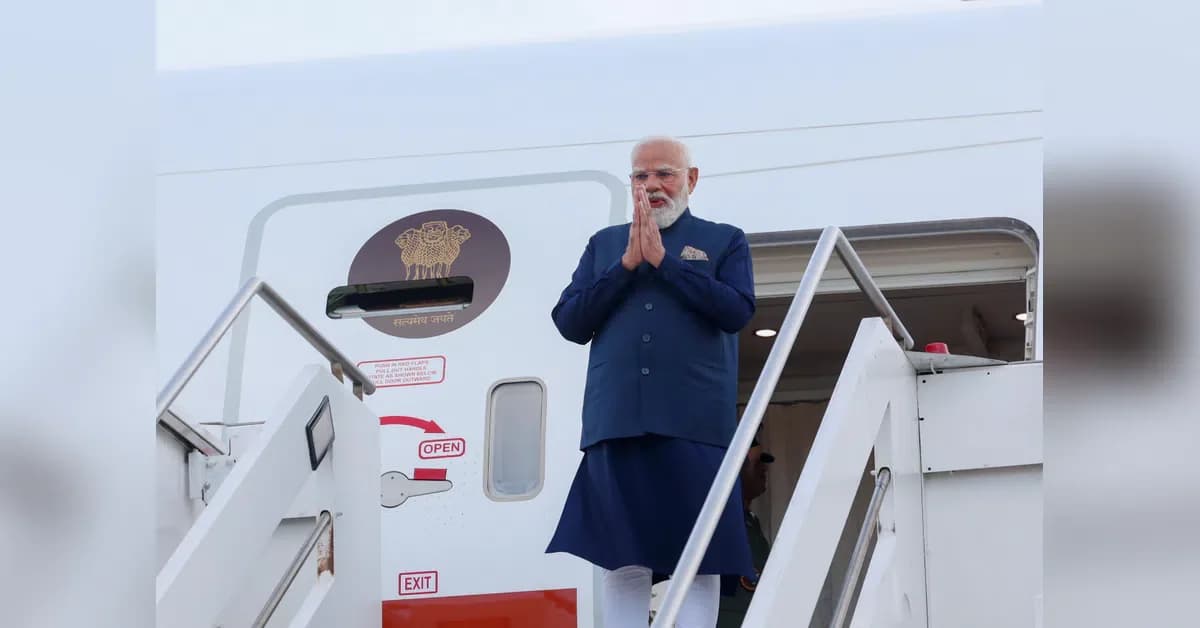
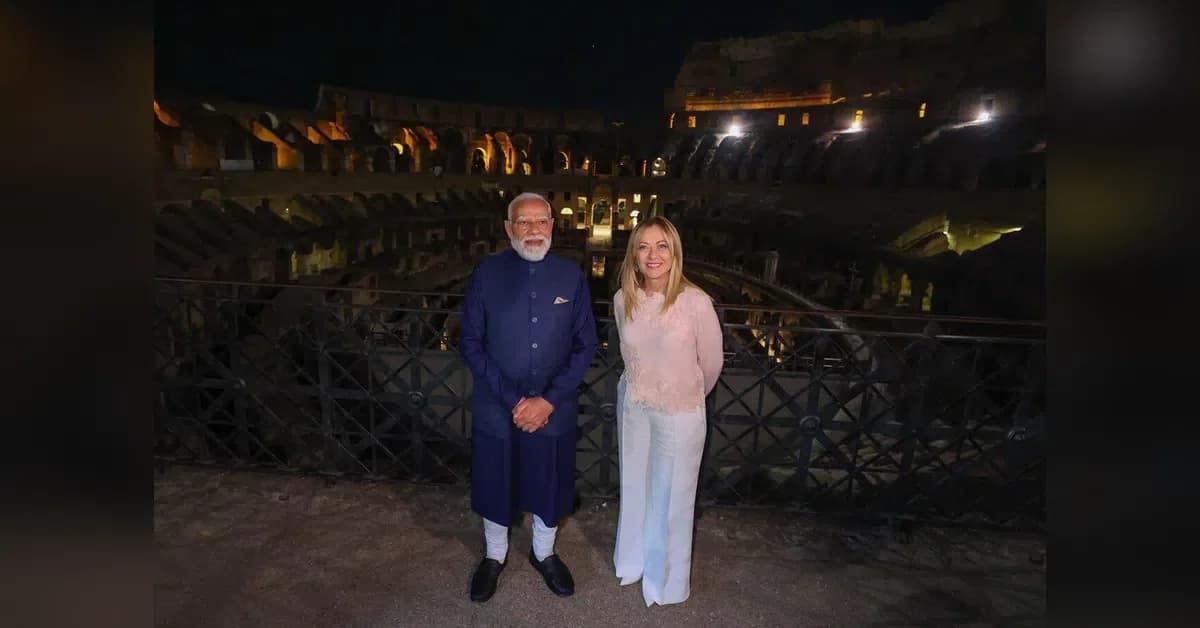
Prime Minister Narendra Modi's visit to Italy from May 19-20 at the invitation of Italian Prime Minister Giorgia Meloni marks a significant milestone in the India-Italy relationship. According to reports from Business Standard, what was once a partnership constrained by hesitation and interrupted by diplomatic turbulence is now being reimagined through the prism of geopolitics, industrial cooperation, connectivity, and technological transformation. Rome increasingly understands that the future of European competitiveness, economic resilience and strategic diversification will depend upon trusted industrial partnerships beyond the Continent, and India stands out because of its democratic credentials, scale, demographic dynamism, manufacturing ambitions, and expanding geopolitical role. As per ANI, Indian Ambassador Vani Rao emphasized that both countries share democratic values, are committed to global peace and security, and are focused on inclusive growth and development, making Italy a critical partner for India. The partnership is now gaining a new and higher dimension that combines our economic dynamism, societal creativity, and millennia-old civilisational wisdom, as outlined in the latest Op-Ed by PM Modi.
Bilateral trade has reached ₹16.77 billion in 2025, making Italy India's fourth-largest trading partner in the European Union. The visit comes amid strong momentum in India-Italy relations, with both sides actively advancing the Joint Strategic Action Plan 2025-2029, a broad framework for cooperation across multiple areas including trade, investment, defence and security, clean energy, innovation, science and technology, and people-to-people exchanges. As reported by Business Standard, the target of €20 billion by 2029 now appears realistic rather than aspirational. The Free Trade Agreement between the European Union and India paves the way for increased trade and investment in both directions, with both countries aiming to reach and exceed the Euro 20 billion target for trade between Italy and India by 2029. The landmark €3.8 billion acquisition of the Iveco Group by Tata Motors underlines the growing confidence of Indian industry in Italy's advanced manufacturing ecosystem. Simultaneously, Italy has demonstrated serious intent by opening an office of SIMEST – an Italian financial institution which supports the international growth and competitiveness of Italian companies in New Delhi with a €500 million funding line. The growing interest of Italian businesses in production for India and the increasing presence of Indian industries in Italy, numbering over 1000 from both sides, is a positive sign that will strengthen the integration of supply chains.
Both sides have made a conscious effort to move beyond past legacy issues and open a new chapter in bilateral defence ties. According to Business Standard, Italy today openly sees India as a defence-industrial partner rather than merely a buyer. The successful conclusion of the India-EU FTA has dramatically expanded opportunities in engineering goods, clean technologies, pharmaceuticals, defence manufacturing, agri-tech, renewable energy, digital services, logistics, textiles, mobility, and advanced manufacturing supply chains. Italy, with 800 active companies in India, could emerge as one of India's most important European gateways. As per ANI, defence will be an important area where both countries will explore how to boost industrial partnerships, with specific agreements to be announced during the visit. During the Italy visit, Modi will hold talks with Prime Minister Meloni and call on Italian President Sergio Mattarella, with discussions expected to focus on strengthening bilateral trade and investment, defence industrial partnerships, maritime security, resilient supply chains, clean energy cooperation and technology collaboration. The collaboration will help ensure the security of critical maritime routes, strengthen resilience in the face of threats such as terrorism, international criminal networks, drug trafficking, cyber-crimes and human trafficking.
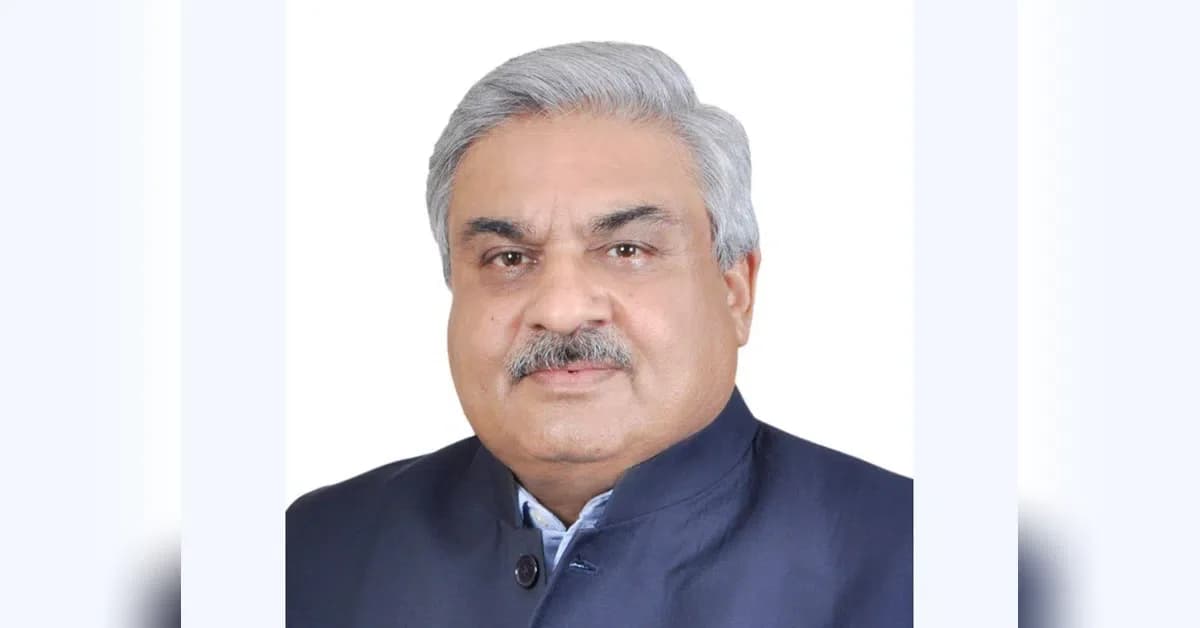
Italy's plans to establish an innovation centre in India connecting start-ups, universities, research clusters, and technology-driven enterprises could create a valuable bridge between the two ecosystems. As reported by Business Standard, Italy's strong support for the India-Middle East-Europe Economic Corridor (IMEC) reflects this strategic reality. The activation of the Sparkle-Airtel Blue-Raman submarine cable from India to Genoa already gives Italy a concrete role as IMEC's western anchor. Additionally, SACE, the Italian export credit agency, has committed another €200 million for Italian SMEs in India. According to ANI, mobility will be another key focus area where both countries will look at increasing the flow of talent and knowledge between the two nations, with specific outcomes expected during the visit. The partnership seeks to create a powerful synergy between Italian design, manufacturing excellence, and world-class supercomputers—reflecting Italy's position as an industrial powerhouse—and India's rapid economic growth, engineering talent, scale, and innovation and entrepreneurial ecosystem with over 100 unicorns and 200,000 start-ups. The growing partnership between universities and research centres will support technological innovation in sectors such as Artificial Intelligence, quantum computing, advanced manufacturing, critical minerals, and digital infrastructure.
The visit is expected to deliver substantive outcomes across multiple sectors, with maritime security and ports identified as critical areas for cooperation. As per ANI, maritime security and ports are another area of focus, reflecting the growing strategic convergence between New Delhi and Rome in the Indo-Pacific and Mediterranean regions. The India-Italy relationship is becoming a test case for how India and Europe can build trusted industrial, technological, and strategic partnerships in an age of uncertainty. To sustain this momentum, both sides must now institutionalise investment facilitation, accelerate defence-industrial cooperation, deepen mobility arrangements, support innovation ecosystems, and move quickly to take advantage of the India-EU FTA. The opportunity exists, and the strategic logic is compelling- sustained political will and implementation is all that is required for India and Italy to build a strategic future together. The partnership is evolving into a special strategic partnership that bridges two continents and shapes new global dynamics, with both nations located at the heart of crucial global economic hubs - the Indo-Pacific and the Mediterranean. The India-Middle East-Europe Economic Corridor (IMEC) represents a vision aimed at connecting our regions through modern transport and infrastructure, digital networks, energy systems, and resilient supply chains, with India and Italy committed to working together with other partners to make this vision a reality.