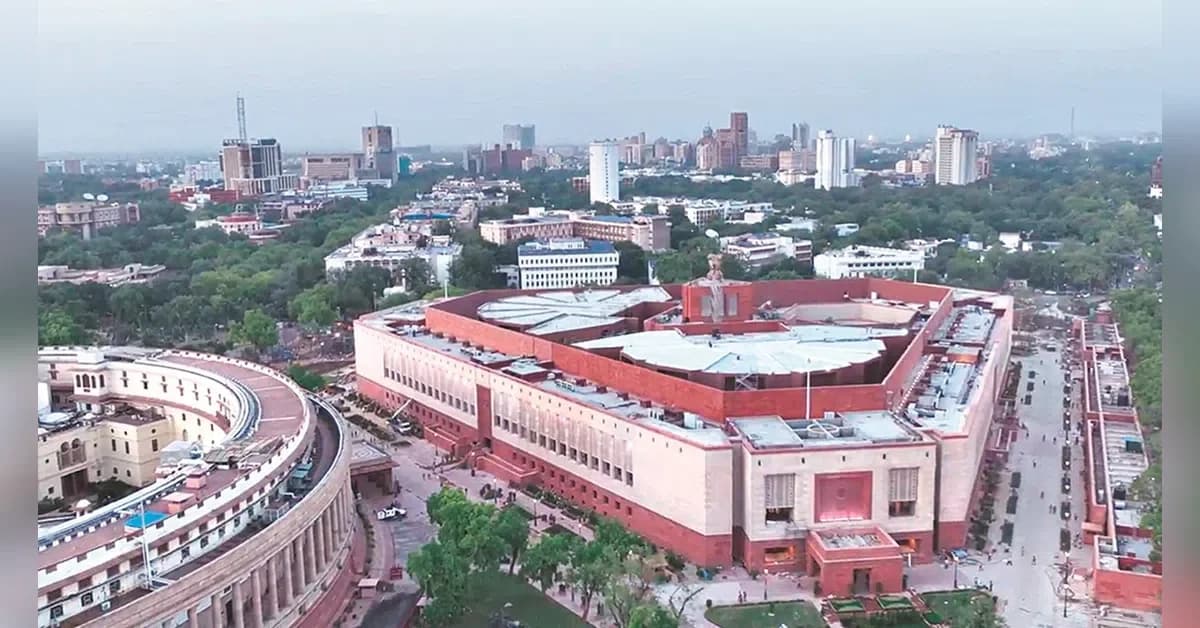
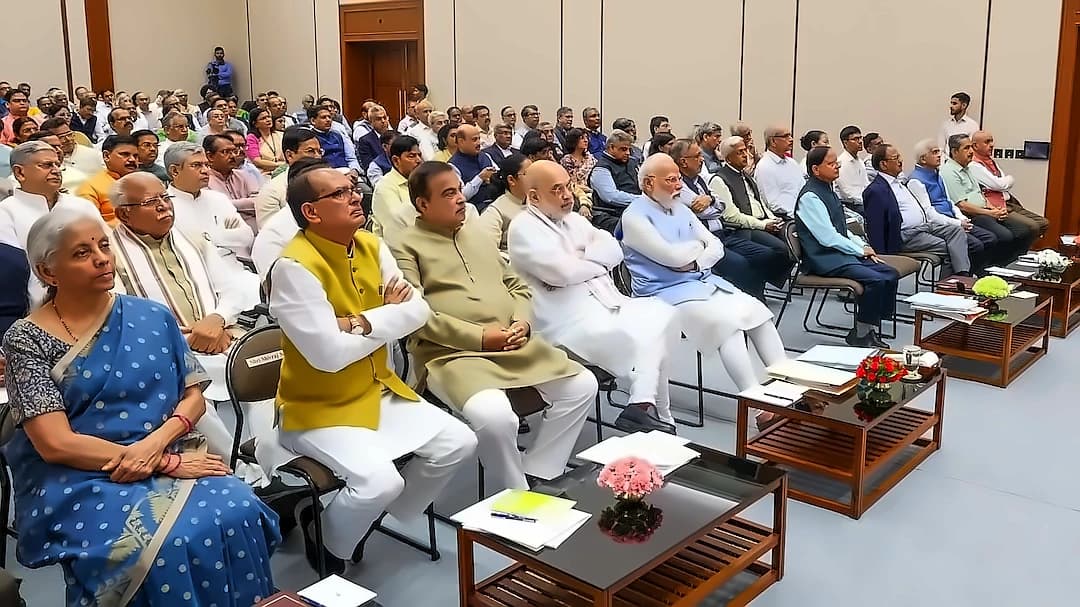
Prime Minister Narendra Modi chaired a marathon meeting of the council of ministers at Seva Teerth on Thursday evening, which lasted over four and a half hours. According to reports from ANI, the meeting started at 5 pm and came amid the intensifying West Asia conflict and rising global economic concerns. The PM had last chaired such a meeting of his entire council of ministers on June 4, 2025, which also marked the first year of his government's third term. This high-level gathering was attended by Union Cabinet ministers, ministers of state with independent charge, and ministers of state, with the Council of Ministers including 30 cabinet ministers, excluding the Prime Minister, five ministers of state (independent charge) and 36 ministers of state. As per sources, this effectively served as the first full Council of Ministers meeting of the year, with the session effectively functioning as a midterm review of the government's performance as the NDA government approaches two years in office during its third consecutive term.
Addressing the ministers, Prime Minister Modi emphasised that Viksit Bharat 2047 is a commitment, not merely a slogan. He stressed that files should move quickly without unnecessary delays and called for maximising productivity in the minimum time. The PM urged ministries to bring greater simplicity in governance and place a stronger focus on reforms. Ministries that ranked lower in performance evaluations were advised to take corrective measures and improve their functioning. During the meeting, presentations were made by more than half a dozen ministries, with nine ministries giving detailed briefings on their performance and future roadmap. The Cabinet Secretary and NITI Aayog also made presentations during the meeting. Sources indicated that the meeting also highlighted ministries that had recorded the fastest disposal of files, with an emphasis on efficiency and timely implementation of decisions. According to ANI, several key ministries made presentations including the Ministries of Agriculture, Forest, Labour, Road Transport, Corporate Affairs, External Affairs, Commerce and Power.
On May 11, the PM had appealed to the people to contribute to saving the country's foreign exchange reserves by cutting down on the use of petrol and diesel, postponing foreign travel, and purchasing gold. As reported by Business Standard, these measures were implemented amid concerns over foreign exchange reserves and the government's efforts to address these challenges through public participation. The meeting comes days after the Prime Minister urged people to reduce discretionary spending on fuel, gold and overseas travel, with the discussions assuming added significance against the backdrop of growing global economic concerns.
According to officials cited by Business Standard, the PM's five-nation tour was marked by 57 outcomes, including key pacts to strengthen India's energy security. The tour included meetings with over 50 chief executive officers of global corporations, who made fresh commitments of $40 billion in investments in India. The tour covered the UAE, Netherlands, Sweden, Norway and Italy from May 15 to the completion date, with the PM landing in the national capital after wrapping up the diplomatic mission. In the UAE, India signed landmark pacts spanning strategic petroleum reserves, long-term LPG supply, defence and shipping, with Abu Dhabi pledging investments totalling USD 5 billion in India. The tour also included 17 agreements in the Netherlands to boost cooperation in defence, critical minerals and other key sectors, with the two countries elevating ties to a strategic partnership. In Europe, India deepened strategic ties across multiple countries, with Sweden and Norway also elevating ties, with cooperation frameworks announced in areas including clean energy, innovation, defence, digital technologies and critical minerals, alongside broader engagement at the India-Nordic Summit.
The discussions assumed added significance against the backdrop of growing global economic concerns arising from the intensifying West Asia conflict. Global crude oil prices have crossed the $100-per-barrel mark, raising fears of inflation in India, which imports about 85 per cent of its oil requirements. Rising crude prices are likely to affect fuel rates, transport expenses and overall prices across sectors. Sectors such as energy, agriculture, fertilisers, aviation, shipping and logistics reportedly received focused attention during the meeting. The meeting took place amid rising global concerns over energy security and higher fuel prices due to the ongoing West Asia conflict and disruptions around the Strait of Hormuz, a critical global shipping route for crude oil and energy supplies. A high-powered informal group of ministers led by Defence Minister Rajnath Singh is already monitoring the evolving situation, with Rajnath Singh not attending Thursday's Council of Ministers meeting due to his visit to South Korea. The PM highlighted the economic implications of the West Asia crisis and instructed ministries to take steps aimed at causing 'minimum inconvenience to citizens', as reported by India Today. The meeting served as an informal midterm assessment of the government's work ahead of the NDA government completing two years of its third consecutive tenure.