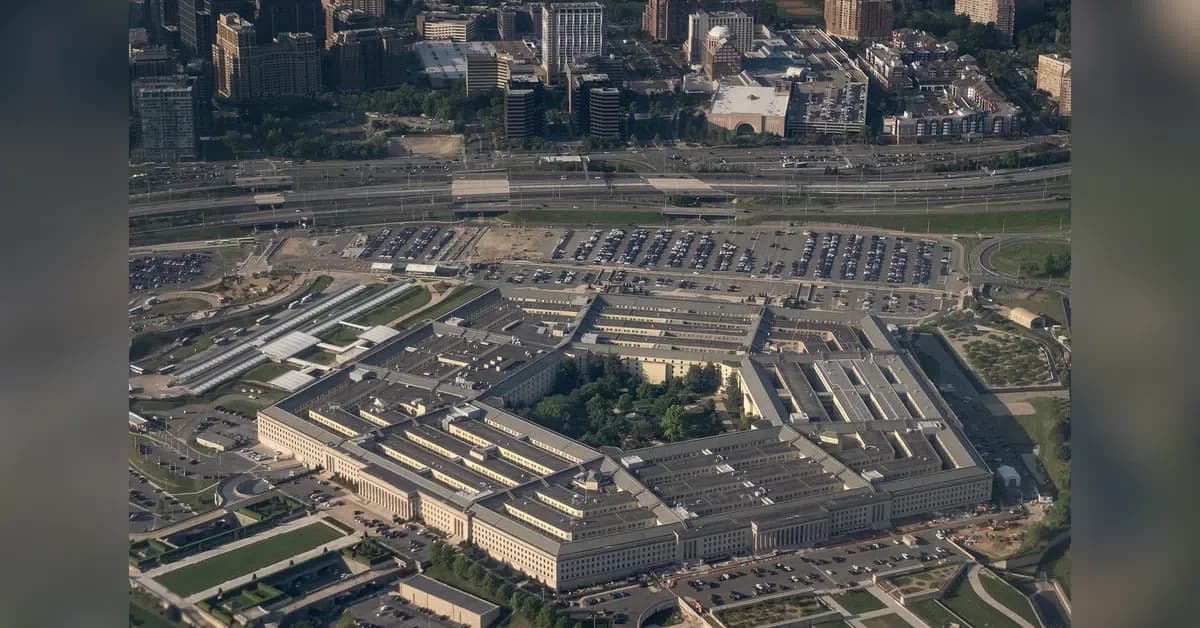
The Pentagon has restored three major Chinese companies to its military companies blacklist after removing them in February. The restored companies include tech giant Alibaba, electric car maker BYD, and search engine Baidu, which were previously removed from the list in February before being reinstated. According to the latest reports, the updated 1260H list now names 188 Chinese companies that the Pentagon identifies as operating in the United States and contributing to China's military-civil fusion strategy. This represents a significant expansion from last year's roughly 130 Chinese entities to the current 188 Chinese entities on the list. The designation increases the likelihood that the DoD will restrict US companies from doing business with the listed entities, with DoD contracting bans on direct deals taking effect this month. Following the announcement, Alibaba Group shares fell 0.5%, BYD declined 0.5%, and Baidu dropped 2.3%, while NIO, which rose over 2% earlier in the day, gave back some gains after the news. The Pentagon justified adding these companies by citing their affiliation with China's Ministry of Industry and Information Technology, with Alibaba being traded on the New York Stock Exchange and helping boost China's defense industrial base through its ministry affiliation.
The Pentagon's latest designation reflects a broader US concern that technologies such as AI, batteries and cloud computing could strengthen China's military capabilities. The key concept driving these additions is dual-use technology - products, systems or scientific capabilities that can serve both civilian and military purposes. AI is the clearest example, while its civilian applications are well known, its defense applications such as military planning, satellite image analysis, cyber operations, surveillance and autonomous weapons systems become a point of contention. Similarly, electric vehicle batteries that power cars and buses also matter for drones, military vehicles, energy storage and mobile battlefield systems. The Defense Department cited direct or indirect affiliations with Chinese state entities including SASAC, MIIT, SASTIND, the PLA, the People's Armed Police, or Chinese security and law-enforcement bodies. The Pentagon also noted that Unitree, whose dancing robots impressed Simon Cowell on NBC's 'America's Got Talent,' received assistance from the Chinese government through its designation as a small or medium-sized company that is highly innovative, highly competitive globally and critical to the country's supply chain. WuXi AppTec has disputed its inclusion, with a spokesperson telling Reuters that the company's inclusion was "clearly a mistake" and that it would take immediate actions to "correct this erroneous designation."
According to the Pentagon's statement, the Chinese military seeks to acquire advanced technologies and expertise developed by Chinese companies, universities and research programmes that appear to be civilian entities. This reflects growing wariness of Beijing's strategy of tapping the strength of non-state businesses for military purposes. The FY 2024 NDAA prohibits the DoD from entering into or renewing contracts directly with listed entities starting 30 June 2026, with indirect contracting bans following a year later. While companies on the list can still do business in the US, they face reputational damage and could be subject to more restrictions. The Pentagon has increasingly used the list to limit companies' ability to secure military contracts or obtain research funding, with a 1260H designation also functioning as a notice to U.S. investors and viewed as a potential precursor to more restrictive trade measures. The list, created in 2021 by a congressional mandate, seeks to identify Chinese companies that the Pentagon considers to have links to the Chinese military, not only those directly controlled by the Chinese military and security forces but also those contributing to the country's defense industrial base.
The Chinese Embassy on Monday accused the US of "overstretching the concept of national security and making discriminatory lists to go after Chinese companies," as reported by Reuters. The embassy stated that Chinese companies observe the laws and regulations of the countries where they do business and urged the US to "stop its wrong practice and create a fair, just and non-discriminatory environment for Chinese companies." The listed companies have consistently disputed their designations - Tencent called its inclusion "a mistake" when it was added last year, and CATL denied any military involvement. House of Representatives China Select Committee Chair John Moolenaar said the updated list "is a warning to American businesses, all levels of government, and the American people. These Chinese companies are working with the Chinese military against our national interests." The embassy's statement comes as President Donald Trump said in January that he would welcome Chinese carmakers such as BYD if they built plants in the U.S. and hired American workers, though a number of U.S. lawmakers have said they will seek a ban on Chinese electric vehicles. The Trump administration has designated these top China firms as 'Chinese military companies' under Section 1260H of the National Defence Authorisation Act, with the designation potentially complicating companies' access to US capital markets and government business, although it does not automatically trigger sanctions.
The latest designation widens the blacklist that increasingly targets sectors at the heart of US-China technological competition. Among the most prominent additions were e-commerce giant Alibaba, search and AI company Baidu, electric vehicle manufacturers BYD and NIO, pharmaceutical research and manufacturing company WuXi AppTec, robot maker Unitree, networking equipment maker TP-Link and solar companies JA Solar and Trina Solar. The list also included battery makers CALB and EVE Energy, lidar firms Hesai and RoboSense, and display-panel manufacturer BOE Technology Group. The semiconductor industry is well represented with CXMT, China's largest memory chipmaker, and YMTC, the country's leading NAND flash manufacturer, alongside WuXi AppTec. The automotive sector features prominently with BYD, which overtook Tesla as the world's largest EV seller in 2025, alongside Nio, CALB Group, and EVE Energy. Most of China's major artificial intelligence companies are now on the list, with Alibaba and Tencent both investors in Unitree, the Hangzhou-based robotics company that shipped more humanoid robots than Tesla in 2025. While a company on the list can still do business in the US, it faces reputational damage and could be subject to more restrictions. The list also included telecoms equipment maker Baicells, which Reuters reported was under investigation by the FBI and Commerce Department last year. The US campaign against Chinese technology firms has now widened from telecom equipment and semiconductors to encompass the entire technology stack that could shape future economic and military power, including chips, cloud computing, AI models, batteries, EVs, robotics, drones, biotechnology, sensors and advanced manufacturing.