The Personal Consumption Expenditures (PCE) price index rose 0.2% in July, meeting market expectations according to Bureau of Economic Analysis data released Wednesday. The core PCE index, which excludes food and energy items, also advanced 0.2% from a month earlier, and 3.3% from a year earlier. Inflation-adjusted consumer spending was flat last month following strong increases in May and June, as reported by CNBC TV18. This muted inflation reading adds to a string of reports suggesting the US economy cooled in July after robust spending earlier in the summer. The data will likely bolster the case at the Federal Reserve for holding interest rates unchanged as officials watch for more signs that inflation pressures from the Iran war are receding. The month-over-month figure also was higher than expected at 0.2% in July after falling 0.1% in June, which had been the weakest reading since April 2020, with economists having forecast a 0.1% increase.
Fed funds futures prices reflected about a 40% probability of a rate hike at the central bank's September 15-16 meeting after the report, versus about 36% immediately before, according to CNBC TV18. The above-forecast headline print gave a modest lift to expectations that the Fed may raise interest rates as soon as next month. The unrounded core PCE was 0.246%, so it barely missed out on rounding to 0.3%. That is a one-month annualised rate (of) nearly 3.0%, said Omair Sharif, founder and president of forecasting firm Inflation Insights. The Personal Consumption Expenditures Price Index increased 3.7% in the 12 months through July, unchanged from June, the Commerce Department's Bureau of Economic Analysis said. Markets continue to price a 25bp rate hike before year-end while economists, in general, still favour an extended pause for policy rates, according to Investing.com India. A separate report out Wednesday showed the US economy expanded in the second quarter at the same pace as initially estimated, though the details pointed to stronger consumer spending. Starting next month, the BEA will make changes to how prices are measured for certain categories — including legal services, computer software and investment advice — that many economists expect will mean a lower core PCE reading. Investors will be listening for Fed Chairman Kevin Warsh to clarify his views about how the US central bank should react to stubborn inflation when he speaks on Friday at the annual Jackson Hole symposium.
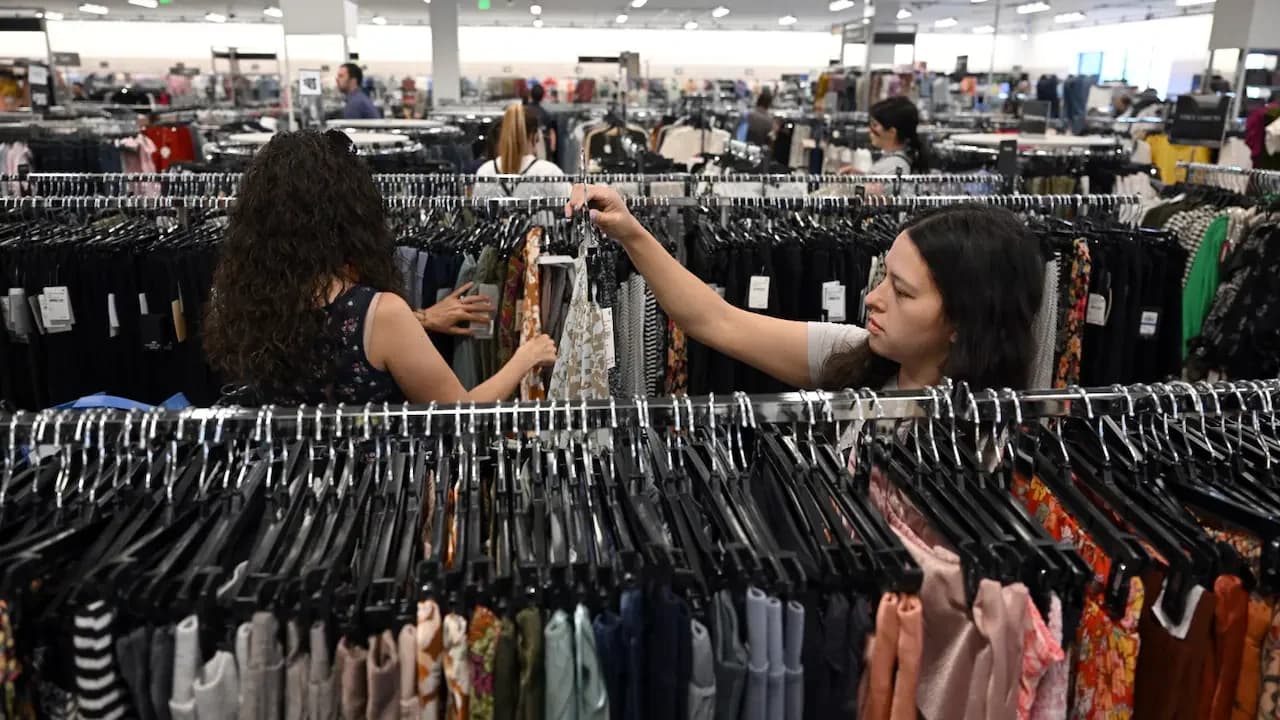
Personal income, a metric which is not adjusted for inflation, rose 0.4%, while wages and salaries advanced 0.3%, according to Wednesday's figures. After adjusting for inflation, disposable income rose 0.4%, while the saving rate climbed to 3%, a four-month high. The details showed inflation-adjusted spending on core goods fell 0.8%, while inflation-adjusted services spending rose 0.3%. A closely watched metric of services inflation that excludes energy and housing was up 0.3%. Real personal spending for July was 0.0% MoM, confirming the soft start to the quarter from the consumer despite real household disposable income doing OK, as reported by Investing.com India. Amazon.com Inc.'s decision to move its Prime Day sales event to June this year from July the year before likely pulled forward some spending, depressing last month's figures. Retailers including Walmart Inc. have said price-conscious consumers are still spending but searching for deals and unique merchandise. The BEA on Wednesday also left unchanged its estimate of annualised gross domestic product growth for the second quarter at 1.5% but revised up consumer spending to 3.4% from the originally reported 3.2%, an indication that the individual consumption that supports two-thirds of US economic activity had held up through the first half of the year.
The July consumer spending and core durable goods shipments data point to a strong real GDP (gross domestic product) growth rate in Q3 that looks to be running at least 3%, said Kathy Bostjancic, chief economist at Nationwide, as reported by CNBC TV18. That figure would be double the second quarter's unrevised annualised growth rate of 1.5%. Business investment remained strong, driven by continued growth in AI spending. Growth in final sales to private domestic purchasers, which measures the combined outlays of consumers and of businesses on investment and is a key indicator of overall private consumption, was revised up to 4.2% — the highest since the first quarter of 2023 — from 3.9%. Corporate profits jumped by $400.9 billion after climbing by $74.4 billion in the first quarter. The latest reading was the second-largest increase in record profits — topped only by the third quarter of 2020 — and was likely driven by Trump's corporate tax overhaul that went into effect this year. There was also an improvement in growth as measured from the income side. Gross domestic income rose 2.2% versus 1.2% in the first quarter. The average of GDP and GDI, also referred to as gross domestic output and considered a better measure of economic activity, grew at a 1.8% rate versus 1.7% in the previous quarter.
Real household disposable income has effectively flatlined for well over a year and is well below where the pre-Covid trend suggests we should be, according to Investing.com India analysis. The savings ratio has risen from 2.6% to 3%, reflecting the underlying consumer pressure. This is key to explaining the K-shaped consumer narrative, with middle and lower-income households reliant on income to fund their spending and under financial pressure — hence the low savings ratio of 3% versus the 6% long run average and the fact credit card and auto loan delinquencies are at or close to all-time highs. However, higher income households have more spare capacity with surging household wealth encouraging the top 20% of households by income to continue spending — remember the Federal Reserve states that the top 20% of households by income hold 70% of household wealth. Employment growth has been modest while wage growth has slowed and elevated inflation prints have eroded spending power, with tax changes not meaningfully improving the situation.
According to Investing.com India analysis, US stocks and high-beta assets could be approaching the end of their latest correction, with several space stocks now testing levels that may mark short-term bottoms. The report notes that the S&P 500 remains green for August, as does the Nasdaq, while the SMH semiconductor ETF is also still positive for the month. This leaves room for the current decline to reverse, as an uptrend can tolerate several consecutive days of selling without necessarily becoming bearish. The key is whether the current selling represents the beginning of something larger or simply a pause within the broader uptrend. A softer PCE reading could provide the catalyst for buyers to return, while falling 10-year Treasury yields could become a major catalyst if the 10-year yield falls below 4.50%, potentially supporting equities, precious metals and cryptocurrencies. The price of oil also saw a decline with Brent crude trading at a 0.97% downturn at $86.42 per barrel. As Jackson Hole beckons, the Fed's challenge is clear: It still has considerable ground to cover before markets see 2% inflation as a credible outcome rather than a distant aspiration, said Olu Sonola, head of US economics at Fitch Ratings.